

Protests devolve into riots.
Thunderstorms spawn tornadoes.
Don’t be inciting the snowflakes.
Don’t be chasing storm troopers!
By: ElRoyPoet © 2020
Tensions over Israel-Hamas war on the rise in the U.S.
In the past month, there have been numerous protests worldwide due to the ongoing conflict between Israel and Hamas. Young adults have been organizing and participating in large rallies and marches. They credulously believe that their demonstrations will convince their respective national leaders to demand a ceasefire from the Israeli government, which would ultimately lead to de-escalation of the Israel Defense Forces (IDF) operations against Palestine. This activism is an anomaly, as there have been more protests related to this conflict than during the communist Russian invasion of democratic Ukraine.
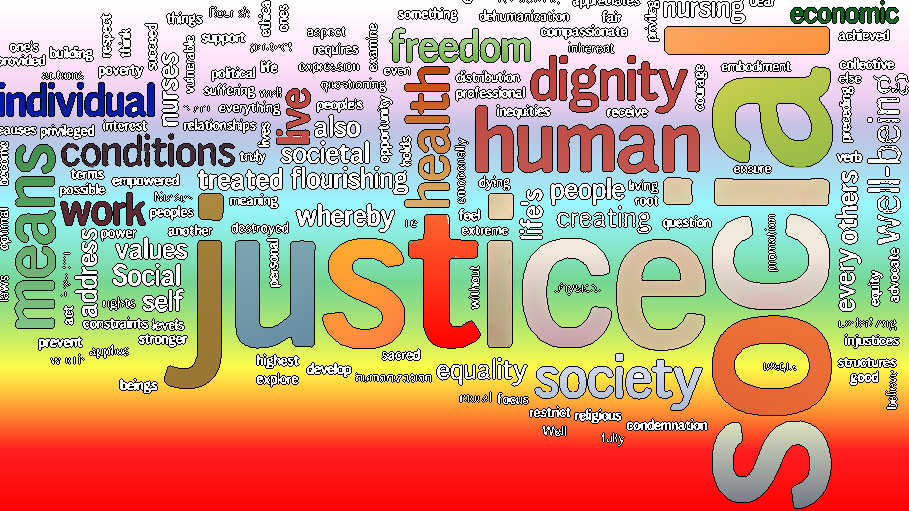
It has become obvious to the global community that the IDF’s actions in the Gaza Strip are leading to an international humanitarian crisis. However, with numerous other ongoing conflicts and humanitarian crises worldwide, many wonder why these young progressives rally for a state whose inhabitants they have no connection to, especially since the Middle Eastern foreign policy has not been a concern before. It appears that the only reason these activists are speaking up now, is because they view the war between Jewish Democrats and authoritarian Palestinians as a social injustice.
Young people often have a competitive spirit and a propensity for conflict, making them well-suited to become soldiers, whether in real combat or simulated battles in video games. However, when there is no war to enlist in, they may seek out a cause to fight for. In liberal democracies, young activists have been petitioning the government to address societal conflicts, especially since the civil rights movement. This is why they naturally gravitate towards battling social injustices, and why those referred to as ‘Social Justice Warriors‘ (SJWs) have been protesting in college campuses, rallies and marches since the 1960s.
Some SJWs may have Borderline Personality Disorder (BPD), a condition that exists on a spectrum. If their symptoms are pronounced, they may be vulnerable to online radicalization and become susceptible to extremist propaganda, leading to violent acts and anarchy. However, assessing the severity of mental health issues can be challenging. Therefore, it would be counterproductive to collectively punish or institutionalize this group, especially since they are the last line of defense for civil rights advocacy.
What motivates SJWs to protest against the Israeli military’s actions toward Palestine?
SJWs may be passionate about social justice issues and believe that what is happening in Gaza is unfair and unjust. They may feel that the IDF’s actions are disproportionate and violate international law, and that the Palestinians have been denied the human rights they deserve. Moreover, SJWs may be motivated by a sense of solidarity with the Palestinians, because they feel a deep empathy for those who are suffering. They may also desire to hold their own governments accountable for their foreign policies and to ensure that their voices are heard in the global conversation about the middle east crisis.
What are common symptoms of BPD that may impact an SJW’s activism?
For SJWs with BPD, their approach to social justice and activism can be affected by a range of symptoms, including intense emotions, fear of abandonment, impulsivity, self-harm, black-and-white thinking, and identity politics. These symptoms can lead to impulsive and risky behavior, resistance to criticism and compromise, and an unstable sense of self. While not all individuals with BPD will be affected in the same way, managing these symptoms and seeking treatment is important for maintaining good mental health and effective engagement in social justice movements.
How do SJWs promote equality?
SJWs promote equality in various ways, such as participating in peaceful protests and demonstrations, organizing rallies, engaging in online activism, educating themselves and others, participating in dialogues with diverse communities, supporting marginalized groups through volunteering, donations, and business patronage, and advocating policy and legislative changes for equality. Through these actions, SJWs aim to create a more just and fair society.
In conclusion, it’s important to note that while some people may experience BPD, this doesn’t apply to all SJWs. We should avoid stigmatizing SJWs with BPD by acknowledging that many of them lead stable and healthy lives. Having BPD does not invalidate the validity of an individual’s activism or their fight for social justice. Therefore, it’s crucial to understand these issues and recognize that individuals with BPD and other health conditions are valuable members of society, who deserve respect and support.
Further Reading and Additional Information:
“The most common form of mental illness is the herd or mob mentality. It is the behavior displayed when some have the desire to belong and be a part of a large group for validation […] Essential to understanding the herd mentality is understanding Borderline personality disorder. Individuals with BPD are very sensitive to perceived interpersonal slights, are highly susceptible to emotional contagion, and have an unstable sense of self. All of which makes them volatile emotionally and engage in impulsive behaviors that are often self-destructive and prone to social conformity. Compared to the general population they maintain significantly higher levels of suicide ideation which can result in them being more likely to escalate conflicts and marginalize the views of others – making them prioritize consensus over critical thinking and rational decision-making (herd/mob mentality or group-think).” Excerpt from … Americans: Where are the Insane Asylums When You Need Them?
“Hysteria is an audiovisual contagion. You have to see and hear someone exhibiting symptoms in order to find yourself replicating those symptoms. See it enough, and it becomes you. This is hysteria’s essential and most terrifying threat: Anyone is susceptible.” By: Nashyiela Loa Zavala, Psychiatrist
“Conservatives believe social movements and protests divide us, but actually, it’s the opposite, at least for popular demonstrations. French democracy was built on a model in which voting is not the only means of popular expression. A demonstration expresses dissatisfaction with government policy. Some commentators have quipped that it doesn’t make sense for the French to essentially be on stand-by for protest at all times, when they have things so good in comparison to everyone else. But this is exactly why things are better in France—because they see the power in collective action and demand change. The French don’t wear their suffering like a badge of honor as is the custom in England.” Excerpt from Why are the French so good at protesting?
“A great many religions rest on a foundational teaching—a golden rule, generally phrased like ‘Do unto others as you would have done unto you’. This golden rule is more than just a religious fundamental; it is grounded in psychological research. We see a similar effect with respect to the self-fulfilling prophecy. If we dislike someone, we are not likely to treat them as well as we could and when they react to our initial (negative) behavior, it is likely to be similar; thus, reinforcing our dislike, the less than optimal treatment and the perpetuation of this cycle. Furthermore, according to the equity principle, what you get out of a relationship should be proportional to what you put into it—’you get what you give’. Excerpt from: Let’s Get Real About Equality
“We are all similar, we are all humans, but we need to be free, to be equal.” By: Dr. Izzeldin Abuelaish
“Injustice anywhere is a threat to justice everywhere. We are caught in an inescapable network of mutuality, tied in a single garment of destiny. Whatever affects one directly, affects all indirectly.” By: Martin Luther King
“Those who make peaceful revolution impossible, will make violent revolution inevitable.” By: John F. Kennedy
 elroypoet.blog