
A perceived grandeur
versus a delusion of grandeur—
which is worst,
either way you’re a target.
The haters and traitors
are out to get you,
the former are external,
the latter internal.
It came to me in a dream—
so what should I do now,
is it too late for me,
like it was for them?
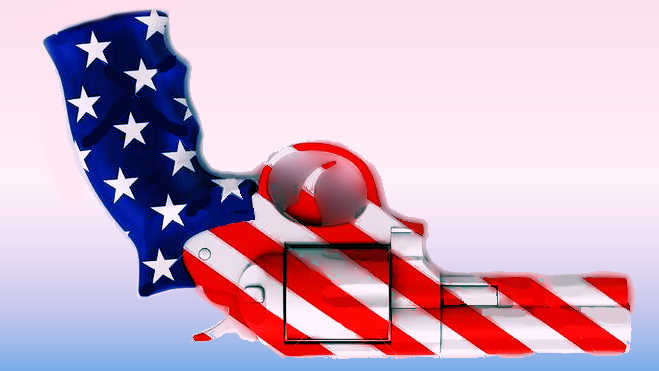
The First and Second, our voice and shield,
the sword that allow us to thrive,
without them, America can’t survive—
they keep our freedom alive.
Edited by: ElRoyPoet , 2025
The trajectory of the United States today raises profound concerns about the future of its democracy, liberty, and national identity. Central to this debate is the role of the MAGA movement and its followers, who many analysts see as serving—whether consciously or unconsciously—as a transition team for Donald Trump and his inner circle (Hassan, 2019). Their purpose appears to be aiding elites and certain Republican politicians in transforming America into an autocratic system. Through rhetoric and actions that undermine democratic institutions, weaken checks and balances, and concentrate power, this movement aims to reshape the nation into a form of rule where the few govern the many—an ominous departure from the foundational principles of liberty and justice (Levitsky & Ziblatt, 2018).
Critics argue that this strategy is the most significant deception ever perpetrated on conservatives and evangelicals—groups that have historically championed traditional values, individual freedoms, and constitutional rights (Judis, 2016). These communities have been targeted with populist rhetoric, used as pawns by elites posing as champions of the people. In reality, these elites pursue policies that serve their own interests, cloaked in the guise of populism (Mayer, 2016). It’s a masterful move to control and sustain power, often at the expense of the principles these groups believe they are defending.
Once this transition is complete, followers are expected to be cast aside or demoted to the role of “patriots of the state”—obedient subjects who accept the authority of the government without question, as if to say, “You better obey your betters” (Rogers, 2017). Many believed they would be rewarded for their loyalty and complicity; however, many will find that they have been betrayed. The very state they helped empower may turn against them, seeking to quash the Constitution and its protections—starting with the First Amendment, which guarantees free speech and religious freedom, and continuing with the Second Amendment, which safeguards the right to bear arms (Waldman, 2014).
Put plainly: once disarmed or disillusioned, the population becomes highly vulnerable to exploitation, tyranny, and domestic terrorism—because they lack the protections and rights that once guarded them (Spitzer, 2015). The danger lies in the fact that those who fought to preserve their freedoms may inadvertently expose themselves to greater threats once those freedoms are suppressed or eradicated. The realization that they were used as pawns in a bait-and-switch scam—believing they were fighting for liberty, only to find themselves powerless—could be devastating. Their country, in this scenario, might no longer exist in the form they once knew; instead, it becomes a resource controlled by a small ruling elite—the wealthy few who manipulate and exploit the masses (Mayer, 2016).
This scenario signals the potential end of the American republic as a free nation. Historically, nations have crumbled when they lost their moral compass or their vision of justice and liberty—”when there’s no vision, the people perish” (Proverbs 29:18). Without a guiding moral and constitutional vision rooted in justice and equality, the nation risks falling into tyranny, with devastating consequences for its citizens and future generations (Kidd, 2014).
To underscore the gravity of this potential catastrophe, consider the implications of the Second Amendment. In a provocative statement, Charlie Kirk once remarked that some gun deaths are “worth it” to protect the Second Amendment, reflecting the deep ideological commitment among many Americans to their constitutional right to bear arms (PolitiFact, 2022). His assassination on September 10, 2025, while speaking at Utah Valley University, underscores the volatile and polarized climate surrounding gun rights and political extremism. His death was a stark reminder that political violence is no longer an abstract threat but a real danger (FBI, 2023).
This tragedy prompts us to consider a sobering hypothetical: if the government or powerful interests sought to revoke the Second Amendment, what would be the consequences? History teaches us that disarmament often comes at a terrible human cost. The founding of the U.S. was cemented through bloodshed—the American Revolution cost thousands of lives to establish the rights and freedoms enshrined in the Constitution (Nester, 2015). To relinquish these rights today would likely entail a similar toll, as law-abiding gun owners resist disarmament, potentially leading to widespread violence and loss of life (Charles, 2014).
Historically, authoritarian regimes have disarmed their populations to eliminate opposition and maintain control. The Soviet Union, after the Bolshevik Revolution, implemented strict gun control policies that disarmed ordinary citizens, making it easier for the government to eliminate opposition and enforce its rule (Rogers, 2017). Similarly, Nazi Germany enacted gun laws, such as the 1938 German Weapons Act, which restricted firearm ownership among Jews and other targeted groups, facilitating the regime’s suppression of dissent and enforcement of totalitarian control (Wittmann, 1995). Mao Zedong’s government in China disarmed the populace during key phases of communist consolidation, preventing rebellion and ensuring strict state authority (Wright, 2019). In Cambodia, the Khmer Rouge confiscated firearms from the people to suppress resistance, leading to mass repression and genocide (Hinton, 2005).
Furthermore, disarming the populace could have dire long-term effects beyond immediate violence. Without the means to defend themselves, citizens become easier targets for exploitation by elites and authoritarian regimes. History demonstrates that when populations are disarmed, oppressive governments and domestic terrorist groups operate with less resistance, threatening individual freedoms and national stability (Rapoport, 2003). The Second Amendment has historically served as a safeguard against tyranny and domestic threats. Its revocation could trigger a cycle of social destabilization, violence, and increased vulnerability to exploitation (Spitzer, 2015).
Most critically, once the population realizes they have been used as pawns—believing they fought for liberty but ending up powerless—they may discover that their country no longer exists as a free nation. Instead, it becomes a resource controlled by a small, powerful elite—the wealthy few who manipulate and exploit the masses. This is the perilous future that looms if current trends continue unchecked.
In conclusion, the United States stands at a crossroads. The rise of the MAGA movement, cloaked in populist rhetoric yet driven by elite interests, threatens to dismantle the constitutional protections and democratic institutions that have long defined the nation (Levitsky & Ziblatt, 2018). The potential loss of the Second Amendment symbolizes more than just gun rights; it represents the broader risk of losing individual freedoms, the rule of law, and the very identity of America as a land of justice and liberty for all. Without a clear moral and constitutional vision—without the guiding light of justice—there is a real danger that the nation could fall into tyranny, with devastating consequences for all its people.
“I don’t write my post-apocalyptic stories, because that’s what I think our future will become. I write them, so that you’ll know what future to avoid.” By: Ray Bradbury
Commentary: Laissez-faire markets that pander to emotional buyers do not self regulate. The GOP has facilitated a gun addiction for the Patriots, by over prescribing the Second Amendment (the right of the people to keep and bear arms SHALL* not be infringed). What started off as preventive medicine for bad government, has devolved into codependency—when the MAGA republicans found out they could game the bill of rights and gain and hold on to power by dispensing more guns into the public space. Tragically just like drug addiction, when there is laid back government oversight on the public and laissez-faire restrictions imposed on greedy pharma (evil capitalists), pandemonium ensues. There are only two possible outcomes (remedies) for the patriots’ unhealthy fascination with gunfire: 1. forced withdrawal or 2. death by overdose, either way there will be huge pains and great suffering inflicted upon America in order to cure it.
*The Supreme Court of the United States ruled that “SHALL” really means “MAY”. Quite a surprise to attorneys who were taught in law school that “shall means must”. In fact “MUST” is the only word that imposes a legal obligation that something is mandatory.
Definition: laissez-faire, noun: a policy or attitude of letting things take their own course, without interfering. “A laissez-faire attitude to life.” Economics: abstention by governments from interfering in the workings of the free market.”Laissez-faire Capitalism.”
“Our founding fathers, having just lived through a revolution, tried really hard to create a system of government that could avoid a revolution in the future. The Constitution of the United States of America is the result. A system that has built in a very straightforward way of allowing for everything from small tweaks (2 term limit for President) to massive social change (end slavery, give women equal rights—yes, I know the ERA didn’t pass, that’s part of my point) and the potential for a complete reboot (without the need for violence) in the form of calling for a constitutional convention.
The state in which I live has had 5 constitutions (and prior to the US, 4 versions of the Frame of Government originally written by William Penn) the most recent was 1968, a few months before I was born.
When I hear people say ‘we need a revolution’ I will often ask ‘why not address your concerns via a constitutional amendment or a new constitution?’ The reply is usually quite enlightening as to the motivations and thinking of those calling for revolution. Some people clearly relish the idea of sowing chaos and destruction, and those are the people who scare me the most.” [….]
You’re right that any armed revolution started right now would be disastrous. And, I fear, would mostly lead to fascism as the government was required to crack down on all the various dissidents.
Though I think you’re overestimating the potential ‘breakup’ of America. I don’t think it would happen like that. The division of America today isn’t like that of Yugoslavia. You don’t have black nationalists living in one state, Mexican nationalists living in another, Protestant nationalists living in one and Catholic nationalists living in another. Sure, you have racial and ethnic and religious diversity. But the reality is, that’s spread out everywhere, and our ultimate dividing lines aren’t region-based or even culture-based anymore, they’re political. ‘Left-wing’ and ‘right-wing’ are far more important classifiers to Americans than ‘Wisconsinite’ or ‘Californian’.
Cities all across America are mostly liberal or left-wing. Rural America is mostly right-wing. The divide is geographic, but it isn’t state vs. state, it’s rural-vs-urban. And neither can really survive without the other.
This means that, if it comes down to ‘A revolution,’ today, it will probably be left-wing vs. Right-wing, not California vs. Texas. And one side will have to win and will re-consolidate America. Whether that’s rural America with its guns and bread, or urban America with its wealth, technology, and factories.
Either way, I think it will lead to tyranny on a massive scale. Government surveillance, oaths of loyalty, secret police, whatever. That’s not to say left-wing and right-wing are the same. Just that no matter what, if there’s a civil war in the US in our current political climate, the government that comes out of it will have to be far more repressive than ours today.
So I’m not seeing a ‘broken up’ America, is my point. I’m seeing a united one that is fascist or totalitarian. Still not a good outcome.” Comments in Let’s talk about revolution.
“Those who make peaceful revolution impossible will make violent revolution inevitable.” By: John F. Kennedy
Final Thoughts: The First Amendment is the cornerstone of the Constitution and upholds the foundation of our democracy. Don’t be deceived into believing you don’t need the First Amendment. If you willingly surrender your rights, what makes you think the government can be trusted—not to trick you—into giving up your Second Amendment rights as well? Even if you resist, it will be too late, because you’ve already forfeited your First Amendment rights—specifically, Freedom of Speech and Assembly. The loss of our First Amendment rights, whether through coercion, deceit, or choice, is the greatest threat to our democracy.
As the saying goes, “When you take care of your first priority, everything else will be okay,” or “When you do first things first, everything else will fall into place. However, if you do second things first, everything else will fall apart.” Our Founders were aware of how subtle and insidious government tyranny can be. We owe them a debt of gratitude for amending the Constitution with the Bill of Rights.
In conclusion, the Second Amendment primarily serves as a safeguard that our First Amendment protections are maintained. However, don’t be misled—when the Second Amendment was enacted in 1791, it was intended as a deterrent against government tyranny. At that time, it was conceivable that a militia of colonists armed with muskets could subvert a standing army. Today, however, an armed militia of citizens would be unlikely to overthrow the government, as the armed forces possess weapons of mass destruction and control the military logistics network.
Therefore, if our First Amendment rights are compromised, the advocates of the Second Amendment would be powerless to defend themselves. Consequently, whoever orchestrates a military coup could ultimately rule over the survivors.
“Power does not corrupt. Fear corrupts… perhaps the (Conservative’s) fear of a loss of power. By: John Steinbeck.
“The world has enough for everyone’s need, but not enough for everyone’s greed.” By: Mahatma Gandhi
“Ignorance breeds fear. We fear those things we don’t understand. If we don’t put a lid on that fear and keep that fear in check, that fear in turn will breed hatred because we hate those things that frighten us. “If we don’t keep that hatred in check, that hatred in turn will breed destruction.” By: Daryl Davis
It is possible to get away with murder, if you kill the people whose lives are already dead to a capitalist society. If only the state can be sovereign, then the citizen must be dispensable. That being the case, it is permissible to remove the misfits who are not in step with the goals of the nationalist state. The progression of tyranny is to first eliminate the enemies of the state, second the burdens to the state, and third those who are not benefiting the state. For this to transpire, all that is required is for the heads of police departments, to give the marching orders. “Everything in the State, nothing outside the State, nothing against the State.” By: Benito Mussolini
“The Party seeks power entirely for its own sake. We are not interested in the good of others; we are interested solely in power. We know that no one ever seizes power with the intention of relinquishing it. Power is not a means, it is an end. The object of power is power.” (Excerpts from “1984”) By: George Orwell
“Power tends to corrupt, and absolute power corrupts absolutely. Great men are almost always bad men, even when they exercise influence and not authority. There is no worse heresy than that the office sanctifies the holder of it.” By: John Dalberg-Acton
“Injustice anywhere is a threat to justice everywhere. We are caught in an inescapable network of mutuality, tied in a single garment of destiny. Whatever affects one directly, affects all indirectly.” By: Martin Luther King
“The blame did not lay on evil men, for evil men always do evil things. The blame lay on all of those millions who just wanted to survive.” By: Sophie Scholl
 elroypoet.blog