

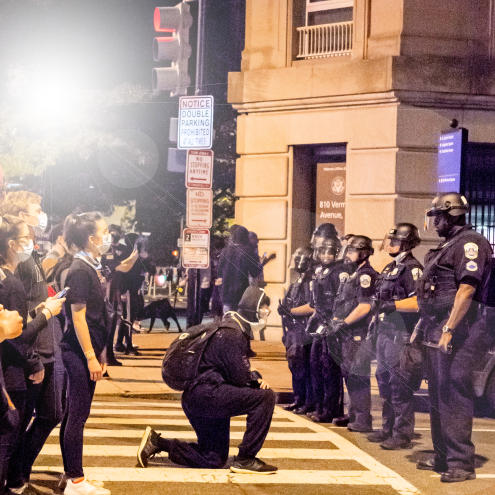
When municipal police no longer serve as defenders of public safety and crime deterrence, the only role left for them to fulfill is that of offense and crime preemption. In this new paradigm, the focus shifts from maintaining community safety to proactively targeting potential threats before they materialize. The dystopian blueprint of “Minority Report” becomes the model—an ominous standard—by which law enforcement’s effectiveness is measured. Every time a minority individual is transformed into a felon, it is recorded as a statistic, a data point used to justify and legitimize the expanding powers of law enforcement agencies. These statistics serve as proof of the so-called success of the militarized police state, providing a convenient rationale for increasing budgets and authority—particularly for agencies like Federal ICE.
In this system, no other measure of justice is deemed necessary. Civil rights and due process go out the window—replaced by a presumption of guilt—guilty until proven innocent. The fundamental principles of justice are sacrificed on the altar of security and control, creating a climate where fear and suspicion dominate. The notion of “innocent until proven guilty” is abandoned, replaced by a climate of perpetual surveillance and preemptive punishment.
The consequences of this new order will be severe. There will be hell to pay—even for those who once believed they could navigate or oppose it, like evangelicals who may have initially supported or tolerated such measures. The tyranny extends beyond law enforcement; it is a system designed to entrench power in the hands of elites and authoritarian figures who see themselves as above the law. They regard themselves as the ultimate arbiters of morality and order, using these mechanisms to suppress dissent, control free populations, and eliminate any threats to their dominance.
In this climate of unchecked authority, the very foundations of liberty and justice are smashed. The dream of a society governed by fairness, transparency, and accountability becomes a fading memory. Instead, we face a stark reality where the instruments of the state are wielded not to serve justice, but to sustain tyranny—an era where the rule of law is replaced by the rule of the powerful, and civil rights are sacrificed in exchange for a false sense of security.
Edited by: ElRoyPoet, 2025
The Dangers of Giving Government the Power to Profile: A Warning to Citizens
History has repeatedly demonstrated that when citizens grant an illiberal government the authority to scapegoat immigrants and minorities, they set in motion a perilous chain of events that ultimately threatens their own rights and freedoms. The process begins subtly but accelerates rapidly, leading to the erosion of constitutional protections and civil liberties, leaving societies vulnerable to tyranny.
The Historical Precedent
“You would hope that history teaches, but I’m afraid it merely preaches: That upon the simple ears it reaches, would recall—to not repeat—the injustices—it admonishes.” By: ElRoyPoet
One of the most notorious examples is Nazi Germany. In the early 1930s, the Nazi regime exploited societal fears, economic hardship, and nationalistic sentiments to justify the persecution of Jews, Romani people, and other minorities. The government used propaganda and laws to dehumanize these groups, gradually stripping them of their rights. Once the state normalized prejudice and violence against minorities, it became easier to justify broader violations of civil liberties—eventually leading to the Holocaust. The German citizens’ initial acceptance of scapegoating minorities paved the way for a totalitarian regime that abolished the rule of law and committed unimaginable atrocities.
Similarly, in the United States during the Red Scare of the 1950s, government officials and media fueled fears of communist infiltration. This led to mass suspicion, blacklisting, and violations of civil rights, including unlawful searches and arrests based on flimsy evidence. Though the U.S. Constitution protected individual rights, fear and prejudice allowed the government to temporarily overstep legal boundaries, setting a dangerous precedent.
The Psychological Mechanism: Scapegoating and Dehumanization
Psychologists have long studied the human tendency to scapegoat and dehumanize others during times of crisis. Social Identity Theory, developed by Henri Tajfel and John Turner, explains how individuals derive their self-esteem from their group membership. When a society faces uncertainty or threat, people tend to bolster their in-group identity by vilifying out-groups—immigrants, minorities, or political opponents. This process fosters an “us versus them” mentality, making it psychologically easier to justify discrimination, exclusion, and violence against those labeled as outsiders.
Moreover, the phenomenon of “moral disengagement,” described by psychologist Albert Bandura, occurs when individuals disconnect their moral standards from their actions, rationalizing cruelty and injustice as necessary or justified. When a government encourages scapegoating, it exploits these psychological tendencies, leading ordinary citizens to accept violations of rights they would otherwise oppose.
The Path from Scapegoating to Tyranny
Once a government successfully demonizes a minority, it often begins to erode constitutional protections, framing dissent as unpatriotic or dangerous. Civil liberties become conditional, and due process is abandoned in favor of preemptive measures—similar to the concept of “crime preemption” outlined in dystopian visions like Philip K. Dick’s Minority Report. This shift transforms society into a surveillance state where guilt is presumed, and individuals are punished based on suspicion rather than evidence.
History warns us that this process does not stop with minorities. Once the door to authoritarian measures opens, it becomes difficult to restrict their reach. Citizens who once supported or tolerated scapegoating risk becoming targets themselves. The erosion of rights becomes systemic, with constitutional protections gradually forfeited under the guise of national security or public safety.
How Could This Happen in America?
Imagine a future where the government blames immigrants for the country’s economic problems, rising crime, unemployment, inflation or other issues. The government might start passing laws that target immigrants, say, detaining them without fair trials or taking away their right to speak out. They could create a system where anyone suspected of being an immigrant or minority is treated as guilty, without proof, just like in the stories of Nazi Germany or the Red Scare.
Or, the government might use fear of terrorism to justify spying on everyone—listening to phone calls, reading emails, and searching homes without proper reasons. Citizens who oppose these actions could be labeled as threats and silenced. Once we allow the government to do this to some groups, it becomes easier for them to do it to others, including people like you or me.
“I don’t write my post-apocalyptic stories, because that’s what I think our future will become. I write them, so that you’ll know what future to avoid.” By: Ray Bradbury
Why Should We Care?
Citizens must recognize the danger of allowing governments to identify scapegoats and target minorities as a means of consolidating power. Once society normalizes discrimination against marginalized groups, the foundation of the rule of law begins to crumble. The protections enshrined in constitutions—due process, free speech, equal protection—become casualties of fear and prejudice.
History and psychology teach us that the path to tyranny is paved with the acceptance of scapegoating and the dehumanization of others. To safeguard our freedoms, we must resist the temptation to justify prejudice and recognize that once we enable governments to violate the rights of one group, we put our own rights at imminent risk. Vigilance, education, and a steadfast commitment to justice are essential to prevent history’s darkest chapters from repeating themselves.
“The struggle of man against power is the struggle of memory against forgetting.” By: Milan Kundera
The lesson is clear: we must never permit a government to exploit fear, prejudice, or societal divisions to diminish our rights. The moment we accept the scapegoating of minorities, we are on a dangerous trajectory toward losing our constitutional protections altogether. Defending the rights of the vulnerable is not only an act of compassion but a necessary safeguard for the liberties of all. Let history serve as a warning—our collective future depends on resisting tyranny in its earliest stages.
The Myth of Crime Reduction Through Deportation of Hispanic Immigrants
A common claim made by some policymakers and media outlets is that deporting Hispanic immigrants will significantly reduce crime in the United States. However, this belief is not supported by facts or crime statistics. In reality, the idea that removing immigrants will lower crime rates is a misconception. Evidence shows that citizens commit more crimes than immigrants, and focusing on deporting migrants does little to improve public safety.
Crime Rates and Immigration
Numerous studies have shown that immigrants are less likely to commit crimes than native-born citizens. According to data from the Cato Institute, immigrants are 44% less likely to be incarcerated than native-born Americans. A report from the American Immigration Council states that immigrants are responsible for a smaller share of crime than their proportion of the population. In fact, in many cities across the U.S., crime rates are higher among native-born citizens than among immigrant populations.
Arrests or Crime Involvement
Groups Percentage
US Citizens: 73%
Hispanic Migrants: 10-15%
Citizens Commit More Crimes
Statistically, U.S. citizens are responsible for the majority of crimes. For example, FBI data from 2019 indicates that about 73% of all arrests involved U.S.-born individuals, even though they make up a smaller percentage of the population. This suggests that focusing solely on deporting immigrants ignores the larger issue: most criminal activity is committed by citizens, not migrants.
Deportation and Crime Reduction
The idea that deporting migrants will lead to safer communities is flawed. While some believe that removing immigrants will eliminate crime, evidence does not support this. Studies have shown that immigration enforcement alone does not significantly reduce crime rates. Instead, tackling the root causes of crime—such as poverty, lack of education, and social inequality—has a more meaningful impact.
Need for Better Training and Supervision
Furthermore, the focus on deportation often diverts attention from improving law enforcement practices. To effectively reduce crime, police and immigration officials need better training, supervision, and community engagement. Simply increasing deportations without addressing underlying social issues is unlikely to make communities safer.
In conclusion, the idea that reducing immigration will lower crime is fundamentally flawed. Crime is influenced far more by social issues such as poverty, lack of education, and inequality—factors that have nothing to do with immigration status. Studies consistently show that immigrants are less likely to commit crimes than native-born citizens, and efforts to deport migrants do not significantly impact overall crime rates. Just as removing a peaceful community wouldn’t change the overall safety of a larger society, targeting migrants ignores the real roots of criminal behavior. Policies based on this false premise not only lack factual support but also distract us from addressing the true social issues that contribute to crime.
The Role of Police in a Capitalist Society: A Critical Examination
The discussion surrounding law enforcement has recently pointed to a crucial realization: police do not merely act as deterrents to crime but primarily enforce compliance and control over populations deemed problematic by the capitalist system. This perspective is rooted in historical and sociological analyses that reveal how police functions often prioritize maintaining societal order at the expense of marginalized communities (Hagin & Peters, 2019). In a society where the elites seek to control the masses, the police emerge as instruments of domination, particularly targeting minorities and the economically disadvantaged (Alexander, 2010).
The training and mindset that officers receive emphasize immediate physical control over individuals rather than de-escalation or community engagement. Numerous cases of police violence, especially those captured on body and dash cameras, illustrate this troubling trend. For instance, in the case of Tyre Nichols, officers resorted to violence almost immediately: as soon as the first officer approached Nichols, he threatened him before escalating to physical brutality (Woods, 2023). Such incidents reflect a broader issue within police culture, where compliance is often enforced through intimidation and aggression rather than respect for individuals’ rights.
This violent coercion is exacerbated by doctrines like “qualified immunity“, a legal principle shielding law enforcement from accountability for misconduct (Holt, 2020). Officers often abuse this form of impunity, wielding their badges and firearms as tools of domination rather than protection. The resulting mentality creates an “us versus them” dynamic, leading to systemic abuses where officers may feel justified in enforcing their version of justice without regard for citizens’ rights (Goldsmith, 2010). This gang-like mentality is intensified within specialized units, fostering a culture where aggression and violence are normalized.
Integral to this culture of impunity is the “blue wall of silence,” where officers hesitate to intervene, fearing reprisal from their peers (Lersch & Mieczkowski, 2005). This phenomenon resembles the dynamics within organized crime groups, where loyalty to fellow members often outweighs the commitment to ethical standards. When prompted to act against misconduct, officers may face ostracism or retaliation, perpetuating a cycle of silence that allows brutality to flourish (Friedman, 2019).
The power differential between police and the communities they serve is often further complicated by racial dynamics within the police force. Baldwin (1998) articulates this phenomenon, highlighting how Black police officers may internalize biases that lead them to act violently against individuals in their communities as a means of seeking acceptance from their white counterparts. This cycle perpetuates systemic oppression and further alienates marginalized communities, making it clear that the abuses witnessed are not merely the result of one’s race but also of the oppressive structures upheld by law enforcement.
Psychologically, mob mentality can play a significant role in police conduct. Research indicates that individuals may exhibit greatly altered behavior when in groups, often succumbing to pressures that encourage aggression or dehumanization of others (Mullen, 1986). In the case of police interactions that result in violence, officers may act out of emotion rather than rationality. This phenomenon illustrates a broader societal problem where personnel poised to serve and protect instead perpetuate harm—a consequence of social conditioning and group dynamics (Raine & Venables, 2001).
An egregious example of this defensive, aggressive posture was seen in a case involving a female officer who attempted to stop her superior from using excessive force on a detained individual. Her intervention led to her being placed in a chokehold by her male colleague, illustrating the systemic failures within police departments that breed violence and hostility, not only against civilians but also within the ranks (Casey, 2022). The unwillingness of other officers to intervene highlights the pervasive culture of violence and silence that makes it difficult for change to take root.
At its core, the issue of police violence is frequently about power dynamics. The frustration and anger that some officers feel can lead to a desire to exert control over those they perceive as weaker, mirroring the experience of many domestic abusers who redirect their frustrations onto individuals who are less powerful (Dobash et al., 2000). While Tyre Nichols may have committed a minor infraction, it is unacceptable for police to enact lethal or violent retribution for perceived disrespect. Police are granted the monopoly on violence to protect the public, and they must exercise this power with restraint and accountability or risk transforming their roles from protectors into oppressors.
In conclusion, the dynamics of policing in a capitalist society reveal a troubling reality whereby officers often internalize a mindset that prioritizes order and control over justice and protection. This systemic problem is exacerbated by legal doctrines that prevent accountability, a culture that shields misconduct, and a psychological environment that normalizes aggression. The case of Tyre Nichols serves as a tragic example of the pressing need for reform within law enforcement. To foster trust and ensure justice, police must embrace a culture of accountability and respect for human dignity—qualities that must define those entrusted with the responsibility to protect and serve.
It is possible to get away with murder, if you kill the people whose lives are already dead to a capitalist society. If only the state can be sovereign, then the citizen must be dispensable. That being the case, it is permissible to remove the misfits who are not in step with the goals of the nationalist state. The progression of tyranny is to first eliminate the enemies of the state, second the burdens to the state, and third those who are not benefiting the state. For this to transpire, all that is required is for the heads of police departments, to give the marching orders. “Everything in the State, nothing outside the State, nothing against the State.” By: Benito Mussolini
“The Party seeks power entirely for its own sake. We are not interested in the good of others; we are interested solely in power. We know that no one ever seizes power with the intention of relinquishing it. Power is not a means, it is an end. The object of power is power.” (Excerpts from “1984”) By: George Orwell
“Power tends to corrupt, and absolute power corrupts absolutely. Great men are almost always bad men, even when they exercise influence and not authority. There is no worse heresy than that the office sanctifies the holder of it.” By: John Dalberg-Acton
“Injustice anywhere is a threat to justice everywhere. We are caught in an inescapable network of mutuality, tied in a single garment of destiny. Whatever affects one directly, affects all indirectly.” By: Martin Luther King
“I’ve come to believe that the most dangerous man in the world is the one who feels no remorse. The one who never apologizes and therefore seeks no forgiveness. Because in the end it is our emotions that make us weak, not our actions.” By: Tahereh Mafi
“The blame did not lay on evil men, for evil men always do evil things. The blame lay on all of those millions who just wanted to survive.” By: Sophie Scholl
“But we will only succeed if we reject the growing pressure to retreat into cynicism and hopelessness. We have a moral obligation to ‘stay woke’, take a stand and be active; challenging injustices and racism in our communities and fighting hatred and discrimination wherever it rises.” By: Barbara Lee
“Though liberty is established by law, we must be vigilant, for liberty to enslave us is always present under that same liberty. Our Constitution speaks of the ‘general welfare of the people’. Under that phrase all sorts of excesses can be employed by [authoritarian] tyrants—to make us bondsmen.” By: Marcus Tullius Cicero
“The ideal subject of [authoritarian] rule is not the convinced Nazi or the convinced Communist, but people for whom the distinction between true and false no longer exists.” By: Hannah Arendt
“Power does not corrupt. Fear corrupts… perhaps the (Conservative’s) fear of a loss of power. By: John Steinbeck.
“Pundits like to take refuge in the saccharine refrain, “this is not who we are,” but historically, this is exactly who we are. Political violence is an endemic feature of American political history. It was foundational to the overthrow of Reconstruction in the 1870s and the maintenance of Jim Crow for decades after.” Excerpt from Where Will This Political Violence Lead? Look to the 1850s.
Op-ed: The point of diversifying the police ranks with different nationalities is strictly for the white cop’s benefit, so that they won’t appear to be so racist anymore. When the public calls out the police chief for not protecting them from these bad apples, he thinks he’s being slick by firing back with the line: “Be the change you want to see. Become a police officer, we’re hiring”. Dim witted minorities who fall for this lie and apply, don’t realize that nothing will change, and they will also become part of the problem. This integration experiment has historically failed, because systemic racism is already ingrained into the institution. The dynamic that prevails below the water line is that these new recruits fall into the department’s class order, with minorities representing the lower ranks and only tolerated as token police with no real authority. The consequences are that these black cops have a chip on their shoulder due to the stigma they now encounter in their former black communities, and because they are also obliged to prove to their superiors that they are worthy to wear the badge.
The idea of diversifying the police ranks with different nationalities for the sole purpose of appeasing the community and masking white officers racism is a flawed and detrimental approach. This misguided attempt to address systemic racism within law enforcement only serves to perpetuate the existing inequalities and injustices in the system.
The notion that adding minority officers to the police force will automatically lead to a more inclusive and fair environment is a fallacy. In reality, simply increasing the diversity of the force without addressing the underlying systemic issues of racism and discrimination does little to create a truly equitable and just system. The idea that hiring minority officers will magically erase the racism embedded in policing is naïve and unrealistic.
Furthermore, the tactic of encouraging minorities to join the police force under the guise of effecting change is disingenuous and harmful. By luring in well-intentioned individuals from marginalized communities with promises of reform and progress, only to subject them to the same oppressive power structures and discriminatory practices, the system only perpetuates the cycle of inequality and injustice.
Historically, attempts to integrate minority officers into police forces have often resulted in tokenism and marginalization. These officers are often relegated to lower ranks and given limited authority, serving as mere symbols of diversity rather than agents of real change. This creates a toxic dynamic where minority officers feel pressure to conform to the expectations of their predominantly white superiors while also facing distrust and skepticism from their own communities.
The consequences of this flawed approach are far-reaching and damaging. Minority officers may experience internalized racism, feelings of inadequacy, and a sense of constantly having to prove themselves in order to be accepted by their peers and superiors. The burden of representation falls heavily on their shoulders, as they are expected to embody and uphold the values of the institution at the expense of their own identities and experiences.
In conclusion, the misguided belief that diversifying police ranks with different nationalities will automatically lead to a more inclusive and just system is a dangerous oversimplification of the complex issues at play. True reform and progress in policing require a fundamental reevaluation of the structures and practices that perpetuate systemic racism and discrimination. It is crucial that we move beyond superficial gestures of diversity and address the root causes of inequality within law enforcement in order to enact meaningful and lasting change.
 elroypoet.blog