

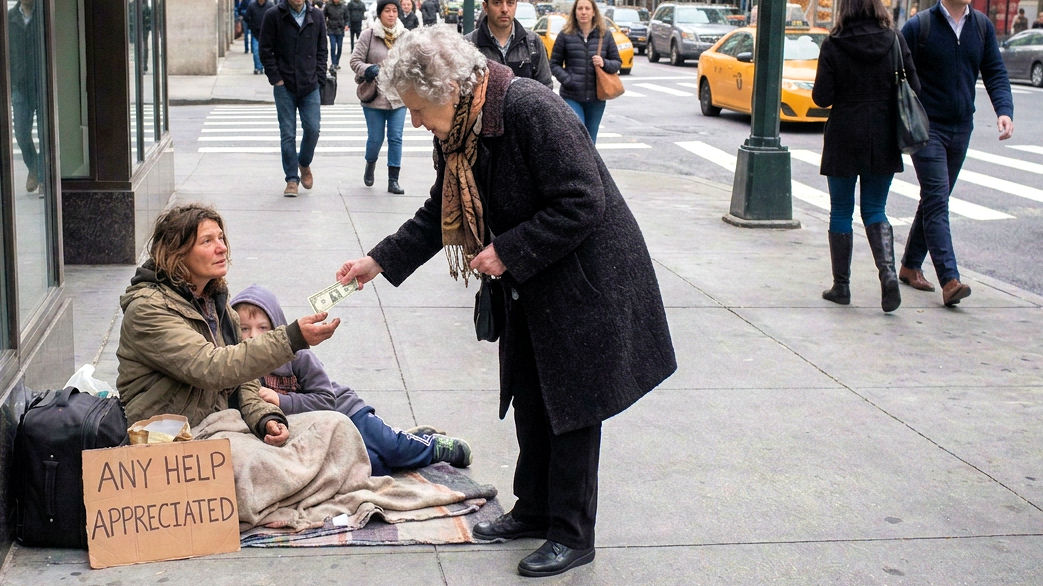
I was born a charming man-child,
mama adored me—I made her smile.
She defended, she sheltered me,
I was innocent and living free.
Yeah, those were the days of our lives.
Every day is a winding road,
every day is a fading dream.
I don’t know where I’m going,
but I know where I’ve been.
Everyday the fire within dims,
you get a little closer to the end.
When I grew up and I became a man,
I found a lady to hold my hand.
She said she loved me,
she wanted a home,
A place for a family, no more to roam.
Our new lives were just beginning.
Every day is a winding road,
every day is a fading dream.
I don’t know where we’re going,
I don’t know how to pretend.
Everyday the fire within dims,
you get a little closer to the end.
Now I see, as the world goes round;
broken people lying on the ground,
no bed to sleep in, no place to stay,
just watching the light fade away.
Those are the days of our lives.
Every day is a winding road,
every day is a fading dream.
I don’t know, what I’m doing,
but I know, where I’ve been.
Everyday the fire within dims,
You get a little closer to the end.
The Bend on the Road to Homelessness
I was born a charming man-child,
mama adored me—I made her smile.
She defended, she sheltered me,
I was innocent and living free.
Yeah, those were the days of our lives.
Every day turns on a bend,
every day is a faded dream.
I don’t know where I’m going,
but I know, where I’ve been.
Everyday the fire within dims,
you get a little closer to the end.
When I grew up and tried to be a man,
I found a lady to hold my hand.
She said she loved me,
she wanted a home,
a place for a family, no more to roam—
our new lives were just beginning.
Every day turns on a bend,
every day is a faded dream.
I don’t know, where we’re going,
I don’t know, how to pretend.
Everyday the fire within dims,
you get a little closer to the end.
Now I see, as the world goes round;
broken people lying on the ground,
no bed to sleep in, no place to stay,
just watching the light fade away.
Those are the days of our lives.
Every day turns on a bend,
every day is a faded dream.
I don’t know what I’m doing,
but I know where I’ve been.
Everyday the fire within dims,
you get a little closer to the end.
By: ElRoyPoet © 2026
I Work More Than 40 Hours A Week And I’m Homeless
Commentary: There’s a universal belief that success and self-worth are nearly identical and if you’re rich you must be either be smart or hardworking. But if you’re poor you must’ve messed up somewhere along the way. People like to believe that they’ve gotten to where they are, because they’re talented or have earned it. That could be true to some extent, but it’s also a fact, that there are people who could have been equally smart or talented and not in their position, because of the barriers that were erected to impede them. It’s hard to sit with the idea, that maybe somebody else deserves to be where they are, more than they do. I think almost everybody, wants to be able to tell a story of making it on their own. However, does that give them the right to hate the less fortunate?
5 lessons from the coronavirus about inequality in America
“Since it’s often impossible to get a reasonable sense of what will happen in the future, it’s unfair to blame people with good intentions who end up worse off as a result of unforeseen circumstances. This leads to the conclusion that compassion, not blame, is the appropriate attitude towards those who act in good faith but whose bets in life don’t pay off […] Despair thrives where empathy is missing; right now, our lack of compassion for one another is killing us […] No matter how smart we think we are, there’s a hard limit on what we can know, and we could easily end up on the losing end of a big bet. We owe it to ourselves, and others, to build a more compassionate world.” Excerpt from The mathematical case against blaming people for their misfortune
Renters In America Are Running Out Of Options

America’s Last Affordable Housing Is Under Threat
A Comprehensive Poem Analysis:
The poem presents a tragic movement from childhood promise to adult homelessness. Through its speaker’s changing relationships, repeated chorus, and imagery of fading energy, it suggests that people do not necessarily begin life without hope or potential. Instead, they may lose their direction through emotional wounds, social pressures, economic hardship, or circumstances beyond their control. The poem is therefore not simply about one person’s decline; it is also an argument against judging homeless people as if their present situation reveals their entire character. Beneath every homeless person may be a former child who was loved, protected, and full of possibility.
The opening stanza establishes the speaker’s childhood as a time of affection and security: “I was born a charming man-child, / mama adored me, I made her smile.” The word “charming” presents the speaker as naturally appealing and socially connected, while the references to his mother’s love create an image of emotional protection. His mother “defended and sheltered” him, suggesting that he once experienced the safety that psychologists associate with a secure attachment. Secure attachment can help children develop trust, confidence, and the belief that other people will support them. In the poem, this early protection gives the speaker an initial sense of innocence: “I was innocent and living free.”
However, the phrase “those were the days of our lives” introduces nostalgia and distance. The speaker is looking back on a period that has ended. The past is not merely remembered; it becomes a contrast to his later loss. His childhood promise is clear, but the poem also hints that childhood security cannot guarantee adult stability. A young person may begin with love and talent yet still encounter forces that gradually weaken their confidence, relationships, and opportunities. Psychological development is shaped not only by personality but also by family conditions, education, employment, mental health, social support, and access to housing.
The first chorus introduces the poem’s central metaphor: “Every day is a winding road, / every day is a fading dream.” The “winding road” suggests uncertainty and a lack of control. The speaker does not know where he is going, even though he knows where he has been. This contrast between memory and direction reflects the difficulty of forming a stable identity during the transition from childhood to adulthood. Young people are often expected to make important decisions about work, relationships, and family before they have the emotional or material resources to do so. The line “I don’t know where I’m going” communicates confusion rather than deliberate failure.
The image of “the fire within” is especially important. Fire traditionally represents ambition, hope, energy, or a sense of purpose. When that fire “dims,” the speaker’s psychological strength is slowly being exhausted. The word “dims” suggests a gradual process rather than one sudden disaster. His decline may result from repeated disappointments, rejection, grief, poverty, conflict, mental illness, addiction, or the loss of meaningful relationships. The poem does not identify one cause, which makes the speaker representative of many different life stories. Homelessness is often caused by several pressures operating together, including unaffordable housing, economic insecurity, violence, weak social support, behavioral-health difficulties, and involvement with the child-welfare system.
The second stanza marks the speaker’s entrance into adulthood. He “became a man” and found “a lady to hold my hand.” The physical image of holding hands represents intimacy, companionship, and mutual support. He and his partner imagine a future together: “She said she loved me, / she wanted a home.” At this stage, the speaker still appears to possess the ordinary hopes associated with adulthood. He wants love, responsibility, and a home. The phrase “our new lives were just beginning” emphasizes possibility. The future seems open, and the couple appear to be moving toward belonging and stability.
Yet the poem’s verse of “innocent and living free” also creates tension. The speaker may be willing to build a life, but willingness alone cannot overcome every obstacle. This is one of the poem’s most important psychological and social insights: personal motivation matters, but it is limited by circumstances. A person can want to work, maintain a relationship, or raise a family and still be defeated by unemployment, illness, domestic abuse, rising housing costs, discrimination, or the breakdown of social networks. Young people who experience homelessness are not all irresponsible or unwilling to change. Some lose housing because the systems around them fail to provide sufficient protection.
The second chorus is darker than the first. The speaker now says, “I don’t know, where we’re going, / and I don’t know, how to pretend.” The shift from “I” to “we” suggests that his uncertainty affects both himself and his partner. The phrase “how to pretend” may imply that he can no longer perform the expected role of the confident adult who has everything under control. Social expectations can intensify psychological distress because people are often taught to measure adulthood through employment, marriage, parenthood, and home ownership. When someone cannot meet those expectations, they may experience shame and feel that they have failed as a person.
This loss of control can also be understood through the idea of learned helplessness. When individuals face repeated situations in which their efforts do not improve their lives, they may begin to believe that action is pointless. This does not mean they are weak or naturally unmotivated. Rather, constant failure, rejection, trauma, and instability can damage a person’s sense of agency. The poem’s repeated uncertainty—“I don’t know where we’re going”—suggests this erosion of control. The speaker’s “fire” does not disappear because he never had ambition; it fades because hope becomes difficult to sustain.
The final narrative stanza creates the poem’s greatest emotional shock. The speaker looks at “broken people lying on the ground” who have “no bed to sleep in, no place to stay,” The concrete detail of the bed makes homelessness physically and emotionally visible. A bed symbolizes rest, privacy, safety, and human dignity. Without one, the individual is denied not only comfort but also the ordinary conditions needed to recover psychologically. Homelessness can expose people to chronic stress, danger, stigma, poor health, and social isolation. Among homeless young adults, adverse childhood experiences are associated with later psychosocial difficulties, including depressed mood and behavioral problems.
The wording “Now I see, as the world goes round;” indicates a change in the speaker’s awareness. He may be seeing homeless people from the outside, but the poem encourages readers to recognize their shared humanity. The homeless are not presented as a separate category of people who were always destined to live on the streets. Instead, they are connected to the speaker’s own life story. The return of the phrase “those are the days of our lives” is therefore deeply ironic. Earlier, it referred to happy family memories; now it refers to people without shelter. The repeated line suggests that homelessness is part of the same human world, not an experience belonging only to strangers or outsiders.
The poem’s use of repetition reinforces this cycle of hope and decline. Each chorus is almost the same, but small changes reveal the speaker’s worsening condition. First, he does not know where he is going; later, he does not know where “we’re” going; finally, he does not know “what I’m doing.” The movement is from uncertainty about the future to confusion about the present self. At the same time, the line “I know where I’ve been” remains. Memory survives even when direction is lost. The speaker still remembers being loved, forming a relationship, and expecting a future. This memory gives the poem its moral force: the homeless person’s identity includes a past, a personality, and unrealized hopes.
The poem can also be interpreted through self-determination theory, which argues that people need autonomy, competence, and relatedness in order to develop motivation and well-being. The speaker begins with relatedness through his mother’s love and later seeks it through romantic partnership. But as his life becomes more uncertain, these sources of connection appear to weaken. His diminishing “fire” may represent the loss of competence—the feeling that he can manage life successfully—and autonomy—the sense that he can influence his own future. Research on homelessness similarly emphasizes the importance of choice, mastery, and relationships in supporting well-being and recovery. The poem’s sadness comes partly from recognizing how poverty and exclusion can take away these basic psychological needs.
Ultimately, the poem argues that homelessness should be understood as a human and social tragedy rather than a simple personal failure. Its speaker begins as a loved child, becomes a hopeful adult, and then confronts a world in which dreams gradually fade. Some people may contribute to their own difficulties, but the poem also makes room for those who are harmed by conditions outside their control. Family breakdown, trauma, economic insecurity, mental illness, addiction, discrimination, and the absence of affordable housing can all alter a person’s path. These forces do not erase personal responsibility, but they complicate the belief that everyone has equal power to choose their future.
The final image of the fading fire is therefore both tragic and compassionate. It suggests that homeless people may appear defeated because their opportunities, relationships, and sense of control have been steadily taken away from them. The poem asks readers to look beyond the condition of homelessness and remember the promise that may have existed at the beginning of each life. Its central message is that a person’s current circumstances should never be mistaken for the full story of who they are.
20 Bible Verses about the Poor
Disclosure:
This post was developed through human-AI collaboration, combining original editorial perspectives with scholarly research. The editor maintains academic integrity and assumes full intellectual responsibility for the theme and its conclusion. All links are property of their respective authors. FOR EDUCATIONAL AND INFORMATIONAL PURPOSES ONLY. NOT LEGAL OR MEDICAL ADVICE.

