
A part of me died—
When my son’s time expired.
And now that barren ground
is sprouting: weeds of cynicism.
Where there was once hope,
peace flowers and laughter,
Now there’s fear and remorse!
I grieved when democracy died.
They carried my freeman—
away in a box.
By: ElRoyPoet © 2021
Congressman Jamie Raskin recounts Capitol invasion, which happened the day after he buried his son
Rep. Jamie Raskin Ties Lincoln’s Mob Rule Warning to Jan 6 Riot
The assertion that Donald Trump “betrayed” the democratic government of Afghanistan through his deal with the Taliban largely stems from the implications of the U.S.-Taliban agreement for Afghanistan’s political future and the stability of its democratic government. Here are some key points regarding this perspective:
- U.S.-Taliban Agreement: In February 2020, the Trump administration signed an agreement with the Taliban that outlined a timeline for the withdrawal of U.S. troops from Afghanistan. The deal included commitments from the Taliban to reduce violence and engage in negotiations with the Afghan government.
- Exclusion of the Afghan Government: One of the primary criticisms of the agreement was that the Afghan government was not a signatory to the deal. Many viewed this as sidelining the legitimate, democratically elected government of Afghanistan, which had been established after the U.S. military intervention in 2001. This exclusion raised concerns about the legitimacy and stability of that government.
- Erosion of Confidence: The agreement illustrated a significant shift in U.S. policy toward a withdrawal from Afghanistan, which many Afghan officials and citizens feared could embolden the Taliban. The perception that the U.S. was turning its back on its Afghan allies led to increased anxiety about the future of democratic governance in the country.
- Implications for Afghan Democracy: Critics argued that the deal with the Taliban represented a betrayal of the democratic ideals that the U.S. had promoted in Afghanistan over the previous two decades. As the deadline for U.S. troop withdrawal approached, the Taliban’s resurgence raised fears about the potential collapse of democratic institutions and the possibility of a return to a Taliban-dominated regime.
- Impact on Negotiations: The deal affected the dynamics of peace negotiations between the Taliban and the Afghan government. Many believed that the agreement gave the Taliban leverage and weakened the Afghan government’s negotiating position, potentially undermining its authority and effectiveness.
Overall, the argument that Trump betrayed the democratic government of Afghanistan centers around the implications of the U.S.-Taliban deal for Afghan democracy, the sidelining of the Afghan government, and the resulting erosion of confidence in U.S. support for its Afghan allies.
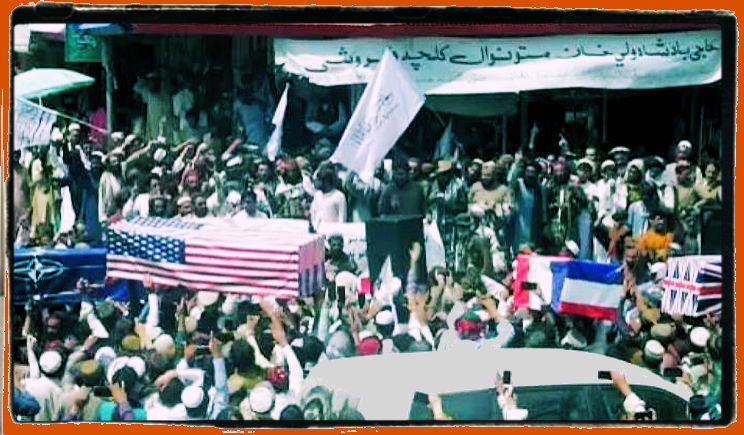
Commentary: This is how the 75,000 Taliban domestic terrorists overthrew Afghanistan’s democracy in 2021, when the US signaled its withdrawal after 20 years of occupation. The 300,000-strong Afghan national armed forces, which the US had fully trained and equipped, became demoralized. This caused their collective state of mind to become deprived of spirit, courage, and coherence, leaving them disheartened, bewildered, and confused. As the citizens’ morale rapidly eroded, the Taliban seized this opportunity to exploit their vulnerability. They marched on Kabul, the capital, and given the existing panic, the mere presence of the Taliban was enough for the government to retreat and surrender.
2020–2021 U.S. troop withdrawal from Afghanistan
The moral of the story is this: if you allow the enemies of democracy to maintain a strong presence, even in the form of a “shadow government” conducting psychological warfare that intimidates the citizens, even a mob of radicalized men can take away your freedom. How could a militant group defeat military soldiers four times greater unless the standing army was fighting the battle on two fronts—one physical and one emotional? This scenario can transpire in any democracy, including our own, if government traitors and cowards are allowed to get away with it.
When a country reaches a point of frustration, with congress refusing to compromise and everyone digging in their heels, unwilling to surrender the ideologies of their polarized parties and cultural groups, it becomes easier for society to become cynical about its democratic institutions and the civil rights they guarantee. Physical and emotional fatigue can make cowards of us all. When patriots believe they cannot win, they may succumb to the temptation of forfeiting their liberal democracy and allowing a tyrant to govern. In the Bible, the Jews had the choice to govern themselves with judges, but they consistently chose to relinquish their freedom to a king. This brought temporary peace of mind, but eventually, the honeymoon is over and the domestic abuse begins.
‘Straight up fascism’: Joy Reid on potential fallout from SCOTUS Trump immunity decision
When a power vacuum occurs in a nation’s government, usually the worst, most dangerous, and vile regime takes over. That’s why, in the event of a collapse in a liberal democracy, an authoritarian regime would most likely replace it. This is also a ploy reminiscent of tactics used by despots like Hitler to manipulate patriots into accepting a fascist police state. Hitler fabricated emergency situations to deceive citizens into believing that their government had collapsed, in order to consolidate power. So, beware of the populist political agitator who claims that the government is corrupt or that the swamp needs to be drained—he is an insurrectionist waiting in the wings.
“Those who can make you believe absurdities, can make you commit atrocities!” By: Voltaire
“When members of one major political party turn inward and reject discussing a diversity of ideas, radicalization happens, and the capacity to work with and create policy to benefit as many people as possible diminishes significantly.” Excerpt from Democrats’ isolation puts democracy in danger
“I am a democrat [proponent of democracy] because I believe in the Fall of Man. I think most people are democrats for the opposite reason. A great deal of democratic enthusiasm descends from the ideas of people like Rousseau, who believed in democracy because they thought mankind so wise and good that every one deserved a share in the government.
The danger of defending democracy on those grounds is that they’re not true. . . . I find that they’re not true without looking further than myself. I don’t deserve a share in governing a hen-roost. Much less a nation. . . .
The real reason for democracy is just the reverse. Mankind is so fallen that no man can be trusted with unchecked power over his fellows. Aristotle said that some people were only fit to be slaves. I do not contradict him. But I reject slavery because I see no men fit to be masters.”
Quote by: C.S. Lewis, “Equality,” in Present Concerns (reprint: Mariner Books, 2002), p. 17.
 elroypoet.blog