
I know how you feel.
There are signs
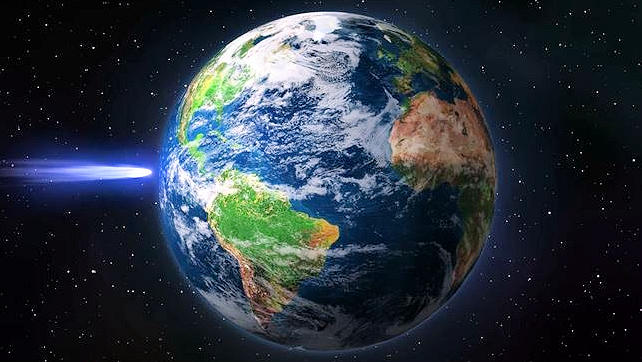
of global warming
and rumors of rockets,
falling from the sky.
Will I live free?
Will my children overcome
the next catastrophe?
Every day you wonder
who’ll be the next casualty.
We dodged a bullet
in the last emergency.
Will the Earth be able
to survive a meteorite
if one comes our way?
But what good does it do
to live in fear and cynicism,
if the sun rises
and the sun sets
at the end of the day?
Is it not better
to have faith and optimism
and move toward enlightenment,
than to wait in the shadows,
for the devil to take it away?
By: ElRoyPoet © 2023
Commentary:
All over the world, wherever there’s conflict, it’s not about whether the right is righteous or the left is wrong. It’s not about whether some people are better and others are worse. If we are all the same, if we are all empty vessels, don’t we all have the same capacity to love and to care?
“What causes fights and quarrels among you? Don’t they come from your desires that battle within you?” —Bible, James 4:1
So what ruins us as a society? It can’t be culture, because our shared customs, values, and goals are good; aren’t they supposed to make us righteous? Why do we blame culture for our shortcomings? What gets in the way?
“For we wrestle not against flesh and blood, but against principalities, against powers, against the rulers of the darkness of this world, against spiritual wickedness in high places.” —Ephesians 6:12
If it’s fear, or the rage associated with it, that causes us to stumble and abandon our manners as we sink our community, how can we rise above it?
“If any of you lacks wisdom, you should ask God, who gives generously to all without finding fault, and it will be given to you.” —James 1:5
All over the world, wherever there’s disagreement between two or more, Jesus is the Peacemaker. This is the universal truth, but it’s not a temporary solution, because if we don’t submit ourselves to Him daily, strife is at the door.
“Submit yourselves, then, to God. Resist the devil, and he will flee from you.” —James 4:7
But don’t hope that empty vessels won’t be influenced or manipulated, because they can. And don’t imagine that without faith in God, we have the capacity for peace and forgiveness, because we can’t. Sadly, if we persist in denial, the night will come—when it’s too late—because the enemy is already within the gate.
In Satan’s temptation of Eve in Genesis 3 and in his temptation of Jesus in Matthew 4, we see the tactics he used and still uses with us. While varied in their details, most temptations fall into one of three categories as listed in 1 John 2:16: the lust of the flesh, the lust of the eyes, and the pride of life. Excerpts from How does Satan tempt us?
“Give your entire attention to what God is doing right now, and don’t get worked up about what may or may not happen tomorrow. God will help you deal with whatever hard things come up when the time comes.” Matthew 6:34
“If my people, who are called by my name, will humble themselves and pray and seek my face and turn from their wicked ways, then I will hear from heaven, and I will forgive their sin and will heal their land.” 2 Chronicles 7:14
So, You Just Became a Christian?
Satan’s story to Eve in Genesis 3 and to Jesus in Matthew 4 was that they could live independently of God, that is, they could be their own god, set their own standards, let circumstances dictate their decision. But it is a lie.
Either God controls your life by your choosing to let him, or Satan controls your life by your choosing to let him and by your choosing to just go with flow. You and I were designed by God to be ruled by a spirit . Our choice is not whether to be ruled, but rather by which spirit we will be ruled.
So, the Christian’s life is based on decisions, the process of making deliberate right choices without being swayed by Satan’s input into our appetites or emotions.
Poem Analysis: The Emotional Impact of Crisis and Hope in Contemporary Society
The poem begins with a relatable expression, “I know how you feel,” immediately establishing a connection between the speaker and the reader. This opening resonates deeply in today’s context, as global socio-political issues and environmental crises create a backdrop of anxiety and uncertainty. The poem’s exploration of themes such as fear, hope, and the human condition reveals profound psychological implications that impact society’s collective consciousness.
The opening stanzas introduce the idea of global warming and apocalyptic imagery, referencing “rumors of rockets, falling from the sky.” This evokes feelings of existential dread rooted in the fear of catastrophe. Psychological research indicates that chronic exposure to distressing news can lead to a condition known as “eco-anxiety”—a concept popularized by psychologists who note that individuals, particularly the younger generation, experience anxiety about environmental degradation and the future of the planet (Ojala, 2020). The speaker’s questions about personal freedom and the survival of future generations reflect a widespread concern that motivates a heightened sense of anxiety in society. The use of rhetorical questions (“Will I live free? Will my children overcome?”) emphasizes the intensity of these worries, mirroring the internal dialogues that many people face in their daily lives.
As the poem progresses, the speaker reflects on humanity’s narrow escapes from past disasters, encapsulated in the line “We dodged a bullet in the last emergency.” This phrase introduces elements of both relief and fragility; while there is an acknowledgment of survival, it is tinged with the understanding that threats are still omnipresent. This duality taps into psychological concepts of resilience and vulnerability. Resilience theory posits that individuals develop coping mechanisms in response to adversity, yet the continuous presence of potential threats can render these coping methods inadequate, leading to an ever-present tension between hope and despair (Masten, 2014).
The poem poignantly asks, “Will the Earth be able to survive a meteorite if one comes our way?” This line symbolizes not only the vulnerability of the planet but also humanity’s uncertainty about the future. Such contemplation can lead to a phenomenon called “future shock,” where the rapid pace of change and the potential for catastrophic events leave individuals feeling paralyzed (Toffler, 1970). In this way, the poem becomes not just a reflection of individual fear, but also a collective sentiment experienced by society as a whole.
However, the poem takes a turn in its later stanzas, urging the reader to consider the futility of living “in fear and cynicism.” This critical pivot underscores a vital psychological insight: while fear can be a powerful motivator for change, excessive fear can stifle creativity and undermine mental well-being. Research shows that fostering hope and optimism can significantly improve one’s psychological health, promoting resilience and enabling individuals to confront challenges more effectively (Seligman, 2006). The lines “if the sun rises and sets at the end of the day” serve as a reminder of the cyclical nature of life and the importance of finding beauty and stability amidst chaos.
The concluding stanzas invite the reader to choose enlightenment over despair. This call to action hinges on psychological concepts of agency and empowerment. By opting for “faith and optimism,” the speaker emphasizes the role of positive psychology in overcoming adversity. Cultivating a mindset focused on constructive thinking and the possibility of change can lead to proactive behaviors, inspiring individuals and communities to act for a better future rather than succumb to inactivity out of fear.
In conclusion, the poem serves as a microcosm of contemporary societal emotions—encapsulating the anxieties stemming from ecological and existential threats while simultaneously advocating for hope and agency. The interplay of fear, resilience, and optimism reveals the complex emotional landscape that defines modern existence. As we navigate an uncertain world, the poem’s powerful message reminds us of the importance of maintaining faith and optimism, allowing us to confront the shadows rather than succumbing to them.
References:
Masten, A. S. (2014). Ordinary Magic: Resilience Processes in Development. American Psychologist, 59(3), 227-238.
Ojala, M. (2020). Eco-Anxiety: A Psychological Response to Climate Change. Environmental Psychology: An Introduction.
Seligman, M. E. P. (2006). Learned Optimism: How to Change Your Mind and Your Life. New York: Vintage Books.
 elroypoet.blog