

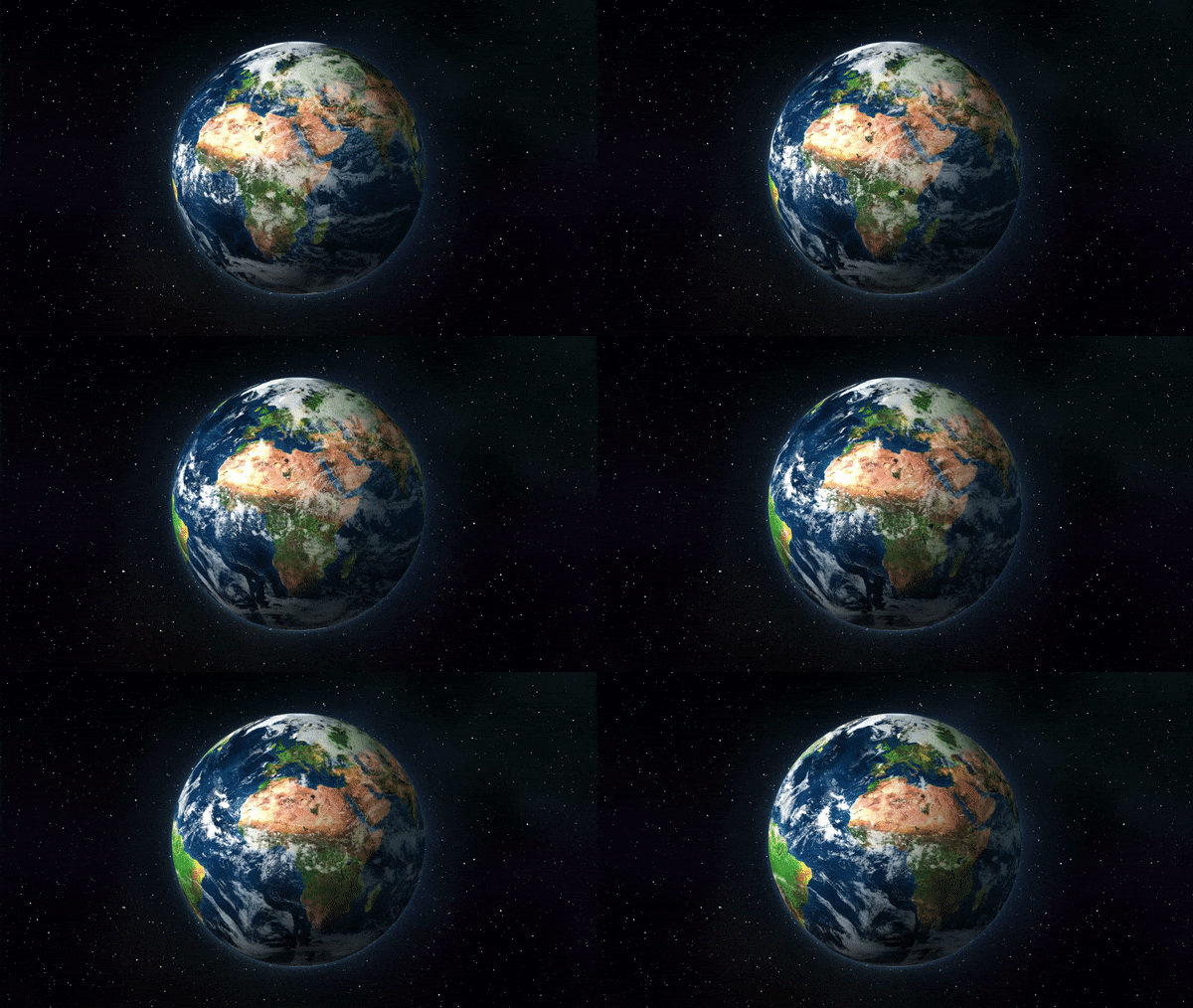
When I observe the Earth, the sun, the moon, the stars;
I recognize the cosmos and a harmony that is ours.
On the stage of night, comets dance and gleam,
each twinkling light beams hope; each orbit, a new theme.
When I look at the human body, a marvel to behold—
organs moving in concert, an incredible journey to unfold.
The heartbeat like a drum, the lungs in rhythmic flow,
a symphony for the living that pulses high and low.
When the wind blows and the rain cascades upon the soil,
I see vibrant colors, and fragrant flowers requiring no toil.
When I feel the cool caress of water droplets on my skin,
I catch a glimpse of beauty and how all of life begins.
In my logical mind, where reason reigns and schools,
I contemplate the grand order of the universal rules.
From every mountaintop and valley, to every ocean’s tide,
there’s evidence of creation embedded deep inside.
As I ponder nature’s grace, I reflect on the purpose of my ways.
In light, in shadows, and in silence, I find my soul’s ballet.
With awe, I recognize the Hand that formed my heart,
and the attributes of my Creator, of which I must impart.
SPANISH TRANSLATION:
Cuando observo la Tierra, el sol, la luna y las estrellas,
reconozco el cosmos y la armonía que nos pertenece.
En el escenario de la noche, los cometas bailan y brillan;
cada luz titilante irradia esperanza; cada órbita, un nuevo tema.
Cuando miro el cuerpo humano, una maravilla por contemplar—
órganos moviéndose en concierto, un increíble viaje para comenzar.
El latido como un tambor, los pulmones en flujo rítmico,
una sinfonía para los vivos que pulsa alto y bajo.
Cuando el viento sopla y la lluvia cae sobre la tierra,
veo colores vibrantes, y flores fragantes que no requieren esfuerzo.
Cuando siento la fresca caricia de las gotas de agua en mi piel,
vislumbro la belleza y cómo empieza la vida.
En mi mente lógica, donde reina la razón y las escuelas,
contemplo el gran orden del universo que nos gobierna.
Desde cada cima montañosa y valle hasta cada marea del océano,
hay evidencia de la creación incrustada profundamente dentro.
Mientras reflexiono sobre la gracia de la naturaleza, pienso en el propósito de mis caminos.
En la luz, en las sombras y en el silencio, encuentro el ballet de mi alma.
Con asombro, reconozco la mano que formó mi corazón
y los atributos de mi Creador, de los cuales puedo dar testimonio.
Por: ElRoyPoet, 2024
The Kalam Cosmological Argument – Part 1: Scientific
The Kalam Cosmological Argument – Part 2: Philosophical
Does God Exist?
When I read the Bible, it testifies that only Jesus can save a fallen man like me. Even though I do not fully understand the Gospel, my belief is based on my faith that the Bible is the inspired, inerrant, and infallible Word of God.
So the only variable in my testimony is the degree to which I acknowledge that I have sinned and need atonement. However, this is flawed logic because humans are incapable of quantifying how good or depraved they are.
Either the Bible is true, or it is not. I need to be saved, or I do not. It is not possible to be saved a little or too much, because any amount of sin on my part necessitates intervention by A Savior. At the end of the day, the only question I need to answer is whether I am a sinner or if I am still living in denial.
What is the purpose of man?
What’s the reason for being born on this earth? Christians believe that they were in Heaven before they were born and that they will return upon death. Did we come from the spiritual to the physical just to return to the spiritual? All believers know that for the spirit to live, the flesh must die! Wouldn’t it have been much easier to have stayed in Heaven with our Creator and Savior than to live in jeopardy of losing our souls in this wicked world?
Do you believe that we came to this earth to be tested? Do overcoming daily temptations and doing good deeds prove that we are faithful and worthy to return? “What does it profit, my brothers, if someone says he has faith but does not have works? Can faith save him?” (James 2:14). Is all that is needed to profess that we accept the Atonement of Jesus Christ to live in Heaven forever? “For God so loved the world that He gave His Only Begotten Son, that whoever believes in Him should not perish but have everlasting life” (John 3:16). “For it is by grace you have been saved, through faith—and this is not from yourselves; it is the gift of God—not by works, so that no one can boast. For we are God’s handiwork, created in Christ Jesus to do good works, which God prepared in advance for us to do” (Ephesians 2:8-10).
Do you have somebody to love? Are you trying to be lovable? I know this can be difficult, especially for young adults who still haven’t found someone, or for mature adults who never became parents. But there is still time! “For this is the message that you heard from the beginning, that we should love one another” (1 John 3:11).
I believe we were born on this earth to receive a human body. Inside the body is a human heart that has the capacity to love. “The Only Begotten Son, Who is in the bosom of the Father, He has declared Him” (1 John 4:9). I believe that the true test of our earthly existence is whether we will choose to love. I also believe that the reason Jesus came to earth to become our Savior is to show us how to love, for when we love somebody, we give of our physical selves.
Spiritual beings are incapable of expressing affection for someone because they are unable to give of themselves. That is the point of why we had to be born of earthly parents—to receive a human heart—and now all we must do is find somebody to love. “I will give you a new heart and put a new spirit within you; I will take the heart of stone out of your flesh and give you a heart of flesh. I will put My Spirit within you and cause you to walk in My statutes, and you will keep My judgments and do them” (Ezekiel 36:26-27).
“For just as rain and snow fall from heaven and do not return without watering the earth, making it bud and sprout, and providing seed to sow and food to eat, so My Word that proceeds from My Mouth will not return to Me void, but it will accomplish what I please, and it will prosper where I send it.” (Isaiah 55:10-11)
A Reflection on the Divine in Nature: Poem Analysis
The poem presented before us serves as a powerful meditation on the profound connection between the natural world and spiritual belief. Through vivid imagery and thoughtful observation, the author invites us to marvel at creation, encouraging readers to engage with the world around them in a way that uncovers deeper truths. As we examine this poem, it becomes evident that it reflects a sacred understanding grounded in biblical principles, illustrating the beauty of creation and communion with the Creator.
The poem opens with a celestial panorama: “When I observe the Earth, the sun, the moon, the stars; I recognize the cosmos and a harmony that is ours.” Here, the poet sets the stage for exploring the magnificence of the universe, hinting at the divine consciousness behind its creation. This idea resonates with Genesis 1:1, “In the beginning, God created the heavens and the earth.” The stars glimmering in the vastness of space are not mere celestial bodies; they are reminders of a purposeful design—an invitation to recognize both beauty and hope, just as a Psalmist proclaims, “The heavens declare the glory of God; the skies proclaim the work of his hands” (Psalm 19:1).
The exploration of the human body mentioned in the poem emphasizes the intricate wonder of life itself. “organs moving in concert, an incredible journey to unfold.” reflects the sentiment that our existence is not random but choreographed by an Intelligent Force. This mirrors Psalm 139:14, which states, “I praise you because I am fearfully and wonderfully made; your works are wonderful, I know that full well.” The poet articulates this symphony of living through rhythmic patterns—a heartbeat, the flow of breath—evoking a sense of divine craftsmanship woven into every fiber of our being.
In the next stanza, the poet captures the essence of nature’s beauty: the wind, the rain and the colorful and fragrant flowers, each element showcasing the interconnection of life. By saying, “I catch a glimpse of beauty and how all of life begins.” the poem reflects on the Genesis narrative of creation, where, after each day, God proclaimed that creation was “good” (Genesis 1:31). The act of observing nature becomes an avenue for spiritual insight—a recognition of God’s artistry and provision in our lives.
The contemplative nature of the poem leads us to a moment of reverence and reasoning: “In my logical mind, where reason reigns and schools,
I contemplate the grand order of the universal rules.” It suggests that faith and logic need not stand in opposition; rather, they can coexist harmoniously. The order of the universe—expressed through cycles, such as the tides and seasons—echoes Proverbs 3:19, “The Lord by wisdom founded the earth; by understanding, he established the heavens.” This harmony in creation fortifies the believer’s faith, demonstrating that reason can lead to a deeper appreciation of divine involvement.
The culmination of this reflection invites us into a personal encounter with the divine, as the poet writes, “With awe, I recognize the Hand that formed my heart,” The underlying message is about the pursuit of a relationship with God, experienced through nature and daily life. A true understanding of the world around us fosters a sense of gratitude for all that is, emphasizing that life itself is a testament to God’s presence. When we acknowledge God’s grace, we echo the sentiment of Isaiah 40:26: “Lift up your eyes and look to the heavens: Who created all these? He who brings out the starry host one by one.”
In conclusion, this poem serves not just as a celebration of nature but as a profound declaration of faith. It invites us to observe creation not merely with our eyes but with our hearts—recognizing the divine fingerprint in every aspect of the world around us. Within its verses, we are reminded of our purpose, our connection to each other, and our place in the vast symphony of existence, where the Creator’s love envelops us all. This harmonious relationship between nature and spirituality, firmly rooted in biblical truths, illustrates how we can find meaning, hope, and inspiration amid the rhythms of life. Indeed, as the poem beautifully encapsulates: “and the attributes of my Creator, of which I can impart.”, urging us to dance to the symphony of creation.
 elroypoet.blog