

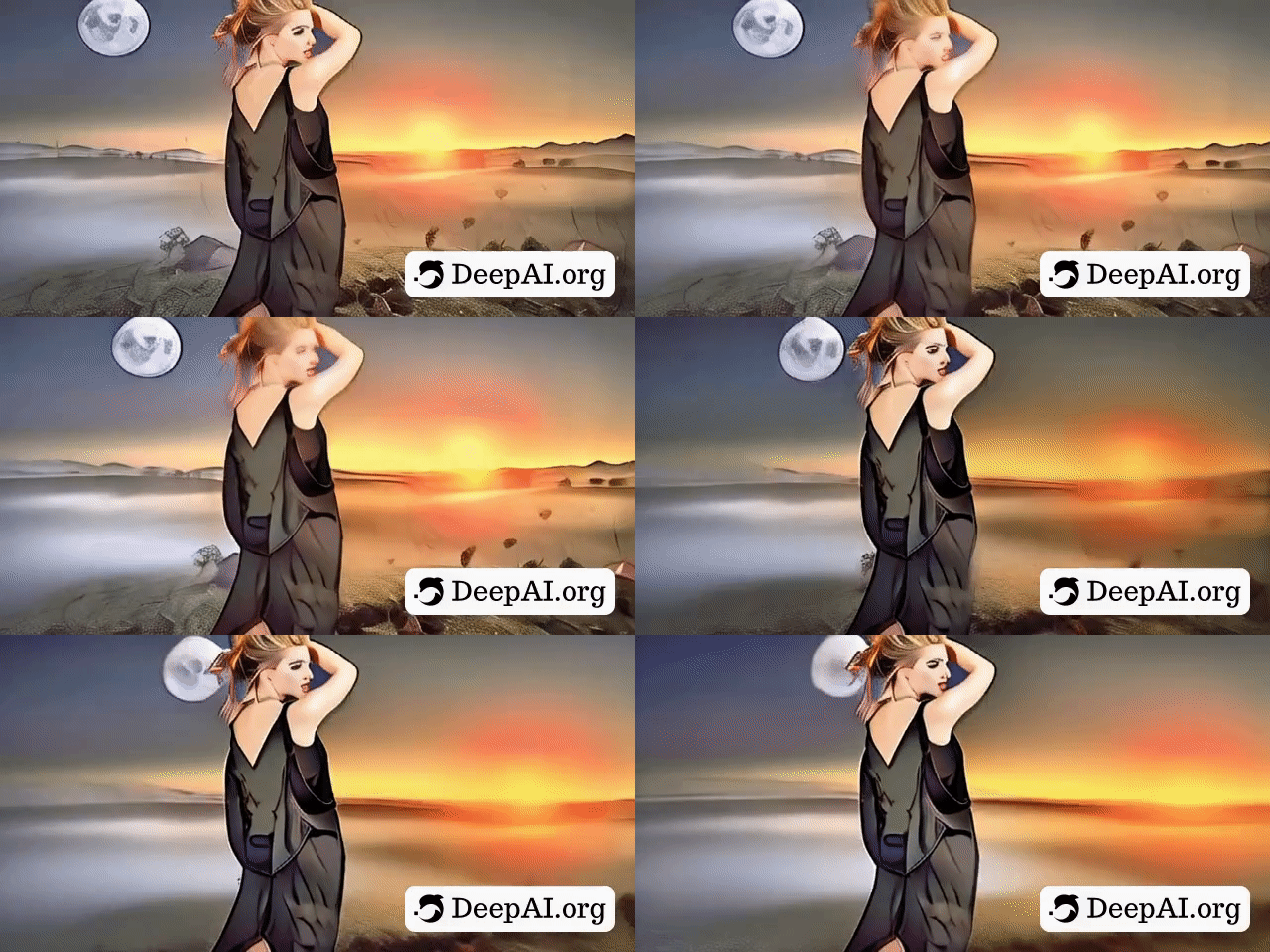
You are the sun and you are the moon,
And I am the poet who adores you;
For you I write my verses.
Sometimes the sun shines on me,
Other times the moonbeams do.
But between the sunset and the moon,
I’m separated from your warmth,
And the reflection of your rays.
So between the moon and the sunrise,
I recite poetry,
While I await, for your glow to arrive.
Spanish Translation
Eres sol y eres luna,
Y yo, el poeta que te adora;
Para ti escribo mis versos.
A veces el sol me ilumina,
Otras veces el espejo de la luna.
Pero entre el ocaso y la luna,
Me separo de tu calor
Y del reflejo de tus rayos.
Así que entre la luna y el alba,
Recito poesía,
Mientras espero que tu resplandor llegue.
Por: ElRoyPoet © 2019
6 Differences Between Healthy and Unhealthy Love
This short, evocative poem utilizes celestial metaphors to explore the complex dynamic of adoration and longing within a relationship. The speaker, identifying themselves as a poet, constructs a world where their beloved is both the life-giving sun and the enchanting moon, sources of both direct and reflected light, symbolizing the different forms of connection and influence they exert. Through the contrasting imagery of sunlight and moonlight, and the spaces between them, the poem reveals the cyclical nature of presence and absence, fulfillment and yearning that characterizes the speaker’s devotion.
The opening couplet establishes the core metaphor: “You are the sun and you are the moon, / And I am the poet who adores you.” This declarative statement immediately positions the beloved as a source of immense power and beauty, mirroring the essential roles the sun and moon play in the natural world. The sun, with its direct and potent energy, likely represents times of intense connection, passion, and direct influence from the beloved. Conversely, the moon, with its gentle, reflected light, suggests a more subtle, perhaps less frequent, form of connection, possibly alluding to times when the beloved’s influence is felt indirectly, or through memory and reflection. The speaker’s self-identification as a poet firmly anchors their role as the adoring observer, the one who translates the impact of this celestial being into art. The line “For you I write my verses” reinforces the idea that the beloved is the sole inspiration and driving force behind the speaker’s creative output.
The following two lines, “Sometimes the sun shines on me, / Other times the moonbeams do,” delve into the fluctuating nature of this relationship. This acknowledges that the beloved’s attention and presence are not constant. The speaker experiences periods of intense warmth and direct connection (“sun shines on me”), interspersed with moments of softer, perhaps more distant, connection (“moonbeams do”). This suggests that the relationship is not always one of equal intensity, but rather ebbs and flows like the tides, guided by the celestial rhythms.
The heart of the poem lies in the lines that explore the periods of separation: “But between the sunset and the moon, / I’m separated from your warmth, / And the reflection of your rays.” This “between” space represents a time of palpable absence. The transition from the sun’s fiery descent to the moon’s cool ascent signifies a void, a moment when the beloved’s direct and indirect influence is absent. The speaker feels the loss keenly, experiencing a separation not only from the “warmth” – likely representing physical presence and affection – but also from the “reflection of your rays,” suggesting a disconnect even from the memory or echoes of their connection.
The final stanza offers a glimpse of the speaker’s response to this absence: “So between the moon and the sunrise, / I recite poetry while I await, / For your glow to arrive.” During this period of waiting, between the fading moon and the anticipated sunrise, the speaker turns to their art. Reciting poetry becomes a form of solace, a way to maintain the connection to the beloved even in their absence. It is an act of devotion, a ritualistic performance of love that sustains them through the darkness. The phrase “await, / For your glow to arrive” reinforces the sense of hope and anticipation. The speaker’s faith in the cyclical nature of the relationship allows them to endure the periods of separation, knowing that the beloved’s “glow,” whether direct or reflected, will eventually return.
“All love stories are frustration stories. To fall in love is to be reminded of a frustration that you didn’t know you had. It is as if, oddly, you were waiting for someone but you didn’t know who they were until they arrived. Whether or not you were aware that there was something missing in your life, you will be when you meet the person you want.” By: Adam Phillips, Excerpt from Why We Fall in Love
Are You In Love or Obsessed? (5 Differences)
 elroypoet.blog