
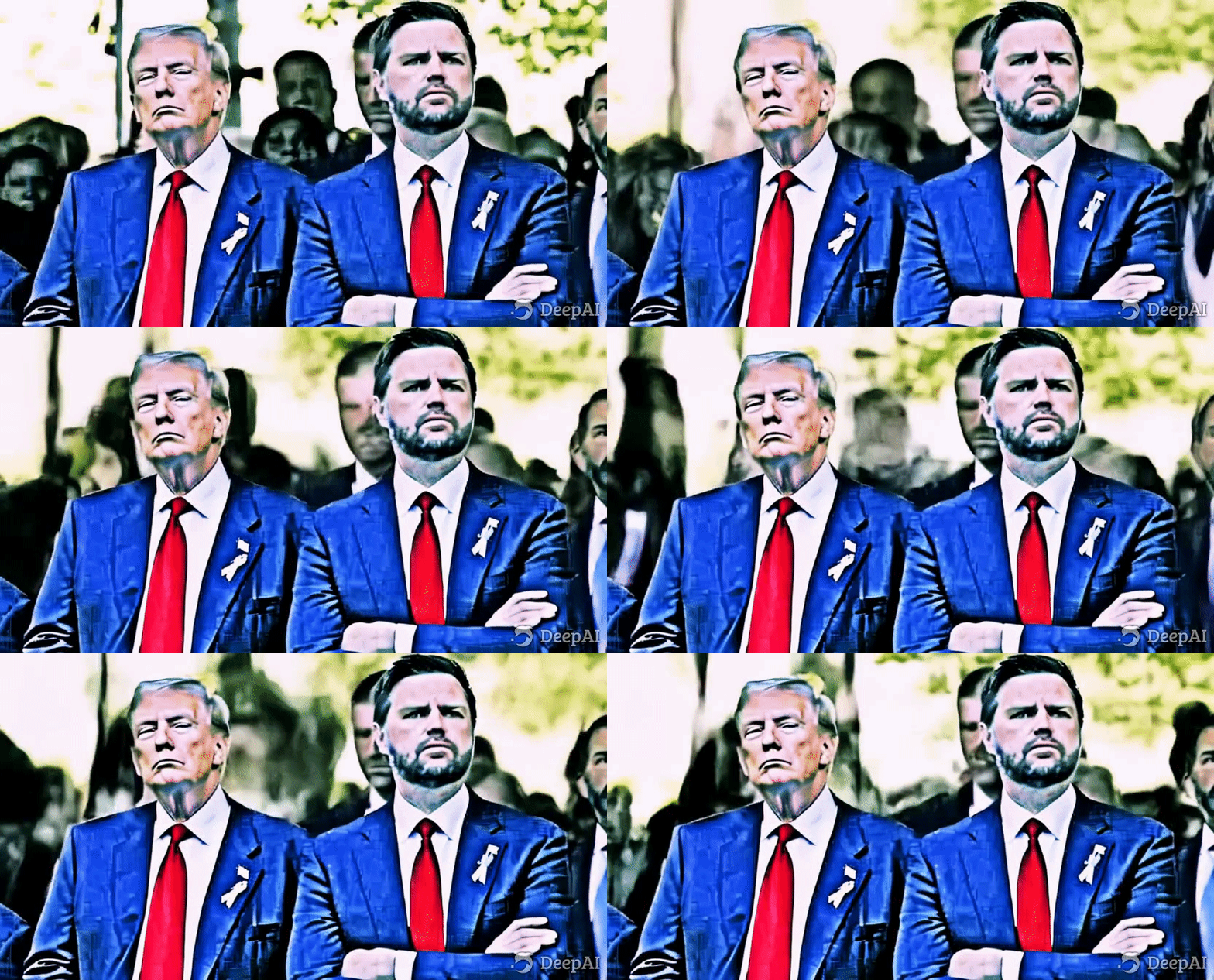
MAGA minds driven by dread,
Despairing that their status has fled,
So they rally against immigrants in fear.
Inciting republicans to hate and to sneer—
From democracy to autocracy will soon be led.
“The first thing to notice is the kind of personality that is attracted to Trump. The personality that does what Trump does is an authoritarian personality. Such individuals tend to follow rules, prefer to be led by authoritative figures, and like hierarchical and patriarchal structures—where a leader at the top issues all the orders, and everyone falls in line behind them. This resembles a more militaristic, top-down hierarchical system.
However, not all supporters of this style favor authoritarianism all the time. Authoritarianism isn’t a stable personality trait because no one can live their entire life like that. Everyone must engage in negotiation, collaboration, and back-and-forth interactions to live their lives. In other words, no authoritarian is authoritarian all the time. It’s not a fixed trait but rather a tendency that can be activated at different times. The key trigger for activating authoritarian traits is fear. When people feel fear, their need for hierarchy and order reemerges and takes hold—fear acts as the doorway that unlocks this personality trait.
So, what is it that brings about this fear among MAGA supporters and Trump followers? Trump is highly skilled at stoking fear. He started his campaign by accusing Mexican immigrants of being rapists and murderers, claiming they are invading our country and killing us all. Stoking fear has become his signature tactic; he’s very effective at it. During his inauguration, he spoke about a depiction of the world filled with threats—an atmosphere of fear, reinforced by Fox News and other conservative outlets—activating this authoritarian tendency in people.
Now, what do MAGA supporters fear the most? Interestingly, it’s not necessarily poverty or crime. Studies show that MAGA supporters are generally not less well-off than the average population. They’re not particularly disadvantaged overall. The unifying factor is a perceived loss of social status—what we can call status anxiety. This perceived threat to their social standing drives much of their fear.
The core of MAGA, of course, is white males. They used to hold a dominant position within the social hierarchy. As women gain more empowerment and immigrants become more assertive or take on leadership roles, these men feel that their automatic right to social superiority is being challenged. This creates a social status anxiety—a fear that their traditional dominance is slipping away. While not all white people feel this way, many MAGA supporters do come from this base.
This anxiety isn’t limited to white males; it can also be present in minorities and women. For example, many white women voted for Trump in the last election, partly because they, too, perceive a threat to their social status—particularly if they see minority women gaining political power or other groups advancing. When people feel their status as the dominant group is being undermined, they experience a form of cultural dethronement.
So, what does this all mean? Essentially, MAGA supporters are driven by a desire to restore what they perceive as their lost dominance. When they talk about “Making America Great Again,” they mean restoring their subgroup’s former status of power. This doesn’t necessarily mean improving their quality of life or economic situation. Instead, it’s about pushing others down—those they see as threats—so they can feel superior again.
This desire to push others down provides a sense of relief from their social status anxiety. They revel in the idea of seeing others, such as immigrants, women, or marginalized groups, being pushed aside. This acts as a form of resentment—marinating in fury at being overtaken or replaced. It’s like a burning coal in their chest—something they can’t tolerate or hold onto peacefully.
A recent tweet by an ABC journalist, which was later taken down, captured this dynamic well. He said that Steven Miller isn’t in his position because he’s particularly smart but because he embodies bile—an intense hatred and resentment. This statement resonates with how others describe him as someone filled with hatred for immigrants and marginalized groups. Steven Miller’s role, and similar figures, reflect the resentment and hostility that underpin much of the MAGA movement.
Many former Republican operatives, like Rick Wilson, have spoken about how figures like Miller are fueled by this bile—more than intellect—focused on hatred of others. This resentment is what drives the movement. They are marinated in it, and their only “medicine” is to see those they fear being pushed down. That’s why they often support policies of cruelty and show off their harshness—Trump’s executive orders frequently demonstrate this.
When Trump feels threatened—whether by legal issues or political challenges—his supporters often feel similarly threatened because they see themselves merged with him. They feel victimized when he is attacked, and their support increases when he is convicted or faces legal repercussions. They identify with him as someone under attack, and this deepens their loyalty.
This connection isn’t limited to white supporters. Minorities, too, can experience status anxiety. For example, in recent elections, many Latino and Black men voted for Trump—often because they saw themselves as holding a position of relative superiority within their communities, especially over women. As women gain more power, some men feel their social status is threatened. White women, too, largely supported Trump in 2016, reflecting this shared status anxiety.
Basically, what unites these groups is a fear of losing social dominance—an anxiety that triggers the authoritarian tendencies within them. This leads them to follow Trump, the “piper,” to wherever he leads, even if that means dismantling democracy. They are willing to accept authoritarianism, cruelty, and the erosion of democratic norms because their primary concern is restoring their perceived superiority.
[The fallacy in this thinking is that many Latino and Black voters believed supporting Trump would restore their social status, but they overlook that their opportunities depend on democracy and the protections of the Constitution. When power shifts to authoritarian leaders, these rights are at risk, and social hierarchies become based on race and privilege, with non-white citizens relegated to second-class status.
Ironically, wannabe authoritarian leaders within the Republican Party have tricked Latino and Black voters into believing that, even if they forfeit democracy, they will still retain their civil rights. Our Constitution is the only thing that guarantees these privileges. When democracy is replaced with autocracy, inevitably the Constitution soon follows suit.]
It’s essential to recognize that this isn’t just about Trump trying to grab power; it’s about a significant segment of America’s population—willing and eager to dismantle democracy itself. This presents an enormous existential threat—not just from Trump, but from this widespread movement and psychology.
To combat this, we need systemic change—deepening and spreading democratic engagement beyond just voting every four years. We must foster a participatory, deliberative process that involves everyone continuously. Understanding the psychology behind the MAGA movement—the resentment rooted in being usurped—is crucial. Only then can we take meaningful steps toward healing.
Writing people off as psychopaths, greed-driven, or narcissistic isn’t enough. We need deeper understanding and community support—especially during this deeply traumatic period in history. We must support each other and share our struggles.
Remember, much of the current infrastructure—social media platforms and information channels—is controlled by a few oligarchs in collusion with authoritarians who could shut down voices like mine at any moment. We must stay connected and organized for the future of our children.” Excerpts from: What Makes Trump & MAGA So Cruel? A Psychiatrist Explains
Characteristics of the Authoritarian Personality in Trump Supporters and Their Impact on Democracy:
Authoritarian Tendencies:
◦ Follow hierarchical, patriarchal, top-down systems.
◦ Prefer strong, authoritative leaders who issue clear directives regardless of democratic principles.
◦ Support militaristic and police structures.
Fluid Trait Activated by Fear:
◦ Not a stable personality; authoritarian traits surface mainly when individuals feel threatened or fearful.
◦ Fear triggers the need for order, hierarchy, and conformity.
Trump’s Fear-Mongering:
◦ Skilled at inciting fear—e.g., immigrants as threats, economic insecurity, “you won’t have a country anymore.”
◦ Amplifies anxiety that their social status is slipping.
Perceived Loss of Social Status:
◦ Support for Trump driven by fear of losing traditional dominance, especially among white males.
◦ Social status anxiety fueled by perceived threats from women, minorities, and immigrants gaining power.
Resentment and Hostility:
◦ Driven by resentment towards marginalized groups and perceived cultural dethronement.
◦ Supporters are often fueled by hatred, bile, and hostility toward others they see as threats.
Identification with Victimization:
◦ Support increases when Trump faces legal or political challenges, as supporters see themselves as co-victims.
◦ Deep sense of loyalty linked to shared victimhood.
Willingness to Dismantle Democratic Norms:
◦ Supporters are often willing to accept authoritarianism, cruelty, and the erosion of democracy to restore perceived lost dominance.
◦ Support leaders who prioritize power over constitutional checks and balances.
◦ Believe that, despite abandoning democracy, their civil rights will be preserved—THIS IS AN ILLUSION.
Threat to Citizens’ Rights and the Constitution:
◦ Under authoritarian rule, leaders and oligarchs decide social hierarchy, marginalizing non-white groups.
◦ Replacing democracy risks undermining the Constitution and civil liberties for all.
Key Takeaway:
This movement is rooted in deep social and psychological fears—particularly the desire to restore perceived lost dominance—posing an existential threat to democratic principles and citizens’ rights. Marginalized groups are especially at risk of having their rights eroded or revoked under autocracy. Addressing this requires systemic engagement, community support, and a deep understanding of the underlying resentments fueling support for authoritarianism.
MAGA definition: Originally used by Ronald Reagan as a campaign slogan in his 1980 presidential campaign (Let’s Make America Great Again), it has since been described as a loaded phrase. It has been described as a slogan representing American exceptionalism and promoting an idealistic or romanticized American past that excludes certain groups. Multiple scholars, journalists, and commentators have called the slogan racist, regarding it as dog-whistle politics and coded language.
Texas Conservatives Fear “Takeover” By Immigrants
Trump’s not the problem. He’s a symbol of 4 bigger issues.
From Immigrants to Citizens: How Government Overreach Endangers Your Rights
What is the Republican Party’s endgame? How will hunting down, rounding up, and terrorizing immigrant communities “make America great again”? What have immigrants done to America to deserve this kind of inhumane treatment from the U.S. Immigration and Customs Enforcement Agents? Don’t immigrants wake up each morning, trying to be good people and going to work to support their families—just like good citizens do?
This cycle of government tyranny often begins with the marginalization of vulnerable groups, such as immigrants, minorities, or political dissidents. These groups are frequently scapegoated and subjected to unjust policies—ranging from mass deportations to surveillance and suppression—under the guise of homeland security or public order. However, history consistently demonstrates that such tactics do not remain confined to targeted populations; over time, they can expand to encompass the broader citizenry. This pattern reveals how governments, in their quest for power or security, can gradually erode civil liberties and democratic principles, turning what begins as targeted repression into widespread authoritarian control.
One prominent example is the internment of Japanese Americans during World War II. Following Japan’s attack on Pearl Harbor in 1941, the federal government forcibly relocated and detained over 120,000 Japanese Americans, many of whom were U.S. citizens, without due process. Initially justified as a necessary wartime security measure, this policy reflected fear and prejudice directed at a specific ethnic group. However, the precedent set by this mass detention paved the way for broader restrictions on civil liberties. In subsequent years, similar tactics—such as increased surveillance, restrictions on free speech during the Cold War, and the McCarthy-era witch hunts—aimed at suspected communists or political dissidents, often targeted individuals based on suspicion rather than evidence, eroding constitutional protections for all Americans.
Another example is the Patriot Act enacted after the September 11 attacks. Designed to combat terrorism, it granted the federal government sweeping powers to conduct surveillance, detain suspects, and investigate without traditional checks and balances. While initially focused on suspected terrorists, the scope of these powers gradually extended beyond targeted individuals, impacting innocent citizens. Mass surveillance programs like PRISM, revealed by Edward Snowden, showed how data collection expanded to monitor millions of ordinary Americans, undermining privacy rights and due process for the broader population.
The rise of police militarization and racial profiling also exemplifies this pattern. Originally aimed at controlling specific communities—particularly minority groups—these tactics have increasingly been used against the general public, especially during times of social unrest or perceived threats to national stability. The use of SWAT teams for routine policing, the expansion of stop-and-frisk policies, and the widespread use of surveillance cameras have all contributed to a climate where civil liberties are compromised not just for targeted groups but for all citizens.
Furthermore, policies that suppress immigrant rights often pave the way for broader repression. When governments justify crackdowns on immigrant communities—through mass detention or deportation—they set precedents for expanded authority that can be leveraged against all citizens. Laws that diminish freedom of speech, restrict assembly, or enable unchecked surveillance contribute to an environment where civil rights are compromised for everyone.
These examples underscore a critical lesson: when governments use repressive tactics against specific groups—whether based on ethnicity, political beliefs, or suspected affiliations—they often lay the groundwork for broader authoritarian measures. Over time, these measures can be normalized and extended, gradually stripping away the rights and freedoms of the entire population under the guise of homeland security or order. Recognizing this pattern is essential to safeguarding democracy and ensuring that the rights of all individuals are protected from the encroachment of government overreach.
Historically, the erosion of civil liberties tends to accelerate when authorities exploit crises or societal divisions. The Patriot Act in the United States post-9/11, for instance, expanded government powers at the expense of individual privacy and due process, affecting all Americans. Similarly, the normalization of police militarization, racial profiling, and mass surveillance demonstrates how state overreach can slowly strip away the rights of ordinary citizens.
In essence, the targeting of immigrant communities or other marginalized groups often serves as a warning sign and are the first steps that illiberal leaders take in their quest for authoritarian rule. When governments prioritize fear and control over justice and democracy, the rights of all individuals—including citizens—are at risk. Vigilance and resistance are essential to prevent the slide into tyranny, ensuring that civil liberties are not taken from anyone, especially those the Republican Party has deemed scapegoats.
Galvanized by Trump, These States Are Passing Harsh New Laws Against Immigrants
The Constitution of the United States protects the rights of all individuals within its borders, REGARDLESS OF THEIR CITIZENSHIP STATUS. This includes immigrants, or non-citizens, who are in the United States. The Constitution guarantees certain rights and protections, such as due process and equal protection under the law, to all individuals, including immigrants. However, there are certain rights and privileges that are specifically afforded to citizens only, such as the right to vote and run for certain public offices. BUT, that doesn’t give republican voters the right to scapegoat immigrants!
The law that broke US immigration
Immigrants waiting 10 years in US just to get a court date
“We can do this the easy way (vote for authoritarian politicians) or the hard way (protesters versus martial law). But understand this: America will come under authority, so know your role, because resistance will be squashed!” — B. Bondman
“The inhumanity of bigots and tyrants is that they will never experience guilt or regret, about their desires superseding the needs of those whom they control or hold power over. They are not capable of feeling empathy or compassion for inferior beings.” — A. Freeman
“First they came for the socialists, and I did not speak out—because I was not a socialist.
Then they came for the trade unionists, and I did not speak out—because I was not a trade unionist.
Then they came for the Jews, and I did not speak out—because I was not a Jew.
Then they came for me—and there was no one left to speak for me.” — Pastor Martin Niemöller
“It does not matter how well the Bible, or the Constitution was written: if those aspirations are not animated by the spirit that dwells in your heart.” — ElRoyPoet
“Each of us feels some aspect of the world’s suffering acutely. And we must pay attention. We must act. This little corner of the world is ours to transform. This little corner of the world is ours to save.” ― Stephen Cope
“The only thing necessary for the triumph of evil is that good men should do nothing […] When bad people join forces, good people need to form a resistance; otherwise, they will be picked off—one by one and suffer in a futile struggle, without anyone caring.” — Edmund Burke (Paraphrased)
Parallels in History
There once was a NAZI man driven by fear,
Who wanted his nationalist status to be clear.
So he followed Hitler’s fascist tune—
In contempt of the Jewish boom,
Hoping his dominance would reappear.
American Version
There once was a MAGA man driven by fear,
Who wanted his social status to be made clear.
So he followed Trump’s authoritarian tune—
In contempt of the Immigrant boom,
Hoping his shame would soon disappear.
Edited by: ElRoyPoet, 2025
 elroypoet.blog