

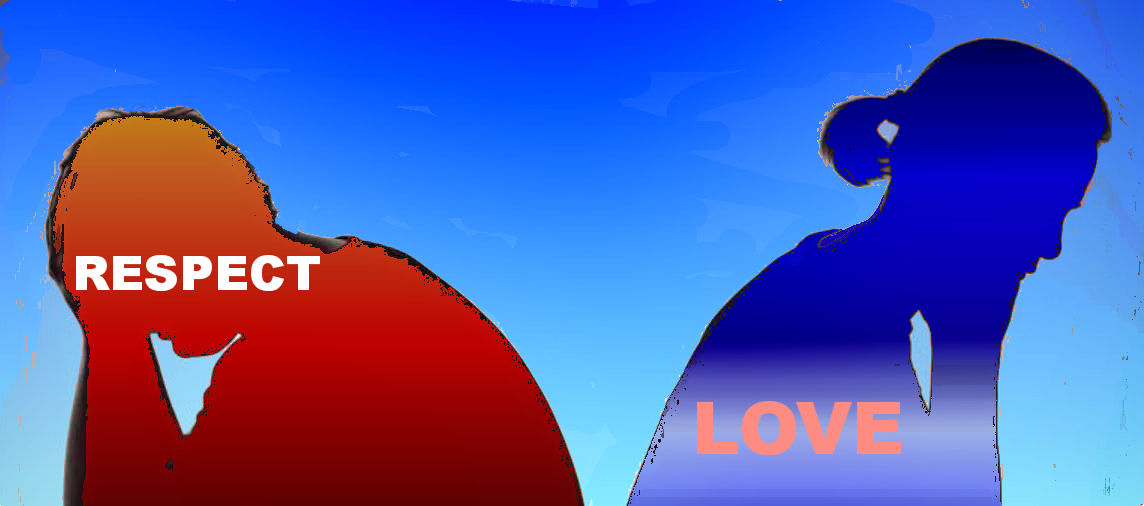
If a man can’t get respect,
he is dead—
a spirit who no longer breathes
life into the community.
If a woman doesn’t get love,
she is also dead—
without a heart’s embrace,
she fades into oblivion.
But a woman without somebody
to love her—
will survive, if polite society
feels empathy for her tender heart.
Yet, a man who lacks respect,
can not turn back—
a wretched soul who’s lost his way,
already dead to society.
How does a man earn respect?
By working hard, providing for his family,
contributing to society’s strength,
standing tall in righteous light.
And a woman—how does she find love?
By faithfulness to her feminine culture,
raising children with care,
nurturing virtue and trust.
Who are the men that fall from grace?
Cowards, traitors and deceivers,
whose mouths hide forked tongues,
who betray gullible women.
And who are the women denied affection?
Harlots and the foolish women—
who believed the smooth talkers
and all those devil’s lies.
Respect and love,
the pillars of life’s foundation—
when neglected, souls wither and die,
and humanity’s heart grows colder.
Edited by: ElRoyPoet, 2025
Respect for Men and Love for Women — A Philosophical Reflection
“When there are rules without a relationship, resentment arises. When there is a relationship without rules, rebellion often follows. However, when there are rules within a relationship, there you will find contentment.” By: Dr. Henry Cloud
Throughout the ages, the profound human needs for respect and love have been recognized as fundamental to individual dignity and societal harmony. These needs, while universal, manifest differently across genders, shaping identities, relationships, and societal structures. To understand these differences is to grasp the essence of human nature and its divine and psychological foundations.
The Necessity of Respect for Men
In biblical tradition, the concept of respect is intertwined with dignity bestowed by God. Genesis 1:27 states that humans are created in the image of God, imbuing every individual with inherent worth. For men, respect is often linked to their role as protectors and providers—a divine mandate that aligns with their purpose.
Psychologically, Abraham Maslow’s hierarchy of needs places esteem—respect, recognition, and status—just above basic physiological needs. When men are respected, they experience a sense of worth and competence; when denied respect, they suffer a form of existential death. Viktor Frankl, in his existential analysis, emphasizes that a loss of purpose and respect leads to despair, which can be considered a spiritual death.
Historically, men who lack respect—due to cowardice, treachery, or deceit—are marginalized, deprived of their societal role, and often experience internal turmoil. Many biblical patriarchal figures exemplify leadership earned through responsibility, wisdom, and integrity—qualities that command respect. Their stories highlight that respect is earned through service, sacrifice, and fidelity to divine and societal principles.
Society’s Decline When Men Abandon Their Role
A thriving society depends fundamentally on the integrity and responsibility of its men. When men neglect to earn respect—shirking their duties as providers, protectors, and moral agents—the fabric of social order begins to fray. Respect is the cornerstone of social cohesion; it fosters trust, stability, and collective purpose. Without it, chaos and disillusionment threaten to unravel the societal fabric.
Historically and psychologically, civilizations have flourished when men exemplified strength, responsibility, and moral uprightness. Conversely, when men abdicate their roles, succumb to cowardice, or indulge in destructive behaviors like betrayal or exploitation, social cohesion deteriorates. Lawlessness, corruption, and societal fragmentation take root. Such neglect fosters widespread insecurity, where the moral fabric weakens, and trust erodes—leading to chaos and decline.
The Consequences of Male Exploitation and Disillusionment
Beyond neglecting responsibility, men have a moral obligation to uphold integrity within their personal relationships. When men exploit women—using them for fleeting sexual gratification and then discarding them—they commit a grave moral failing. Such behavior not only damages individual women but also erodes societal trust and moral standards. Women, betrayed by this exploitation, become disillusioned with love, losing faith in genuine commitment and fidelity.
This betrayal breeds cynicism, mistrust, and emotional scars that hinder women’s capacity to love authentically. It creates a cycle where superficial relationships replace meaningful bonds, weakening the moral and emotional fabric of society. Proverbs 22:1 underscores the importance of integrity and reputation; when men fail in these virtues, they contribute to a culture of superficiality and moral decay.
Psychologically, exploitation damages women’s emotional health, leading to mistrust, detachment, and emotional scars that persist across generations. Such wounds diminish the societal capacity for genuine love, fostering environments where relationships become transactional and superficial. Over time, this erosion of trust and virtue undermines the moral cohesion necessary for a thriving civilization.
The Moral and Social Responsibility of Men
Men bear a profound responsibility to pursue respect through honest work, moral uprightness, and responsibility. Earning respect ensures social stability, preserves moral virtue, and upholds societal order. When men neglect these duties, they contribute to societal decline, weakening the moral fabric that holds civilization together.
Likewise, men must recognize their role in fostering genuine love rooted in fidelity, commitment, and moral integrity. Exploitation and betrayal not only harm individuals but also corrode the societal values that sustain community life. Such behaviors breed cynicism, undermine family structures, and threaten the very foundations of civilization.
The Role of Women and the Impact of Disillusionment
Women, in their faithfulness and nurturing roles, are vital to societal stability. When they are betrayed or abandoned by irresponsible men, they become disillusioned, which can lead to social fragmentation and moral decay. Society suffers when trust is broken, and the moral bonds that hold families and communities together are weakened.
A healthy civilization depends on men reclaiming their roles as respectful, responsible figures who earn honor through virtue and integrity. Only then can society restore its moral foundations, ensuring that love and respect are preserved as sacred virtues—pillars that uphold the dignity of individuals and the collective well-being of civilization.
When men neglect their duties—failing to earn respect and exploiting women—they contribute to societal decline, chaos, and the eventual doom of civilization. The moral health of society hinges on personal responsibility, moral uprightness, and the unwavering pursuit of virtue—principles rooted in divine and psychological truths—that uplift individuals and sustain the collective good.
The term stands for Deny, Attack, Reverse Victim, and Offender. It was coined by psychologist Jennifer Freyd, and it describes a pattern where a person accused of harmful behavior immediately denies it, attacks the person confronting them, and then shifts the blame to cast themselves as the true victim in the situation. According to Freyd, this occurs “when an actually guilty perpetrator assumes the role of ‘falsely accused’ and attacks the accuser’s credibility and blames the accuser of being the perpetrator of a false accusation.”
The Role of Men in Society: Respect, Responsibility, and Righteousness
Fundamental Needs:
- Men need respect; women seek love. Society depends on men earning respect through responsibility and commitment.
Biblical and Psychological Foundations:
- Respect affirms dignity (Genesis 1:27). Maslow’s esteem needs and Frankl’s emphasis on purpose highlight that respect and integrity are vital for individual and societal well-being.
Societal Impact of Men Neglecting Respect:
- When men shirk responsibilities—avoiding work, accountability, or moral uprightness—they undermine social cohesion.
- Civilizations decline when leaders and community men lack integrity, leading to chaos and moral decay.
Behavior Examples That Erode Respect:
- Cowardice and avoidance of duty
- Betrayal, treachery, or dishonesty
- Exploitation of women for sex and wife abandonment
- Dishonor, irresponsibility, deadbeat dads
- Engaging in criminal or deceitful behavior
- Showing lack of moral integrity or accountability
Consequences of Exploitation and Disillusionment:
- Women betrayed by such behaviors become disillusioned with love.
- Society suffers as relationships weaken, and moral standards decline.
Moral Responsibility:
- Men must earn respect through honest work, integrity, and responsibility.
- They must be faithful and morally upright, preventing societal decay.
An Analysis Of The Poem:
“In every encounter, we either give life or we drain it; there is no neutral exchange.” By: Brennan Manning
The poem explores fundamental human needs—respect and love—and emphasizes their vital role in individual identity and societal cohesion. It contrasts the consequences of their absence, portraying respect and love as essential pillars that sustain not only personal well-being but also the community’s moral fabric. The poem also reflects on societal judgments, gender roles, and moral values, highlighting how respect and love are earned, lost, and the repercussions thereof.
Structure and Form:
As a free verse poem, it eschews strict rhyme or meter, allowing for a conversational and reflective tone. The use of short, impactful lines creates emphasis and rhythm, guiding the reader through the moral reflections and societal commentary. The poem is divided into thematic sections: the consequences of lacking respect or love, the means of earning respect and love, and the moral judgments of certain behaviors and character types
Tone and Voice:
The tone is serious, contemplative, and somewhat moralistic. It conveys a sense of urgency about the importance of respect and love, framing their absence as existential threats. There is a moral dichotomy—those who earn respect and love versus those who betray or fall short—highlighted through the use of stark language and moral judgments
Imagery and Language:
The poem employs vivid imagery, such as “a spirit who no longer breathes” and “fades into oblivion,” to evoke the loss of vitality and essence. The metaphor of respect and love as “pillars of life’s foundation” underscores their foundational importance. Descriptive words like “cowards,” “traitors,” “deceivers,” “harlots,” and “foolish women” evoke moral judgments and societal stereotypes, which serve to reinforce the poem’s moral framework.
Gender Perspectives:
The poem presents gender roles through traditional lenses: men are primarily evaluated based on respect earned through hard work and righteousness, while women are associated with love, faithfulness, and nurturing. It highlights societal expectations placed upon both genders, and the moral consequences of deviations—such as betrayal or foolishness
Moral and Societal Commentary:
The poem suggests that respect and love are essential for societal health. When these are neglected, “souls wither and die,” and “humanity’s heart grows colder,” implying that moral decay begins with individual failings that ripple outward. It emphasizes personal responsibility—earning respect and love through virtue—and criticizes behaviors deemed as betrayals or moral lapses.
Theme:
The poem advocates for the importance of moral integrity, emphasizing that respect and love are not just personal virtues but societal necessities. It warns that neglecting these virtues leads to spiritual death and societal decline, urging individuals to uphold righteousness, faithfulness, and integrity.
Poem Interpretation and Explanation
Opening Lines:
“If a man can’t get respect, / he is dead— / a spirit who no longer breathes / life into the community.”
Analysis:
The poem begins with a powerful metaphor equating a lack of respect in a man’s life to death. The phrase “he is dead” emphasizes that respect is not merely a social courtesy but a vital life force. The metaphor of a “spirit who no longer breathes” suggests spiritual death or loss of vitality, highlighting that respect sustains both individual purpose and societal contribution. The idea that a man’s respect is tied to his ability to “breathe life into the community” underscores the communal importance of personal virtue; a man’s respect is not solely personal but also a societal obligation.
Second Stanza:
“If a woman doesn’t get love, / she is also dead— / without a heart’s embrace, / she fades into oblivion.”
Analysis:
Here, love is presented as essential to a woman’s existence, similar to respect for men. The phrase “without a heart’s embrace” signifies emotional nourishment and intimacy as vital for her vitality. The phrase “fades into oblivion” suggests that love sustains a woman’s sense of purpose and identity; without it, she risks invisibility or being overlooked in societal and personal terms. The parallelism between respect and love highlights their equal importance for men and women, respectively, establishing a moral symmetry.
Third and Fourth Stanzas:
“But a woman without somebody / to love her— / will survive, if polite society / feels empathy for her tender heart.”
“Yet, a man who lacks respect, / can not turn back— / a wretched soul who’s lost his way, / already dead to society.”
Analysis:
These lines introduce nuance: although love is vital for women, survival is possible if her community shows compassion. This suggests societal dependency or judgment—women’s survival hinges on external sympathy, perhaps reflecting societal expectations or limitations placed on women. Conversely, for men, lacking respect is presented as irreversible—“can not turn back”—implying moral failure leads to spiritual death. The phrase “already dead to the community” emphasizes societal rejection of disrespectful men, framing respect as a moral currency that, once lost, condemns a man to social death.
Questions and Ethical Reflection:
“How does a man earn respect? / By working hard, providing for his family, / contributing to society’s strength, / standing tall in righteous light.”
Analysis:
This section shifts to moral prescriptions: respect is earned through virtuous actions—hard work, responsibility, societal contribution, and righteousness. The phrase “standing tall in righteous light” suggests moral integrity and moral superiority, reinforcing the idea that respect is rooted in virtue. It also reflects traditional societal values concerning masculinity: provision, strength, and moral uprightness.
Transition to Women and Love:
“And a woman—how does she find love? / By faithfulness to her feminine culture, / raising children with care, / nurturing virtue and trust.”
Analysis:
The poem offers a pathway for women to find love—through faithfulness, nurturing, and cultural fidelity. These qualities are framed as virtues that secure love and social approval. The emphasis on “raising children with care” and “nurturing virtue and trust” underscores traditional gender roles centered on motherhood and nurturing as core to a woman’s societal value and capacity to sustain love.
Discussion of Moral Fall and Betrayal:
“Who are the men that fall from grace? / Cowards, traitors and deceivers, / whose mouths hide forked tongues, / who betray gullible women.”
“And who are the women denied affection? / Harlots and foolish women— / who believed the smooth talkers / and all those devil’s lies.”
Analysis:
These stanzas depict moral decline and betrayal. Men who are cowardly, treacherous, or deceitful are characterized as fallen from grace—morally corrupt and socially condemned. The “forked tongues” metaphor suggests duplicity and betrayal. Women who are “foolish” or labeled “harlots” are portrayed as victims of deception by “smooth talkers,” implying societal judgment of women who fall prey to manipulation. The dichotomy underscores societal morality: virtue and fidelity for women, strength and respect for men, with betrayal leading to social or spiritual death.
Conclusion and Moral Reflection:
“Respect and love, / the pillars of life’s foundation— / when neglected, souls wither and die, / and humanity’s heart grows colder.”
Analysis:
The closing lines reinforce the central themes: respect and love are foundational to life, similar to pillars supporting a structure. Their neglect causes moral and spiritual decay (“souls wither and die”). The phrase “humanity’s heart grows colder” suggests societal apathy or moral decline resulting from the erosion of these virtues. It underscores the collective impact—individual virtues that uphold societal well-being.
Overall Analysis:
- Moral and Cultural Values:
The poem upholds traditional virtues—respect, love, fidelity, responsibility—and condemns betrayal, cowardice, and moral weakness. It promotes a moral code where individual virtue directly correlates with societal health. - Gender Roles & Expectations:
It reflects conventional gender roles: men as providers and moral leaders; women as nurturers and faithful lovers. The poem criticizes those who deviate from these roles, framing such deviations as moral failures leading to spiritual death. - Use of Metaphors & Imagery:
The metaphors of death, decay, and spiritual demise underscore the gravity of moral lapses. The imagery of “breathing,” “fading,” and “withering” evokes vulnerability and the importance of virtues that sustain life. - Tone & Moral Judgment:
The tone is serious, moralistic, and somewhat admonitory. It conveys a sense of moral urgency, warning against the consequences of losing respect and love. - Implication & Message:
The poem advocates for maintaining personal integrity, responsibility, and fidelity as essential to individual dignity and societal stability. It warns that neglecting these virtues leads to societal decay—“and humanity’s heart grows colder.”
The Key Literary Devices Used In The Poem:
1. Metaphor
- “He is dead— a spirit who no longer breathes”
Compares a man lacking respect to a lifeless spirit, emphasizing spiritual or moral death. - “Fades into oblivion”
Portrays a woman’s loss of love as fading into nothingness, symbolizing erasure of identity or purpose. - “Pillars of life’s foundation”
Represents respect and love as foundational support structures, emphasizing their importance in societal stability.
2. Repetition
- The phrase “If a man can’t get respect” and “If a woman doesn’t get love” set up parallel structures, emphasizing the symmetry and importance of respect and love for both genders.
- The repeated use of “dead” underscores the destructive consequences of lacking these virtues.
3. Parallelism
The poem employs parallel sentence structures to compare men and women. This reinforces the moral symmetry and societal expectations placed on both genders.
- Respect for men vs. love for women.
- Morally upright men vs. wretched men.
- Virtues that earn respect vs. fidelity and nurturing that earn love.
4. Imagery
- “Breathes life,” “fades into oblivion,” “wither”
Vivid images evoke vitality, decay, and loss. - “Forked tongues”
Visual imagery suggesting duplicity and deception. - “Devil’s lies”
Conjures images of evil or temptation, emphasizing moral corruption.
5. Alliteration
- “Foolish women… smooth talkers”
The repetition of the initial consonant “w” and “s” creates a rhythmic effect and emphasizes the characters described. - “Standing tall in righteous light”
The repetition of the “t” sound adds to the sense of moral uprightness.
6. Moral Diction (Word Choice)
- Words like “respect,” “love,” “faithfulness,” “righteous,” “virtue,” “betray,” “deceivers,” “traitors,” “foolish” all carry moral connotations, reinforcing the ethical message.
- The use of “harlots,” “devil’s lies,” “gullible women” employs morally charged language to evoke judgment.
7. Symbolism
- “Respect” and “Love” symbolize moral virtues essential for societal cohesion.
- “Respect and love” as “pillars” symbolize stability and strength.
- “Already dead to society” symbolizes social rejection and moral condemnation.
8. Contrast
- Respected men vs. fallen men
- Loving women vs. women denied affection
- Virtue vs. betrayal (This highlights the moral choices and their consequences.)
9. Tone and Mood
- The tone is serious, moralistic, and admonitory.
- The mood evokes concern about societal decay and the importance of virtue.
Summary of Literary Devices:
- The poem employs metaphors to symbolize spiritual death and societal decay.
- Parallelism underscores gender roles and moral expectations.
- Imagery vividly depicts decay, deception, and moral virtue.
- Repetition emphasizes the key themes of respect and love.
- Alliteration enhances rhythm and memorability.
- Moral diction reinforces the ethical message.
- Contrast highlights moral judgments and societal standards.
“Beware of those who weep with realization, for they have realized nothing.” By: Carlos Casteñeda
 elroypoet.blog