
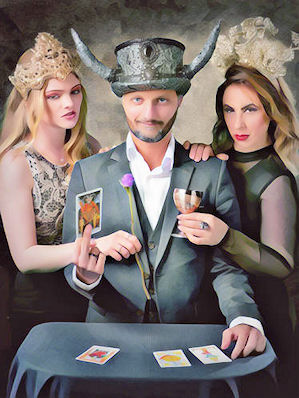
Democracy levels the playing field,
Equality for all, civil rights, and free will.
But autocracy—a liar and a thief—
Takes you out of the game, offers no relief.
Many Republicans, turned cynical,
Once prideful, now acting hysterical.
They would always be the ones to win,
Until MAGA’s delusion pulled them in.
Christian nationalists refused to play fair,
Haters and cheaters—with a cruel stare.
Sore losers, taking home their ball—
So no one else can have liberty, none at all!
Once, conservatives and evangelicals, bright,
Played freely in America’s early morning light.
Now, Trump’s deceit has made them concede—
Their children’s future to tyranny; who will impede?
Edited by: ElRoyPoet, 2023
Prompt: Democracy levels the playing field; autocracy takes you out of the game. The reason many Republicans are skeptical of democracy is that they have become cynical—they were so accustomed to always be winning, but Trump convinced them that they just couldn’t win anymore. Christian nationalists dislike playing fair, so they have resorted to lying and cheating instead. Since MAGA followers are sore losers, they are taking their democracy ball home so that no one else can play with liberty. How unfair that conservatives and evangelicals got to play ball when they were young, but Trump has tricked them into giving their children’s ball away to authoritarians.
Trump Threatens WAR On Chicago
“MAGA rhetoric” is republican’s path to power
Democracy Under Siege: Lessons from History and the Perils of Polarization
When a country throws up its arms in disgust because Congress refuses to compromise and everyone is constantly digging in their heels—because they don’t want to relinquish the ideologies of their polarized parties and cultural groups—it becomes easier for affluent society to become cynical about its democratic institutions and the civil rights they guarantee. This polarization and stubbornness undermine the very foundations of representative democracy, leading to political paralysis and societal disillusionment.
Physical and emotional fatigue make cowards out of all of us, and when patriots believe they can’t win, they often succumb to the temptation—perceived as the easy way out—to forfeit liberal democracy and let a power-hungry strongman govern for them. History offers numerous examples of this pattern. For instance, in the early 20th century, countries like Germany and Italy faced similar crises of political instability, which facilitated the rise of authoritarian regimes under Adolf Hitler and Benito Mussolini respectively. These leaders promised order and national revival but ultimately led to destruction and chaos, illustrating the danger of abandoning democratic principles when faced with internal strife.
In the Bible, the Jews had the opportunity to govern themselves with judges, but they often chose to relinquish their freedom to a king. This pattern recurs throughout history: societies seeking stability sometimes gravitate toward strong, centralized authority. In ancient Israel, the shift from the period of the judges to monarchy under Saul, David, and Solomon was initially driven by the desire for security and national identity, but it also paved the way for tyranny and internal conflict. Similarly, during the Roman Republic, the rise of Julius Caesar and subsequent emperors demonstrated how the promise of order could erode republican values, leading to autocratic rule.
The tendency to opt for strong leadership in times of crisis is not new; it is a recurring theme that highlights the fragile nature of democracy. The initial appeal of monarchy or dictatorship often masks the long-term costs of sacrificing civil liberties and democratic processes. The Roman Republic, for example, experienced instability and civil wars before Augustus established the imperial system, which, while bringing stability, also marked the decline of republican ideals.
In modern times, we see this pattern repeated in countries where democratic institutions have been weakened or abandoned altogether. The rise of populist leaders across the globe—such as Hugo Chávez in Venezuela, Viktor Orbán in Hungary, or Jair Bolsonaro in Brazil—often capitalizes on societal fatigue and disillusionment, promising to restore order but eroding democratic norms in the process.
Ultimately, history teaches us that temporary peace achieved through authoritarianism is often an illusion, and the true cost is the erosion of civil rights, individual freedoms, and the rule of law. Democratic societies must remain vigilant, fostering compromise and understanding, even amid polarization. Otherwise, they risk sliding into cycles of authoritarianism, where the promise of stability masks the suppression of dissent and the consolidation of power by a few.“If our democracy dies, the reason won’t be that Americans were too apathetic to save it; it will be that they voted it out of existence.” By: H. Scott Butler
“The reason the MAGA republicans keep repeating the big lie, even though they know that the elections weren’t stolen, is because it’s a big joke to them—they do it to ‘own the libs‘ (mock the democrat voters who still believe in democracy). Ironically trump has ignited their ‘disgust for democracy’ reflex with his constant barrage of grievance rhetoric bombs.” By: A. Freeman
“But if the story is about Republican candidates who say in absolute terms that they have no business running for public office; that they don’t believe in democracy; that indeed they have contempt for the very idea of normal people manifesting their destinies; […] With that, citizens know what to do. That paradox is, of course, this: Republican candidates who are hostile to democracy are asking voters to entrust them with democracy. They are saying, ‘I can’t be trusted.’ […] When you allow anti-democrats to sit at the negotiating table of democracy, little gets done, because the table’s been depoliticized. That, of course, is the ultimate objective of these Republican anti-democrats. They strive to make democracy unworkable, ungovernable and unbearable, hoping to drive republican citizens into despairing whether they can manifest their own destinies. Fortunately, they are telling us who they are.” Excerpt from Republican anti-democrats are telling us who they are. Are we listening?
In order to explain why we have systemic racism and a culture of ethics violations within our institutions, we need to understand that all systems in government rely on people to do their jobs in good faith. All it takes is for one key player to cheat, and the system fails. No system is self-moderated, no matter how much we audit and try to regulate it; it is up to the civil servant(s) to do his job to the best of his abilities. All the systemic problems we find are to be blamed on the people in power who are acting slick—not on the system. Blaming the culture is unconstitutional; an individual(s) in that system who is unwilling to support it, is literally breaking his oath of office. This is why a democracy can’t survive without a free press—to force transparency on the government—so that if it is discovered that a corrupt public official(s) is gaming the system, it can be brought to the citizens’ attention, so that the bad actor(s) can be impeached by the checks and balances in place.
The Biggest Lie Trump Told Was His Oath Of Office
Commentary: Back in 2016, the Republicans were at their wits end, because they believed they just couldn’t win, anymore! So they opted ‘to go for broke’, by electing a city slicker instead of a conservative politician. But here’s the ‘kicker’, only fools go for broke, because if you gamble with your liberty, chances are you’re going to end up in broke. But not only that, you’re probably going to break the ties that bind you with family, friends and church, too.”
Idiom: “to go for broke”, can be traced back to World War II when American soldiers would use it as a slang term before going into battle. It was meant to convey that they were willing to risk everything, including their lives, in order to win. Today, “go for broke” has taken on a broader meaning beyond its military origins. It is often used in situations where someone is taking a significant gamble or making an all-or-nothing effort towards achieving something. The phrase implies that one is putting everything on the line with no guarantee of success.
Definition: Kicker, as in “here’s the kicker “, likely comes from poker. The kicker is a card used to break ties in hands of the same rank.
Doctrine and Covenants 98:4-10
4 And now, verily I say unto you concerning the laws of the land, it is my will that my people should observe to do all things whatsoever I command them.
5 And that law of the land which is constitutional, supporting that principle of freedom in maintaining rights and privileges, belongs to all mankind, and is justifiable before me.
6 Therefore, I, the Lord, justify you, and your brethren of my church, in befriending that law which is the constitutional law of the land;
7 And as pertaining to law of man, whatsoever is more or less than this, cometh of evil.
8 I, the Lord God, make you free, therefore ye are free indeed; and the law also maketh you free.
9 Nevertheless, when the wicked rule the people mourn.
10 Wherefore, honest men and wise men should be sought for diligently, and good men and wise men ye should observe to uphold; otherwise whatsoever is less than these cometh of evil.
“Though liberty is established by law, we must be vigilant, for liberty to enslave us is always present under that same liberty. Our Constitution speaks of the ‘general welfare of the people’. Under that phrase all sorts of excesses can be employed by [authoritarian] tyrants—to make us bondsmen.” By: Marcus Tullius Cicero
“Tyranny anywhere is a threat to freedom everywhere.” By: Alex Storozynski
“First they came for the socialists, and I did not speak out—because I was not a socialist.
Then they came for the trade unionists, and I did not speak out—because I was not a trade unionist.
Then they came for the Jews, and I did not speak out—because I was not a Jew.
Then they came for me—and there was no one left to speak for me.” By: Pastor Martin Niemöller
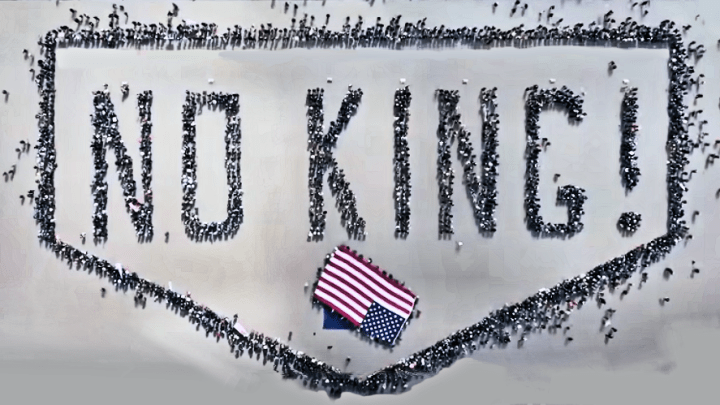
Then Mosiah sent out his voice,
seeking the will of the people,
who should be our king?
And the people answered,
desiring Aaron, but Aaron, gone to Nephi,
could not be king, and he refused it,
and none of Mosiah’s sons would take it.
So Mosiah, with wisdom, sent words again,
calling the people to consider:
the kingdom rightly belongs to Aaron,
but he has declined.
And he warned:
if another is appointed, contention will rise,
blood will be shed, wars will come,
many souls will be lost.
He pleaded for wisdom—
not to destroy his son,
not to choose pride and vain ambition,
for that leads to sin.
He declared: let us appoint judges,
wise men who judge according to the law,
judges who judge righteously,
who judge according to commandments of God.
For it is better to be judged of God,
whose judgments are always just,
than of men, who are often unjust.
If men could always judge in righteousness—
judges who judge as King Benjamin did—
then kings might be good,
and peace could reign forever.
But I have labored,
to teach commandments,
to establish peace,
to prevent wars, theft, bloodshed, and iniquity.
And I have punished according to law,
for men are not always just.
Iniquity is caused by wicked kings,
by those who trample commandments,
who set laws after their own wickedness,
who destroy righteousness with their laws,
who send armies to crush rebellion,
who seek to destroy those who oppose them.
Such rulers pervert justice,
bring destruction, bring bondage—
as King Noah and his people did,
when their wickedness led to ruin.
And I say,
you cannot dethrone an iniquitous king
without great contention—
without shedding blood.
For they have friends in wickedness,
guards around them,
lawless laws, laws that serve their own evil.
They tear down righteous laws,
enact laws to serve their wickedness,
and those who refuse to obey—
they destroy, they war,
they seek to wipe out all righteousness.
And I say,
it is not expedient
for such abominations to reign.
Choose judges—
the voice of the people—
judges who judge according to the law,
laws given by our fathers,
laws given by the Lord.
The voice of the people is usually right,
but the lesser part may desire evil,
and if iniquity is chosen—
the judgment of God will come,
destruction will follow.
If judges do not judge righteously,
then higher judges must judge them,
and the righteous will be preserved.
Let this land be a land of liberty,
where each man enjoys rights and privileges,
as long as the Lord permits.
Mosiah’s words warned of the burdens—
the wars, the bloodshed, the thefts, the iniquity—
caused by unrighteous rulers,
by kings who serve themselves.
And the people, convinced of the truth,
relinquished their desire for kings,
and sought instead justice,
equality, and liberty.
They gathered,
casting their voices for judges—
to judge, to govern by law—
rejoicing in the freedom granted.
And judges were appointed—
Alma, the first judge,
walking in righteousness,
judging with justice,
and peace reigned.
Thus, the land was preserved,
not by kings, but by righteous judgment,
by a people who chose justice,
who trusted in the Lord,
and who valued liberty.
Prompt: Book of Mosiah 29
 elroypoet.blog