
You’d hope that history teaches,
But often it merely preaches:
To ears that it reaches,
It simply beseeches—
“Learn, lest we repeat its breaches.”
Edited by: ElRoyPoet, 2026
The 1992 LA Riots From a Korean American Point of View
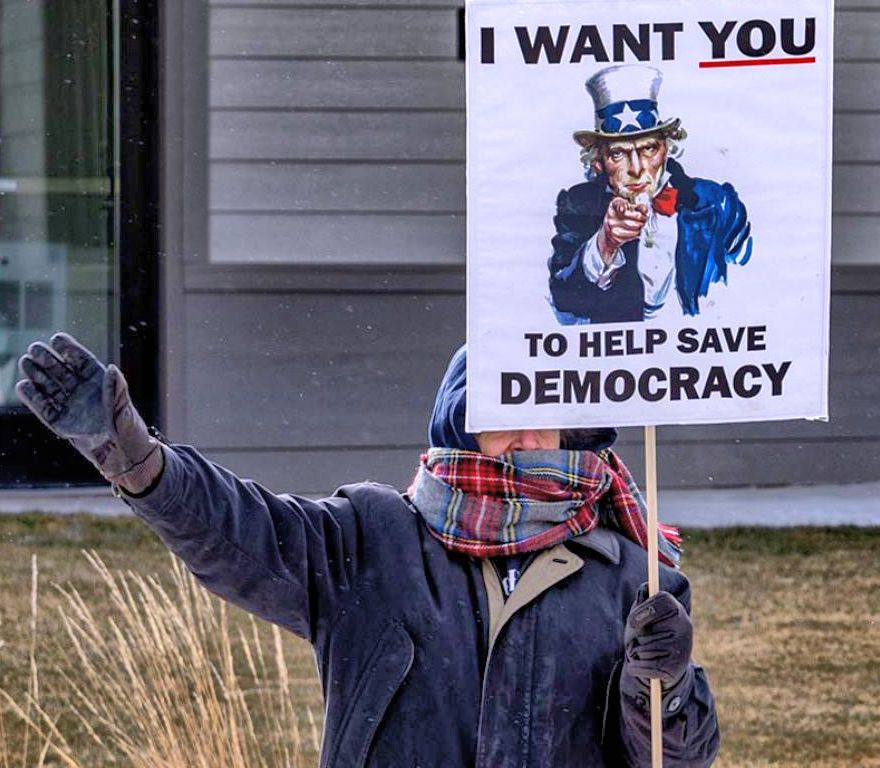
America was born through blood, sweat, and tears, literally speaking. When the king of England imposed tyranny against the colonies, the colonists were the first protestors, asserting their rights and fighting for independence. Since then, protest has remained a vital element of American democracy — serving as a powerful tool for social change, challenging injustice, and shaping national laws and culture.
The Founding Fathers insisted on including the First Amendment in the Bill of Rights because the Revolutionary experience had shown how easily governments could silence dissent, control information, and crush political opposition. To secure republican self‑government they protected four interlocking freedoms — speech, press, assembly, and petition — so citizens could criticize rulers, organize collective action, expose abuses, and press for reform without fear of legal retaliation. Embedding those guarantees in the Constitution aimed to prevent a return to the centralized, arbitrary power the colonies had rebelled against and to ensure that protest remained a lawful and effective means of checking authority.
The Colonial Era and the Fight for Independence (1765–1783)
- Stamp Act resistance (1765) and coordinated colonial boycotts established networks for collective action and noncompliance.
- The Boston Tea Party (1773) and subsequent mobilization culminated in the Declaration of Independence (1776) and a revolutionary culture that normalized popular challenge to power.
The Early Republic and the Era of Expansion (1783–1850)
- The Alien and Sedition Acts (1798) provoked political backlash demonstrating early American commitment to free expression; their unpopularity helped politicize civil liberties and shaped later free‑speech doctrine.
- Protest and moral persuasion drove the abolitionist movement (e.g., William Lloyd Garrison, Frederick Douglass), pressuring courts and legislatures and shifting political coalitions.
Civil Rights Explained
- Origins and scope: Beginning in the 1950s and peaking in the 1960s, the Civil Rights Movement brought together Black churches, local community organizations, student groups, and national civil-rights organizations (NAACP, SCLC, SNCC) to challenge segregation, disenfranchisement, and racial violence across the American South and beyond. Landmark campaigns included the Montgomery Bus Boycott (1955–56), sit-in movement (starting 1960), Freedom Rides (1961), Birmingham campaign (1963), the March on Washington (1963), and the Selma to Montgomery marches (1965). Those actions built broad public support, national media attention, and political pressure that crossed regional lines.
- Tactics and state responses: Movement activists emphasized direct-action and nonviolent civil disobedience — mass protests, boycotts, sit-ins, and voter-registration drives — to dramatize injustice and provoke legislative response. State and local authorities often met demonstrations with arrests, police violence, and legal repression (e.g., mass arrests in Birmingham, violent responses in Selma). Federal authorities intervened at times: the Kennedy and Johnson administrations employed negotiations, federal court suits, and, in critical moments, federal enforcement (e.g., national guard/federal marshals protecting the Selma marches). These confrontations produced extensive litigation and federal investigations into abuses.
— Key contemporary sources include federal reports and Supreme Court opinions arising from the era, plus extensive coverage in national newspapers. - Constitutional and legislative stakes: The movement’s moral and legal challenges translated into major constitutional and statutory changes. Sustained activism, litigation, and legislative lobbying contributed directly to landmark federal laws — the Civil Rights Act of 1964, which outlawed segregation and employment discrimination, and the Voting Rights Act of 1965, which targeted discriminatory voting practices — and to Supreme Court rulings that expanded constitutional protections for equal treatment and voting. Those legal changes reshaped federal–state relationships on civil rights and established precedents and enforcement mechanisms that continue to inform civil‑rights litigation and policy.
The Anti‑War, Counterculture, and Identity Movements (1960s–1970s)
- Origins and scope: During the 1960s and early 1970s, a broad constellation of movements — opposition to the Vietnam War, the counterculture, and emerging identity movements (including second‑wave feminism, Black Power, Chicano, Native American, and LGBTQ+ activism) — coalesced into a dynamic period of political and cultural change. Campus networks, grassroots organizations, veterans’ groups, and community activists organized mass demonstrations, teach‑ins, draft‑resistance efforts, cultural publications, and local service projects that challenged U.S. foreign policy, conventional social norms, and institutional discrimination.
- Anti‑war protest and state responses: Widespread student and civilian opposition to the Vietnam War included large national marches, campus occupations, and symbolic actions (teach‑ins, draft card burnings). High‑profile events — such as the 1967 and 1969 national antiwar marches and the 1970 Kent State protests — helped shift public opinion and increased political pressure on elected officials, contributing to changes in military strategy, troop withdrawals, and limits on executive war powers. Authorities often responded with campus crackdowns, mass arrests, and deployments of National Guard or federal forces in confrontations that produced significant litigation and debate over free speech, assembly, and the scope of state power.
- Counterculture and cultural impact: The counterculture promoted alternative lifestyles and critiques of consumerism, militarism, and traditional authority through music, communal living, psychedelic experimentation, and independent media. Its cultural innovations reshaped public discourse on personal freedom, gender roles, sexual norms, and drug policy, influencing later social movements and policy debates even as many elements became commodified or institutionalized.
- Identity movements and Stonewall: Emerging identity‑based movements built sustained organizing infrastructures to press for legal and social change. Second‑wave feminism intensified campaigns for workplace equality, reproductive rights, and legal reforms; Black Power and Chicano/Native American movements focused on self‑determination, political representation, and cultural pride; student‑led groups pursued campus reforms and community empowerment. The Stonewall Riots (1969) were a catalytic moment for LGBTQ+ activism — spontaneous resistance to police raids at the Stonewall Inn galvanized activists, led to the formation of local advocacy organizations, and helped launch visible, sustained political organizing that pushed for decriminalization, anti‑discrimination measures, and public recognition.
- Constitutional and policy stakes: These movements collectively shaped law and policy through protest, litigation, electoral politics, and institution‑building. Antiwar pressure contributed to legislative and executive shifts on military engagement and informed later reforms (e.g., War Powers debates). Identity movements advanced civil‑liberties claims and statutory reforms on gender equality, reproductive rights, voting access, and anti‑discrimination, while court cases and policymaking around protest policing and free expression clarified constitutional limits on state responses to dissent.
Black Lives Matter, Too
- Origins and scope: Black Lives Matter (BLM) emerged as a decentralized movement after the 2013 acquittal in the Trayvon Martin case and expanded following the 2014 deaths of Michael Brown and Eric Garner; it became a nationwide movement that surged again after the 2020 killing of George Floyd in Minneapolis, producing mass protests in hundreds of U.S. cities and around the world.
- Policing and state responses: Local, state, and federal authorities routinely deployed police forces, sometimes with militarized equipment and aggressive crowd‑control tactics, to manage or disperse BLM demonstrations. Notable instances include the militarized response in Ferguson in 2014, widely criticized tactics (use of tear gas, rubber bullets, mass arrests) at many 2020 protests, and federal deployments to several cities that raised constitutional and jurisdictional concerns. Civil‑liberties organizations documented patterns of force and litigation followed.
— U.S. Department of Justice, “Investigation of the Ferguson Police Department” (March 4, 2015); American Civil Liberties Union, “Policing Protest” reports; see also coverage in The New York Times and The Washington Post. - Constitutional stakes: The aggressive policing of protest underscores the First Amendment’s continuing importance. When governments deploy force in ways that chill speech or deter assembly, judicial scrutiny, legislative oversight, and civil‑liberties advocacy become critical to preserving space for lawful dissent. Court decisions and litigation clarifying the limits of police power help to define and protect those limits.
The ICE Protests (ongoing), Explained
- Origins and scope: Protests targeting U.S. Immigration and Customs Enforcement (ICE) coalesced prominently in 2018 after the public outcry over family‑separation policies and the “zero tolerance” border enforcement that produced widely circulated images of detained children. Movements such as “Abolish ICE,” Families Belong Together rallies, and localized “Occupy ICE” actions spread to hundreds of cities, while ongoing demonstrations continued around detention facilities, courthouses, and airports. Protests have recurred in response to high‑profile raids, deportation operations by ICE agents, and revelations about detention conditions, with renewed surges when federal policy shifts or widely reported incidents (including deaths or alleged abuses while in ICE’s custody) drew national attention.
- Policing and state responses: Local, state, and federal authorities used a range of policing tactics to manage ICE‑focused protests — mass arrests, dispersal orders, curfews, and the deployment of local police, sheriffs’ deputies, and federal agents. At times protesters faced aggressive ICE crowd‑control measures at facility occupations and airport demonstrations; other responses involved negotiated encampment removals and targeted arrests of organizers. Several cities also responded politically by restricting cooperation with ICE (sanctuary policies) or by legislating limits on facility access, producing legal conflicts between municipal and federal authorities.
- Tactics and organizing: Protesters have employed marches, sit‑ins at ICE offices and detention‑facility gates, airport disruptions, clergy and legal observer accompaniment, civil‑disobedience actions (blockades, hunger strikes), and coordinated pressure on contractors and local lawmakers. Advocacy groups combined street protest with litigation, Freedom of Information Act (FOIA) requests, reporting on detention conditions, and campaigns to end family separations, limit detention, and reform or abolish ICE.
- Legal and constitutional stakes: ICE protests raise intersecting First Amendment and federal‑state questions — free speech and assembly rights at federal facilities and detention sites, limits on law‑enforcement use of force, and the legal contours of local noncooperation with federal immigration enforcement. Litigation and congressional oversight prompted reviews of detention conditions, contractor practices, and enforcement authority. Municipal sanctuary measures generated court challenges and federal push-back, highlighting tensions over jurisdiction, separation of powers, civil-liberties protections and a renewed public debate about ICE’s role and detention practices.
Why the First Amendment Matters for a Free Society
- Mechanism for accountability: The First Amendment’s protections for speech, press, assembly, and petition enable information flow and public scrutiny of government. Without these channels, abuses are more likely to go unchecked. The Supreme Court has repeatedly emphasized free expression as central to democratic self‑government (e.g., New York Times Co. v. Sullivan; New York Times Co. v. United States).
- Historical pattern: Episodes of repression (Sedition Act of 1798, Palmer Raids of 1919–20) show that curtailing expression is often an early move toward centralized, unchecked, illiberal power.
- Comparative and theoretical support: Scholars argue that suppression of media and civil liberties precedes democratic decline. Open public dialogue allows for the challenge of those in power and prevents a monopoly on truth.
In conclusion, protest has repeatedly proven to be a catalyst for democratic change in American history — from colonial resistance and abolitionism to the civil‑rights and modern social‑justice movements. Legitimate concerns about violence, property damage, or ineffective advocacy are real and deserve attention: nonviolent tactics are usually more effective, and when protests turn to rioting they risk alienating potential allies and provoking unlawful repression. At the same time, dismissing protest wholesale because some episodes become disorderly, or because elected officials appear unresponsive, undermines the constitutional protections that make peaceful dissent possible.
The heavy policing of movements such as Black Lives Matter in recent years shows how state power can be used to narrow civic space; resisting such narrowing is essential to preserving the republic. Defending the First Amendment — while holding individuals accountable for unlawful conduct — protects the channels through which grievances are aired and corrected. Curtailing expressive freedoms in reaction to unpopular or inconvenient speech risks concentrating authority, narrowing political competition, and making democratic correction far more difficult. Preserving constitutional protections for dissent is therefore a practical safeguard against the erosion of republican self‑government.
From the colonists’ resistance to modern social movements, protest has been essential to American political development. The First Amendment is the constitutional safeguard that makes sustained dissent possible; both legal doctrine and historical experience show that protecting expressive freedoms is crucial to preventing the slide into tyranny.
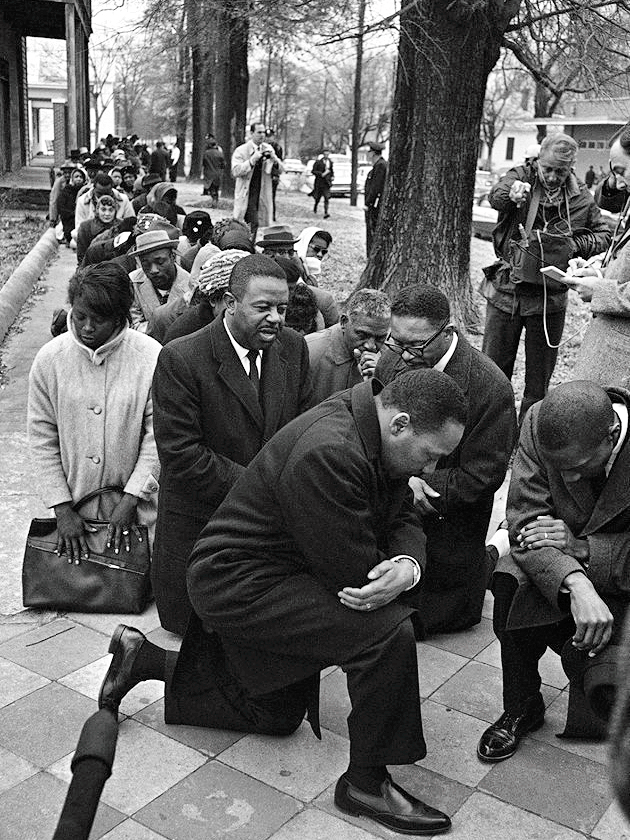
“Now let us be sure that we will have to keep the pressure alive. We’ve never made any gain in civil rights without constant, persistent, legal and non-violent pressure. Don’t let anybody make you feel that the problem will work itself out… For those who are telling me to keep my mouth shut, I can’t do that… I’m not going to segregate my moral concerns. And we must know on some positions, cowardice asks the question, “Is it safe?” Expediency asks the question, “Is it politic?” Vanity asks the question, “Is it popular?” But conscience asks the question, “Is it right?” And there’re times when you must take a stand that is neither safe nor politic nor popular, but you must do it because it is right.” By: Martin Luther King Jr.
“Injustice anywhere is a threat to justice everywhere. We are caught in an inescapable network of mutuality, tied in a single garment of destiny. Whatever affects one directly, affects all indirectly.” By: Martin Luther King Jr.
Unjust Laws Are Illegitimate: The Moral Duty of Citizens to Resist
The Difference Between Law and Morality
History shows laws aren’t inherently moral; their legitimacy rests on whether they uphold human rights and dignity. As Martin Luther King Jr. wrote in his 1963 Letter from Birmingham Jail, “an unjust law is no law at all”: legality alone doesn’t confer moral legitimacy. Laws are human constructs and can contradict moral truth — King described an unjust law as one not rooted in eternal or natural law. Jim Crow statutes, which legally enforced segregation, degraded human dignity and exemplify laws that were legally valid but morally illegitimate. Accepting laws solely because they are enacted risks endorsing oppression; citizens must challenge discriminatory statutes.
Why Citizens Obeyed Jim Crow
- Social norms and normalization: Routine enforcement made segregation seem ordinary and lawful.
- Legal coercion and threat: Policing, economic penalties, and the threat or reality of violence deterred resistance.
- Institutional incentives: Officials, businesses, and courts complied to preserve order, status, or profit.
- Cultural ideology: Racist narratives and pseudo‑legal reasoning framed segregation as acceptable.
- Moral disengagement: Rationalization, diffusion of responsibility, and beliefs that resistance was futile reduced collective action.
Taken together, these factors turned immoral laws into routinized social practice despite their injustice.
Duty to Resist and Moral Responsibility
Citizens therefore have a duty to resist laws that perpetuate injustice, inequality, or tyranny, because compliance enables moral erosion and threatens society. Moral responsibility includes disobeying unjust laws. Laws that oppress or dehumanize — whether those that enabled the Holocaust or legalized segregation — violate justice and dignity and thus demand resistance, even at legal risk. Moral resistance prevents injustice from becoming entrenched and preserves society’s integrity. Resistance — moral action, civil protest, and sometimes civil disobedience — is essential. As King warned, the greater danger is the silence of good people. The civil rights movement’s success against Jim Crow shows that collective moral resistance can reform unjust laws and defend democracy and human dignity.
Why Citizens Obeyed Nazi Laws
Propaganda and ideology: Intense state messaging, nationalism, and scapegoating generated acceptance.
– Fear, coercion, and terror: Police, paramilitaries, and legal penalties made dissent dangerous.
– Institutional capture: Courts, bureaucracy, and industry were co‑opted, closing legal channels for opposition.
– Opportunism and conformity: Careerism and self‑preservation motivated compliance or collaboration.
– Incremental legalism: Repressive measures were introduced gradually and given legal form, normalizing escalation.
These mechanisms show how legal form plus social pressure can mask profound immorality.
Stanford Prison Experiment
Psychological experiments show how authority can quickly produce abusive behavior when unchecked, underscoring the need for moral vigilance against unjust power and laws.
- Summary: In 1971, Philip Zimbardo’s study assigned college students to “guard” or “prisoner” roles in a simulated jail; within days some guards became abusive and prisoners suffered severe distress. The study was halted early for ethical reasons.
- Lesson: It demonstrates how situational power, role conformity, loss of self-awareness, and weakened moral restraints enable ordinary people to commit or tolerate abuse — showing why institutional checks and individual moral courage matter when the state delegates coercive authority.
Political Philosophy and the State
Political philosophy — the study of government and law — focuses on questions of legitimacy: how to structure collective relationships, who holds authority, what counts as legal versus illegal action, and who decides. These are not abstract problems; they shape policy and the lives of those affected by them. A competing view — legal positivism — holds that law’s validity depends on its enactment, not its moral content; acknowledging that argument clarifies why debates about legitimacy matter.
Personal and Political Stakes
- Political philosophy matters for the community and personally: it frames how we evaluate policies, policing, and the legitimacy of state violence.
- Compassion and humility: Debating authority and justice demands listening, admitting uncertainty, and recognizing that those who exercise power, e.g. police, politicians may be decent people whose actions still require scrutiny.
- Democratic commitment: While democracy isn’t a perfect guarantee, consent of the governed and collective resistance remain central to reclaiming legitimacy when the law becomes an instrument of oppression.
The State, Monopoly on Violence, and the Question of Legitimacy
- Monopoly on violence: Per Max Weber, the modern state claims exclusive lawful authority to use coercive force; citizens are barred from equivalent force.
- Who judges legitimacy?: Democratic processes, the rule of law, human‑rights norms, independent courts, and civic oversight supply legitimacy — but none guarantee it. If legality alone defines legitimacy, authoritarian regimes can legalize oppression.
- Stakes: The state’s exclusive use of force can protect or oppress; legitimacy depends on moral constraints and consent of the governed. Historical revolutions and mass movements show people will withdraw consent when a state becomes tyrannical.
Police Power and Abuses
- Role vs. reality: Police are meant to protect and serve, yet abuses — racial bias, profiling, corruption, and excessive force — persist; justice is not applied equally.
- Legal limitation: In Warren v. District of Columbia — D.C. Cir. 1981, the court held that police do not owe a constitutional duty to protect specific individuals, which narrows expectations of individualized protection and accountability.
- Causes and consequences: Systemic racism, corruption, poor training, resource scarcity, and perverse incentives, e.g. reliance on fines contribute to abuse, eroding public trust and making reliance on the state for protection precarious.
The Limitations of the Law and the In‑Groups/Out‑Groups Dynamic
“The law cannot protect anyone unless it binds everyone; and it cannot bind anyone unless it protects everyone.” This highlights a fundamental flaw in systems that create in‑groups and out‑groups — those protected without being bound, and those bound without being protected. Such systems foster inequality, bigotry, and abuse of power. When laws selectively shield certain groups while oppressing others, they lose moral legitimacy. True justice requires equality under the law — binding and protecting all individuals equally. Resistance to unjust laws that perpetuate in‑group favoritism is essential to building a fairer society.
The Moral Imperative to Resist
Obedience to unjust laws enables the rise of tyranny. When individuals follow laws that discriminate, marginalize, or violate basic rights, they contribute to a slide toward authoritarianism. The Nazi regime acted according to law, yet its actions were morally reprehensible. Accepting such laws risks normalizing cruelty and oppression. Resistance — moral action, civil protest, and sometimes civil disobedience — is crucial. As King reminded us, “the gravest threat to justice is not the clamor of bad people but the silence of good ones.” Moral action begins with recognizing that laws are not infallible and that moral duty can require disobedience.
Preventing Society’s Descent into Tyranny
History shows that unquestioning obedience to unjust laws can produce authoritarianism. When citizens accept discriminatory laws or suppress dissent, they enable consolidation of power by oppressors. The state can use laws to legitimize violence, suppression, or extermination. To prevent this, citizens must resist unjust legislation — laws that violate morality and human rights. Systems that create in‑groups and out‑groups lose moral legitimacy. True justice requires laws that bind and protect everyone equally.
Upholding Morality Over Legality
In conclusion, laws reflect the values of their makers and can be tools of oppression. When they violate basic rights and equality, they are morally illegitimate. Citizens have a moral obligation to resist and disobey unjust laws, guided by principles articulated by King and others who argue that morality must transcend legality. The Stanford Prison Experiment shows authority can be abused when moral restraint is absent, and history warns of the dangers of obedience in the face of injustice. The law must bind and protect everyone; otherwise it ceases to be just. To build a just society, we must challenge unjust laws, exercise moral courage, and stand for universal human dignity. Only then can we prevent the slide into tyranny and ensure that morality truly guides the law.
At times, Minneapolis reminded me of what I saw during the Arab Spring in 2011, a series of street clashes between protesters and police that quickly swelled into a much larger struggle against autocracy. […] “Overall, this community has exercised enormous restraint,” Allison Sharkey, the executive director of the Lake Street Council, which represents many minority-owned businesses that have been hit hard by the ICE raids, told me. “But we have been pushed, probably intentionally, towards civil unrest.” […] And as with the Arab uprisings, there is profound unease about where it is all leading—especially now that two people have been shot dead in scenes like the one I witnessed—alongside an undertow of hope that Minnesota can provide the rest of the country with a model of democratic resistance. Excerpt from: Welcome to the American Winter
“More than a few commentators have drawn sometimes shaky comparisons between the current moment and 1968, the year when, in April, Dr. King was gunned down on a motel balcony in Memphis. In June, Robert Kennedy was murdered at the Ambassador Hotel, in Los Angeles, after winning the California primary […] At the Democratic Convention that summer, in Chicago, Mayor Richard Daley cracked down brutally on anti-war protesters in Grant Park. Richard Nixon won the Presidency. And, as few remember, there was also a flu pandemic; the H3N2 virus killed at least a million people, including a hundred thousand Americans. Perhaps the deepest frustration of thinking about 1968 and 2020 is the time elapsed, the opportunities squandered, the lip service paid. In the realm of criminal justice, the prison population began to skyrocket under Ronald Reagan and kept on accelerating for decades, until midway through the Obama Administration. Black Lives Matter began, in 2013, at least in part because even the Obama Presidency, for all its promise, proved unable to exert anything like a decisive influence on issues of racism and police abuse.” Excerpts from: An American Uprising
“People don’t stop hating because a veil lifts and they are suddenly able to see hate for what it is […] They leave because it makes sense for them, because the value hate once gave them has diminished or evaporated […] The reality is, people rarely change their personality or ideals during adulthood, and if they do, it needs to be something they do on their own, for themselves […] I realized much too late that hate is a huge waste of life.” By: Corinna Olsen Excerpts paraphrased from: White Supremacy was her world and then she left
Questions and Answers:
1. Q: Why did the Founding Fathers insist on including the First Amendment in the Bill of Rights?
A: The Revolutionary experience showed how easily governments could silence dissent; the First Amendment (speech, press, assembly, petition) was included to protect citizens’ ability to criticize rulers, organize collective action, expose abuses, and prevent a return to arbitrary power.
2. Q: What early colonial actions exemplify protest against British rule?
A: The Stamp Act resistance (1765), coordinated boycotts, and the Boston Tea Party (1773) mobilized colonists and culminated in the Declaration of Independence (1776).
3. Q: How did the Alien and Sedition Acts of 1798 affect American views on free expression?
A: The Acts’ restrictions on speech and press provoked political backlash and helped politicize civil‑liberties concerns, reinforcing the importance of legal protections for dissent.
4. Q: In what ways did abolitionists use protest to advance their cause?
A: Abolitionists used petitions, pamphlets, public meetings, moral persuasion, and direct protest (e.g., speeches and publications) to shift public opinion and pressure lawmakers to end slavery.
5. Q: Give three key protest events from the Civil Rights Movement and their outcomes.
A: Montgomery Bus Boycott (1955–56) helped desegregate buses; March on Washington (1963) highlighted national support for civil rights; Selma to Montgomery (1965) helped spur the Voting Rights Act and further federal protections.
6. Q: What led to the escalation of protests against ICE (U.S. Immigration and Customs Enforcement) in 2020, and what were the broader implications of the demonstrations?
A: The protests against ICE were sparked by the Trump administration’s “zero-tolerance” policy along the U.S.-Mexico border, as well as separations and detention conditions faced by migrant families, including children; the 2020 protests against ICE, demanding its abolition, drew large crowds, raised awareness about immigration policies, and contributed to growing calls for comprehensive immigration reform.
7. Q: What triggered the modern Black Lives Matter movement, and what broad impact did its 2020 protests have?
A: BLM grew after events including the Trayvon Martin case and the 2014 deaths of Michael Brown and Eric Garner; 2020 protests after George Floyd’s killing mobilized millions, prompted scrutiny of policing, and accelerated local and national policy debates on reform.
8. Q: How have governments at different levels used policing in response to protests like BLM, and why is this significant for the First Amendment?
A: Local, state, and federal authorities have used crowd‑control tactics, militarized equipment, curfews, and mass arrests to manage or suppress protests; such responses can chill speech and assembly, highlighting the need for judicial scrutiny and civil‑liberties protections under the First Amendment.
9. Q: What evidence links protections for free expression to resistance against authoritarianism?
A: Constitutional doctrines (e.g., New York Times Co. v. Sullivan; Brandenburg v. Ohio), historical episodes of repression (Sedition Act, Palmer Raids), and comparative scholarship (How Democracies Die) show that suppressing speech and civic space often precedes democratic erosion.
10. Q: How should democracies respond to protests that turn violent without undermining constitutional freedoms?
A: Democracies should distinguish between lawful dissent and unlawful violence — defend the right to peaceful protest, hold individuals accountable for crimes, prefer nonviolent tactics, and resist curtailing expressive freedoms in ways that concentrate power and impede democratic correction.
 elroypoet.blog