

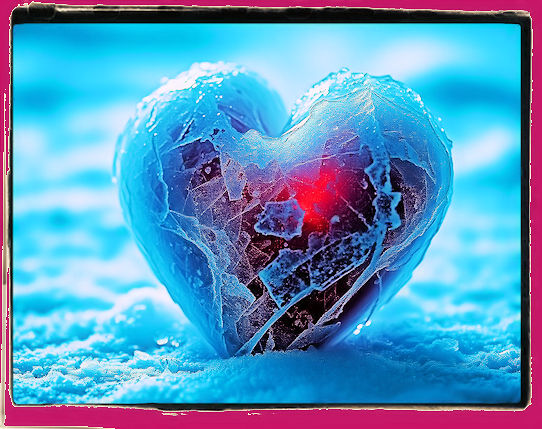
When people’s minds are led by love,
The truths they believe come as a dove.
When people’s minds are led by hate,
The lies they believe will seal their fate.
We must seek, for love to be real,
If we don’t, our hearts won’t heal.
By: ElRoyPoet © 2020
From Lies to Truth: How the Mind Justifies its Moral Choices
When someone’s heart is hurt, what they do next isn’t decided by fate. It depends on how they interpret the pain. Pain might be the start, but it doesn’t have to be the end. What happens after pain depends on what the mind chooses to believe. If a person is guided by compassion, their suffering can lead to clarity. It can help them see what’s true, what’s harmful, and what needs to be fixed. But if the mind defaults to contempt or hatred, pain becomes a source of distortion. Instead of helping, it changes beliefs—turning doubt into certainty and suspicion into what feels like “truth.”
This is why some cycles of anger and hate seem impossible to break. Hate often begins as an attempt to make sense of chaos. When questions go unanswered, anger can give a false sense of certainty. It turns confusion into a verdict, finds a target, and treats that verdict as the truth. As a result, the mind stops listening. Instead of trying to understand, it repeats the same conclusions until they become part of who someone is. That’s how lies become dangerous—not because they are always false, but because they seem final. They limit what seems acceptable or worth doing, trapping people in a way of thinking that’s hard to escape.
Love works differently. Love isn’t naive or blind; it’s guidance. Love shifts focus away from punishment and toward healing. It encourages us to question assumptions and change our minds when needed. Where hate sees people as enemies or lost causes, love sees complexity. It recognizes pain as a wound, not a reason to justify more hurt. The heart of healing is not ignoring pain but transforming it into understanding and growth.
This change is also a moral choice. When hate rules the mind, it not only corrupts how we think but also how we act. It makes people less empathetic, more irresponsible, and more likely to see harm as inevitable. Shame and guilt may appear, but they don’t help us get better—they just make the cycle worse. Love, on the other hand, makes responsibility possible. It asks us not only who is to blame but what can be fixed, learned, or repaired. It doesn’t undo the past but refuses to let the past control the future.
Every cycle of harm involves a choice—whether to understand or to accuse. People can see their suffering as a reason to be cruel or as an opportunity to grow wiser. The lazy mind instinctively chooses hate because it may seem easier at first, as it feels more “powerful.” It offers a sense of control and a simple explanation that requires no vulnerability. But in the long run, hate causes more damage. Hearts become hardened, peace of mind deteriorates, and hurt multiplies.
The path forward is to seek healing instead of just trying to survive the pain. Healing requires more than good intentions; it needs a clear direction. If love is real, we must pursue it—through humility, honest questions, responsibility, and a refusal to let anger control us. If we give up on that, our hearts don’t just remain broken—they become conditioned into a mode of thinking that leads to more discrimination. So the real question isn’t just what happened, but what we are choosing to follow now. Because the way we justify our prejudices determines whether pain leads us toward healing or pushes us further into hate.
Opinion:
Love and hate are two powerful, complex emotions that are closely connected because both are deeply personal and directed toward someone or some group. They are like two sides of the same coin — intimate feelings shared with those we care about or those we strongly oppose. However, they exist on opposite ends of the spectrum, especially in how they influence our lives and the lives of others. Love has the power to build up, heal, and bring people together, while hate can tear down, cause division and destroy. Ironically, both emotions can incapacitate those who wield them, whether the giver or the receiver, depending on their intent.
Hate often begins with a simple misunderstanding, but it can escalate into collective contempt, fueling conflict within families, communities, or even entire nations. When I reflect on the evil in the hearts of people, I realize that hate is not something God created. Hate is the result of turning away from God’s love — when humans choose to reject compassion and understanding, but instead, allow anger and resentment to take hold.
Jesus understood how the human mind works. He told His followers to love one another because love requires courage and purpose. When someone is hurt or feels wronged, they face a choice: respond with patience and love or react with rage and hate. Hate is a strong emotion that can overcome the heart, leading people to believe false things, blame others — such as immigrants, Muslims, minorities, LGBTQ+ individuals, the poor, homeless people, and their liberal sympathizers — while defending their political party’s ideology at all costs, often perpetuating division, injustice, and suffering in the process. This creates a vicious cycle where hate feeds itself, especially when fueled by conservative social media that promotes culture wars.
Unfortunately, this cycle is reinforced when corrupt leaders — whether government or religious — use propaganda or dogma to deepen division and spread hatred. They make people feel angry and afraid, pushing communities further apart. But Christians are called to a different path: to love everyone, even when it’s difficult. Love isn’t about ignoring pain; it’s about choosing to see others with kindness, compassion, and understanding. When we respond with love, we can transform hurt into insight and help heal wounds instead of making them worse.
The key is to choose love over hate. When we do, we open the door to healing, peace, and unity. Responding with love shows what we truly believe about others and ourselves. When we allow hate to manipulate us, we risk becoming more divided and causing more suffering. But with love, we can break cycles of anger and build a future rooted in kindness, understanding, and forgiveness. Ultimately, love has the power to transform hearts and communities, turning pain into growth and division into reconciliation.
World So Cold
It starts with pain
Followed by hate
Fueled by the endless questions
No one can answer
A stain
Covers your heart
Tears you apart just like a sleeping cancer
Now I don’t believe men are born to be killers
I don’t believe the world can’t be saved
How did you get here and when did it start?
An innocent child with a thorn in his heart
What kind of world do we live in
Where love is divided by hate?
Losing control of our feelings
We all must be dreaming this life away
In a world so cold
Are you sane? Where’s the shame?
A moment in time passes by
You cannot rewind
Who’s to blame and when did it start
Is there a cure for your sickness, have you no heart?
What kind of world do we live in
Where love is divided by hate?
Selling our soul for no reason
We all must be dreaming this life away
In a world so cold
There’s a sickness inside you that wants to escape
It’s a feeling you get when you can’t find your way
So how many times must you fall to your knees
Never, never, never, never, never do this again
By Song Writers: Skidd Mills, Justin Mark Rimer, Anthony Paul McCoy, 12 Stones © 2007
Links:
“When you start understanding the science and psychology of hate, you begin to realize that there are numerous complex reasons for your hatred towards people. In an ideal world, we would love and respect everyone we interact with. Everyone will be compassionate, emphatic, generous, considerate and kind. We will accept each other’s views no matter how opposing they may be to ours and would learn from different perspectives. But reality is far from ideal. And this is perhaps why we often get upset, angry and annoyed with others.” Excerpt from 5 Reasons Why You Hate People According To Psychology
“In every encounter, we either give life or we drain it; there is no neutral exchange.” By: Brennan Manning, 2008
Disclosure:
This post was developed through human-AI collaboration, combining original editorial perspectives with scholarly research. The editor maintains academic integrity and assumes full intellectual responsibility for the theme and its conclusion. All links are property of their respective authors. FOR EDUCATIONAL AND INFORMATIONAL PURPOSES ONLY. NOT LEGAL OR MEDICAL ADVICE.

