


What do you do when your world turns dark?
When the circle breaks and you lose the spark?
No place to lay your head, no one left to call,
Just the wind and the shadows on the wall.
I drive these streets and I see the hollow gaze,
Of countless souls lost in a freezing haze.
People who remember when Christmas brought cheer
Now shiver in silence as winter draws near.
They took a wrong turn, they made a mistake,
Now they’re waiting for a miracle, for Christ’s sake!
And I’m sitting here with a heart turned cold,
Convinced they reap the bitter seeds they sowed.
I used to be the one with the open hand,
Trying to be a hero, trying to make a stand.
But the weight was too heavy, the mountain too high;
I grew tired of the struggle and stopped asking why.
I felt like a zero, just a drop in the rain,
Unable to ease the hunger or the pain.
I have so much, yet I feel so small,
So I built a fortress, and put up a wall.
Oh Lord, You said: “the poor would always be with us”,
But knowing, I’m the reason why, fills me with disgust.
Now I’m staring at the street in the December glow,
Asking for the mercy that I used to know.
Oh Lord, help me understand,
How to hold the hurting in the palm of Your hand.
I see people suffering on the streets every day,
And I’ve watched my own compassion fade away.
I don’t want to be jaded, I don’t want to be blind,
I’m searching for the spirit that I left far behind.
Oh Lord, save my heart, break the stone,
No one should have to spend Christmas alone.
Oh Lord, I’m not perfect; I’m just a man,
Trying to follow Your heavenly plan.
The spirit isn’t gone; it’s buried in the snow.
Light a fire in my soul; let kindness grow.
Not for the credit, not for the show,
But because You loved us first,
And the world needs to know.
By: ElRoyPoet © 2026
Commentary: There’s a universal belief that success and self-worth are nearly identical and if you’re rich you must be either be smart or hardworking. But if you’re poor you must’ve messed up somewhere along the way. People like to believe that they’ve gotten to where they are, because they’re talented or have earned it. That could be true to some extent, but it’s also a fact, that there are people who could have been equally smart or talented and not in their position, because of the barriers that were erected to impede them. It’s hard to sit with the idea, that maybe somebody else deserves to be where they are, more than they do. I think almost everybody, wants to be able to tell a story of making it on their own. However, does that give them the right to hate the less fortunate?
5 lessons from the coronavirus about inequality in America
“Since it’s often impossible to get a reasonable sense of what will happen in the future, it’s unfair to blame people with good intentions who end up worse off as a result of unforeseen circumstances. This leads to the conclusion that compassion, not blame, is the appropriate attitude towards those who act in good faith but whose bets in life don’t pay off […] Despair thrives where empathy is missing; right now, our lack of compassion for one another is killing us […] No matter how smart we think we are, there’s a hard limit on what we can know, and we could easily end up on the losing end of a big bet. We owe it to ourselves, and others, to build a more compassionate world.” Excerpt from The mathematical case against blaming people for their misfortune
I Work More Than 40 Hours A Week And I’m Homeless
Renters In America Are Running Out Of Options
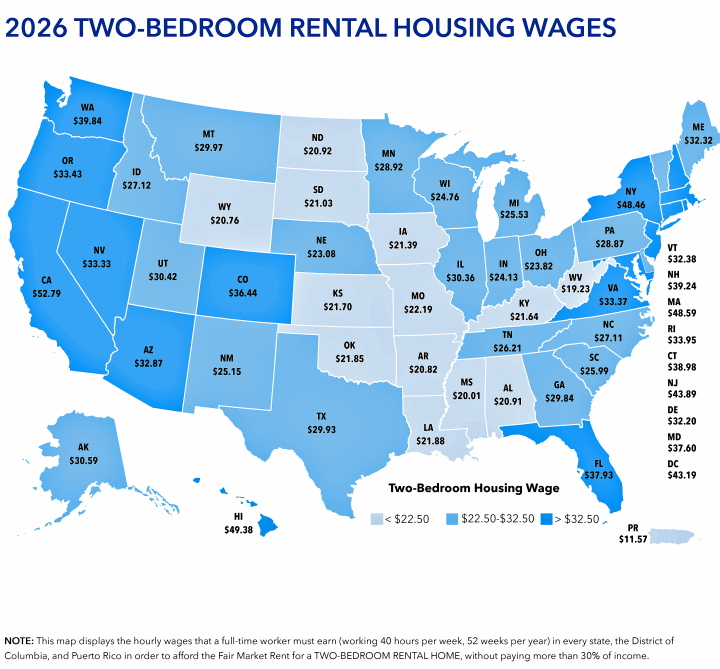
America’s Last Affordable Housing Is Under Threat
A Comprehensive Poem Analysis:
This poem is a reflective, first-person narrative that explores the emotional struggle between empathy and apathy. It focuses on the speaker’s internal conflict as they witness homelessness and poverty during the holiday season, moving from a place of active helping to emotional numbness, and finally to a plea for spiritual renewal.
The poem begins by establishing a contrast between the external world (the freezing streets) and the speaker’s internal world (a heart turned cold). The speaker admits to judging those in poverty, suggesting they “reap the bitter seeds they sowed,” which shows a psychological defense mechanism called the just-world fallacy—the belief that people deserve their misfortunes. This allows the speaker to distance themselves from the pain of others to avoid feeling overwhelmed.
As the poem progresses, the speaker reveals that this coldness is actually a result of “compassion fatigue.” Having tried to be a “hero” in the past, the speaker felt the weight of the systemic problem was too heavy to fix. To cope with the feeling of being “a drop in the rain,” they built an emotional “fortress.” This metaphor illustrates how poverty affects not only the poor but also those who witness it; the speaker’s inability to solve the problem led to a sense of helplessness and subsequent isolation.
The conclusion of the poem is a prayer for redemption. The speaker recognizes that their jadedness is a spiritual failure and asks for the “stone” around their heart to be broken. By the end, the speaker shifts from focusing on the “mistakes” of the poor to focusing on their own need for mercy and the universal need for kindness. The “fire” and “snow” imagery symbolizes the battle between the coldness of indifference and the warmth of human connection.
Psychological Effects of Poverty: Questions and Answers
- How does the “hollow gaze” mentioned in the second stanza reflect the psychological state of those experiencing long-term poverty?
It suggests a state of dissociation or emotional numbness, often caused by chronic trauma and the exhaustion of survival, where a person may appear vacant or devoid of hope. - Why does the speaker believe the poor “reap the bitter seeds they sowed,” and what does this reveal about how society views poverty?
The speaker is attributing poverty to personal failure or bad choices; this reflects a societal tendency to blame the individual rather than acknowledging systemic issues, which further stigmatizes the poor. - In what way does the poem illustrate the concept of “learned helplessness” for those on the street?
The line “waiting for a miracle” suggests that the individuals may feel they have no agency or power to change their situation, leading them to rely on external hope rather than actionable solutions. - How does the “freezing haze” serve as both a physical and psychological metaphor?
Physically, it represents the winter cold, but psychologically, it represents the disorientation, confusion, and invisibility that accompany the experience of homelessness. - What is the psychological impact of the “circle breaking” mentioned in the first stanza?
The “circle” represents social support systems (family, friends, community). When this breaks, the resulting isolation leads to a loss of identity and a profound sense of loneliness. - How does the speaker’s transition from “open hand” to “fortress” mirror the psychological effect of compassion fatigue?
The speaker became overwhelmed by the scale of suffering and the feeling of insignificance, leading them to shut down emotionally as a way to protect themselves from further distress. - What does the phrase “I felt like a zero” indicate about the speaker’s sense of self-efficacy?
It shows a complete loss of self-efficacy, where the speaker feels that their individual actions are meaningless in the face of a massive problem, leading to apathy. - How does the timing of Christmas exacerbate the psychological pain of poverty?
The holidays emphasize social belonging and family warmth, which heightens the contrast for those who are alone and lacking resources, making their isolation feel more acute. - What is the psychological significance of the speaker asking for “mercy” for themselves?
It shows a realization that the “wall” they built to protect themselves actually imprisoned them in a state of jadedness, creating a different kind of emotional poverty. - How does the poem suggest that kindness can act as a psychological intervention for poverty?
By arguing that “no one should have to spend Christmas alone,” the poem suggests that social connection and being “seen” are as vital for psychological survival as physical resources.
20 Bible Verses about the Poor
Jesus’ statement “the poor you will always have with you” is found in the Gospels of Matthew, Mark, and John, and it is often interpreted as a critique of those who neglect the poor rather than a justification for inaction. His words highlight the importance of generosity and caring for the needy, rather than accepting poverty as inevitable.
Disclosure:
This post was developed through human-AI collaboration, combining original editorial perspectives with scholarly research. The editor maintains academic integrity and assumes full intellectual responsibility for the theme and its conclusion. All links are property of their respective authors. FOR EDUCATIONAL AND INFORMATIONAL PURPOSES ONLY. NOT LEGAL OR MEDICAL ADVICE.

