
Just because I was born with supremacist and nationalist tendencies:
It doesn’t mean, I can be trusted to rule the world.
So why would I allow a populist—worse than I—to be the boss of me?
It’s asinine to ever imagine, that it would benefit anyone.
The only way, a pluralistic society has a fighting chance for equality is:
If it hardens its democracy.
So, checks and balances is the only way to go—
the executive, the legislative, the judicial—
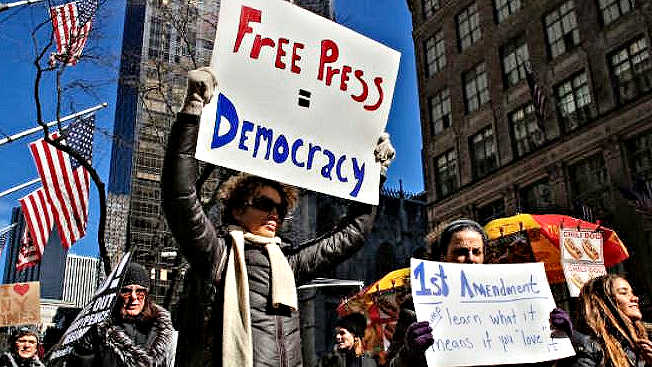
and the free press, the watch dog over all.
By: ElRoyPoet © 2022
Democracy Under Siege: Lessons from History and the Perils of Polarization
When a country throws up its arms in disgust because Congress refuses to compromise and everyone is constantly digging in their heels—because they don’t want to relinquish the ideologies of their polarized parties and cultural groups—it becomes easier for affluent society to become cynical about its democratic institutions and the civil rights they guarantee. This polarization and stubbornness undermine the very foundations of representative democracy, leading to political paralysis and societal disillusionment.
Physical and emotional fatigue make cowards out of all of us, and when patriots believe they can’t win, they often succumb to the temptation—perceived as the easy way out—to forfeit liberal democracy and let a power-hungry strongman govern for them. History offers numerous examples of this pattern. For instance, in the early 20th century, countries like Germany and Italy faced similar crises of political instability, which facilitated the rise of authoritarian regimes under Adolf Hitler and Benito Mussolini respectively. These leaders promised order and national revival but ultimately led to destruction and chaos, illustrating the danger of abandoning democratic principles when faced with internal strife.
In the Bible, the Jews had the opportunity to govern themselves with judges, but they often chose to relinquish their freedom to a king. This pattern recurs throughout history: societies seeking stability sometimes gravitate toward strong, centralized authority. In ancient Israel, the shift from the period of the judges to monarchy under Saul, David, and Solomon was initially driven by the desire for security and national identity, but it also paved the way for tyranny and internal conflict. Similarly, during the Roman Republic, the rise of Julius Caesar and subsequent emperors demonstrated how the promise of order could erode republican values, leading to autocratic rule.
The tendency to opt for strong leadership in times of crisis is not new; it is a recurring theme that highlights the fragile nature of democracy. The initial appeal of monarchy or dictatorship often masks the long-term costs of sacrificing civil liberties and democratic processes. The Roman Republic, for example, experienced instability and civil wars before Augustus established the imperial system, which, while bringing stability, also marked the decline of republican ideals.
In modern times, we see this pattern repeated in countries where democratic institutions have been weakened or abandoned altogether. The rise of populist leaders across the globe—such as Hugo Chávez in Venezuela, Viktor Orbán in Hungary, or Jair Bolsonaro in Brazil—often capitalizes on societal fatigue and disillusionment, promising to restore order but eroding democratic norms in the process.
Ultimately, history teaches us that temporary peace achieved through authoritarianism is often an illusion, and the true cost is the erosion of civil rights, individual freedoms, and the rule of law. Democratic societies must remain vigilant, fostering compromise and understanding, even amid polarization. Otherwise, they risk sliding into cycles of authoritarianism, where the promise of stability masks the suppression of dissent and the consolidation of power by a few.
See Video Kurt Bardella: Democracy Doesn’t Die In Darkness, It’s Happening In Broad Daylight
“I am a democrat [proponent of democracy] because I believe in the Fall of Man. I think most people are democrats for the opposite reason. A great deal of democratic enthusiasm descends from the ideas of people like Rousseau, who believed in democracy because they thought mankind so wise and good that every one deserved a share in the government.
The danger of defending democracy on those grounds is that they’re not true. . . . I find that they’re not true without looking further than myself. I don’t deserve a share in governing a hen-roost. Much less a nation. . . .
The real reason for democracy is just the reverse. Mankind is so fallen that no man can be trusted with unchecked power over his fellows. Aristotle said that some people were only fit to be slaves. I do not contradict him. But I reject slavery because I see no men fit to be masters.” Quote by: C.S. Lewis, “Equality,” in Present Concerns (reprint: Mariner Books, 2002), p. 17.
“Without the Free Press there is no Democracy. Without Democracy there is no Free Press.” By: A. Freeman
“If our democracy dies, the reason won’t be that Americans were too apathetic to save it; it will be that they voted it out of existence.” By: H. Scott Butler
Poem Analysis: The Imperative of Checks and Balances in Sustaining Democratic Equality
This poem presents a compelling reflection on the fragility of democracy and the importance of institutional safeguards to preserve equality within a pluralistic society. At its core, it grapples with the innate tendencies toward supremacy and nationalism, acknowledging their existence but asserting that these traits do not warrant unchecked power or trust in leadership—particularly in the context of global governance. The poet emphasizes that allowing populist figures—those who exploit nationalist sentiments—to lead is inherently dangerous, describing such a scenario as “asinine” and detrimental to collective well-being.
The opening lines, “Just because I was born with supremacist and nationalist tendencies,”recognize the human propensity toward bias and tribalism, echoing psychological and sociological research that highlights the persistence of ingroup favoritism and prejudice (Tajfel & Turner, 1979). The poet then dismisses the notion that such tendencies should translate into authority: “It doesn’t mean I can be trusted to rule the world.”This stance aligns with political theory that advocates for institutional checks rather than individual or populist rule, given the propensity for power to corrupt and for biases to distort judgment.
The line “So why would I allow a populist—worse than I—to be the boss of me?” confronts the threat posed by populist leaders who often capitalize on nationalist and supremacist sentiments to consolidate power. Scholars like Cas Mudde and Cristóbal Rovira Kaltwasser (2017) describe populism as a “thin-centered ideology” that pits “the pure people” against “the corrupt elite,” often undermining democratic norms. The poet suggests that empowering such leaders is inherently foolish, as it risks undermining the very democratic principles that safeguard diversity and equality.
The poem underscores the necessity of strengthening democratic institutions: “The only way a pluralistic society has a fighting chance for equality is if it hardens its democracy.” This statement stresses resilience through institutional robustness—a concept supported by political scientists like Robert Dahl (1989), who outlined criteria for a healthy democracy, including effective participation, protection of rights, and institutional checks. The phrase “hardens its democracy” implies actively reinforcing these elements to withstand populist and nationalist threats.
Central to this reinforcement are “checks and balances,” the poem affirms, emphasizing the separation of powers among “the executive, the legislative, the judicial,” along with the vital role of “the free press” as “the watchdog over all” of them. This echoes Montesquieu’s (1748) classical model, which argued that dividing governmental powers prevents tyranny and safeguards liberty. The mention of the press as a “watchdog” aligns with Noam Chomsky and Edward Herman’s (1988) analysis in Manufacturing Consent, which underscores the media’s role in holding power accountable and fostering transparency.
In conclusion, the poem advocates for a resilient democracy fortified through institutional checks and an independent press to protect pluralism and equality. It recognizes the human inclination toward supremacist and nationalist tendencies but emphasizes that societal safeguards—checks and balances—are essential to prevent these inclinations from undermining democratic integrity. As recent political developments have demonstrated, the weakening of such safeguards often leads to democratic erosion (Levitsky & Ziblatt, 2018). Therefore, the poem serves as a reminder that democracy’s strength lies in its institutions, not in individual or populist leaders.
References:
- Dahl, R. A. (1989). Democracy and Its Critics. Yale University Press.
- Montesquieu. (1748). The Spirit of the Laws.
- Chomsky, N., & Herman, E. S. (1988). Manufacturing Consent: The Political Economy of the Mass Media. Pantheon Books.
- Levitsky, S., & Ziblatt, D. (2018). How Democracies Die. Bloomsbury Publishing.
- Tajfel, H., & Turner, J. C. (1979). An integrative theory of intergroup conflict. In W. G. Austin & S. Worchel (Eds.), The social psychology of intergroup relations (pp. 33–47). Brooks/Cole.
 elroypoet.blog