

My heart beats faster, but not as strong,
As the core of my love begins to sink.
Obviously, something seems to be wrong,
For you to think, I might need a shrink.
Because in my brain, I hear a gong-bong,
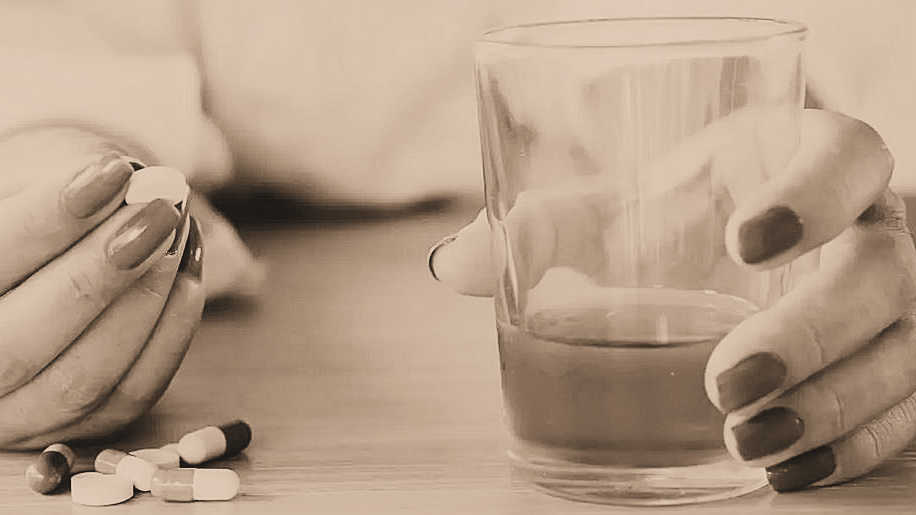
It doesn’t mean, I need pills and a drink.
Maybe it’s just, a favorite song,
Making my right hand tremble, when I lip-sync.
Ironically, when I was a young Longfellow,
I was almost on the brink
Of practicing psychology for a lifelong.
I thought I could fix, how other people think.
Though my thoughts seem to enjoy ping-pong,
I’m not so sure, about my biological link.
And I’m concerned, because I don’t know how long
My left eye will continue to wink.
By: ElRoyPoet © 2019
While we can’t control the feelings and thoughts that pop into our heads, we can control what we do with them. Bricker’s work using acceptance and commitment therapy in smoking cessation programs suggests we shouldn’t keep telling ourselves to stop thinking about an urge; instead, we must learn better ways to cope. The same applies to other distractions like checking our phones too much, eating junk food, or excessive shopping. Rather than trying to fight the urge, we need new methods to handle intrusive thoughts.
Use this 4-step method to handle unwanted thoughts that can derail your focus.
Step 1: Look for the Discomfort That Precedes the Distraction, Focusing In on the Internal Trigger
Step 2: Write Down the Trigger
Step 3: Explore Your Sensations
Step 4: Beware of Liminal Moments
Excerpt from How to Disarm Internal Triggers of Distractions
The Danger of Self-medicating: “Cravings can repeatedly override plans and resolutions to moderate or abstain from drug use, and this can be a disruptive, frustrating, demoralizing and traumatizing experience for those who battle these cravings—an experience that for some lasts a lifetime.[…] While there are various interpretations of the exact role of dopamine, it is well established that psychoactive drugs cause artificially high bursts of phasic dopamine to be released by midbrain dopamine neurons. […] When drugs are encountered, dopamine is released in anticipation of reward, but then the drug itself—due to its chemical effects—causes an additional dopamine boost when ingested, signalling that the drug is ever increasing in value. The result, on this mainstream view, is that these boosts in dopamine trigger cravings that overestimate the amount of reward that is expected, and so explain the excessive motivational pull of cravings.[…] People who use drugs want to numb out, to feel alive, to feel accepted or socially connected, to be freed from mental or physical pain (including withdrawal symptoms), to not feel anxious, to feel included. These emotional experiences themselves can become the objects of the desires driving addiction, and drugs are a vehicle to satisfy them, at least temporarily. A craving for a cigarette can be a desire for control and order in a stressful environment. An alcohol craving can aim at feeling comforted and safe. A craving for ketamine can be a desire to feel relaxed and relieved from worries. In severe addiction, a craving might aim at a feeling of complete self-annihilation, to be freed, no matter the cost, from the painful conditions of daily life. […] Cravings are sensitive to emotional and psychological needs and values, and this helps to explain why they are so motivating. Imagine a mundane craving to check Instagram or Twitter. Built into that craving, one might also find a desire for attention, validation, social connection or interaction, a cure for loneliness, emotional numbing, maybe the self-punishing urge to compare and despair, or for what the philosopher Jean-Jacques Rousseau called amour-propre, a form of self-love that is constituted by the recognition or approval of others. Next time you find yourself having a craving, reflect on how you experience it. Is it your brain anticipating a spike in dopamine, a flood of pleasure? ” Excerpt from Why we crave
“Having a purpose and meaning in life is a very important coping mechanism. Whatever we do in life, whatever work we produce, however much money we make, we cannot be fully happy until we know that someone else needs us, that someone else depends on our accomplishments, or on the love that we have to share. It’s not that we need other people’s good words to keep going in life, but if we don’t do something with someone else in mind, then we’re at much higher risk for poor mental health. The famous neurologist Dr. Victor Frankel said: “For people who think there’s nothing to live for and nothing more to expect from life, the question is getting these people to realize that life is still expecting something from them.” Doing something with someone else in mind can carry you through the toughest times. You’ll know the why for your existence and will be able to bear almost any how. So the question is do you do at least one thing with someone else in mind? This could be volunteering, or it could be sharing this knowledge that you gained today with other people, especially those who need it most, and these are often the people who don’t have money for therapy, and they’re usually the ones with the highest rates of anxiety disorders. Give it to them, share with others, because it can really improve your mental health. So I would like to conclude with this: another way you can do something with someone else in mind is finishing work that might benefit future generations. Even if these people will never realize what you’ve done for them, it doesn’t matter, because you will know, and this will make you realize the uniqueness and importance of your life.” Transcript excerpt from How To Cope With Anxiety Video
The Science Behind Why Some of Us Are Shy
7 dimensions of depression, explained
Poem Analysis: Exploring Inner Turmoil and Self-Reflection
The poem presents a candid exploration of inner emotional and mental struggles, intertwined with humor and introspection. Through vivid imagery and a conversational tone, the poet delves into themes of love, mental health, self-awareness, and the uncertainty of identity.
Themes and Emotional Tone
At its core, the poem grapples with the sensation of emotional weakening—”my heart beats faster, but not as strong,” suggests a sense of diminishing passion or vitality. This decline in emotional intensity is further emphasized as “the core of my love begins to sink,” indicating that love, once perhaps vibrant, is now waning. The tone is contemplative yet tinged with irony, as the speaker questions whether their symptoms warrant psychiatric help—”For you to think I might need a shrink.” This line hints at societal perceptions of mental health and the stigma that can accompany self-diagnosis or concern.
Imagery and Symbolism
The poet employs auditory imagery with “gong-bong,” a playful onomatopoeic phrase, to symbolize internal noise or chaos in the mind. Importantly, the speaker clarifies that this noise does not necessarily imply mental illness—”It doesn’t mean I need pills and a drink.” Instead, it could be misinterpreted as a mental health issue when it may simply be a response to something benign, like a “favorite song,” which makes the “right hand tremble when I lip-sync.” This imagery conjures a sense of involuntary physical reactions, blurring the line between genuine concern and everyday quirks.
The reference to “Longfellow,” a renowned poet, introduces a nostalgic element. The speaker recalls a youthful ambition to pursue psychology, perhaps to understand or fix others’ minds—”I was almost on the brink of practicing psychology for a lifelong.” This aspiration reflects a desire for mastery over the mind, which now contrasts with current uncertainties about one’s own mental and biological integrity. The mention of “ping-pong” as a metaphor for restless thoughts conveys mental agility but also instability, emphasizing the speaker’s ongoing internal dialogue.
Self-Reflection and Uncertainty
The closing lines express personal concern about physical and mental continuity—”I’m not so sure about my biological link” and “how long my left eye will continue to wink.” These lines symbolize the fragility of health and identity, highlighting a fear of losing control or coherence over oneself. The wink, a subtle yet expressive gesture, becomes a metaphor for fleeting vitality or consciousness, reinforcing the theme of uncertainty.
Final Thoughts
Overall, the poem is a poignant yet humorous reflection on the complexities of the human mind and heart. It balances vulnerability with wit, inviting readers to consider how internal struggles are often intertwined with perceptions of love, health, and identity. Through vivid imagery and candid introspection, the poet captures the universal experience of questioning oneself amid life’s unpredictable currents.
 elroypoet.blog