

I’m living inside the wreckage of who I thought I’d be—
a life I loved, gone; a map burned before me.
Struggle folds over pain; each breath a steep ascend.
Gratitude lingers here, stitched with a jagged seam,
but not all hands that reached out were soft.
Stop handing me the word “strong” like a bandage.
We already know. I had no other choice.
Telling me “I’ll be fine” is your way of saying, I want to leave;
it makes you feel lighter as you walk away.
Predicting the future is not a kindness.
What helps is a friend who brings lunch,
the one who sends a text without a sermon,
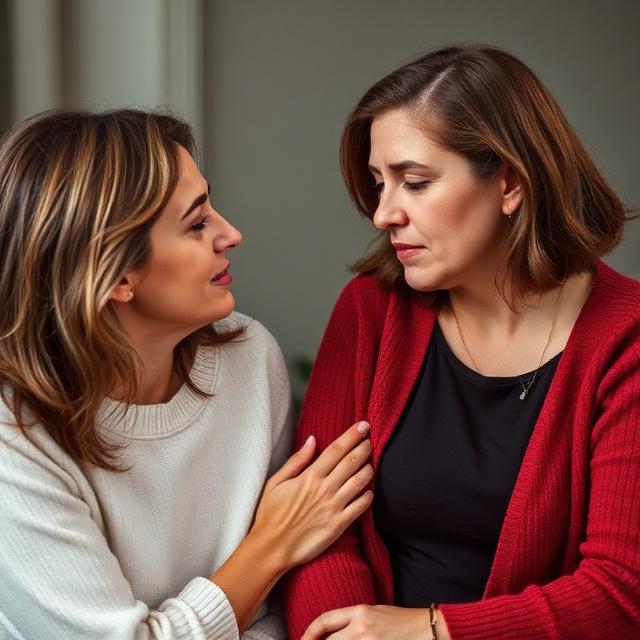
who sits while I cry and sips a drink with me,
prays with trembling hands, and offers small tokens.
Practicality over platitude—action, not slogans.
Don’t tell me this is part of some grand plan.
Bad things don’t owe the good that might follow.
Meaning is not a forecast; we make it messy and hard.
If I rise, that won’t erase the salt of now.
Don’t credit cruelty for a later mercy.
“Just find something practical,” you say,
as if my dreams are luxuries I must pawn.
I am not a fool; I have skills and self‑esteem.
I paid my dues when I was younger!
Didn’t I earn the right to choose a life that’s mine?
Don’t offer unsolicited advice. Offer a listening ear.
Sit. Ask how I am doing. Bring breakfast. Cover the bill.
Be quiet enough to hold my grief—without explaining it away.
“You’re on your own,” dressed as “you’ve got this,”
still leaves me drowning.
I learned to be the helper who never asked—
rejection made me stoic, made me solitary.
So when I finally ask, don’t hand me clichés.
Do the thing before being asked. Be present.
Hold space. Be a warm, unjudging witness.
Some friends did that—Cash App or cash in hand,
footprints in my home, time at my table.
Those were lifeboats, not motivational speeches.
Even when they say “I’m here”—that is therapy,
compassion that does not presume—it is ending.
I am grateful for attempts, even for clumsy gestures.
I can accept good intentions
and still refuse hollow words.
When someone is hurting, swallow your discomfort.
Love with errands, with silence, with presence.
This hurt is real.
It is a breakup with purpose and place.
I gave myself; I was not seen.
It was hope in what I could not mend,
and it stings like any lost love.
One day I may thrive—perhaps—
yet that won’t make this less sharp.
For now, let me be soft. Let me be held.
If you must speak, say instead:
“I am here.” Then stay to wipe away a tear.
Edited by: ElRoyPoet, 2026
Antifragility: How to use suffering to get stronger
“Are you a victim or survivor? Brokenness isn’t a part of who you really are, it isn’t your authentic self. Whether we see ourselves as a victim or a survivor, this self-image has a direct bearing on how our life will progress. As a victim we become self-focused, we go inward and allow the suffering to grow. We blame others for how we feel and believe people are trying to intentionally hurt us. A victim, even years later, is still powerless. Victim-hood has dire consequences that must be out grown. Just because you survived an incredible hurt or betrayal doesn’t mean that you are a survivor. An over-comer embraces life and doesn’t hide from it due to fear. Victims feel helpless, whereas survivors have reclaimed their power and taken back the control of their lives. Through survivor-ship we take responsibility for our choices and our feelings and consciously decide that we are no longer a victim. Survivor-ship is a choice to heal.” Excerpt from victim or survivor, do you know the difference?
“Who is good, if he knows not who he is? And who knows what he is, if he forgets that things which have been made are perishable, and that it is not possible for one human being to be with another always?” Excerpt from Epictetus on Love and Loss: The Stoic Strategy for Surviving Heartbreak
Commentary: Throughout life, individuals face numerous challenges that can alter their beliefs and perspectives. It’s common for people to blame others for their faults and shortcomings because acknowledging personal flaws can lead to low self-esteem. Blaming others for one’s weaknesses perpetuates a victim mentality and hinders personal growth. While it is true that upbringing and environment play a significant role in shaping one’s character, it is up to an individual to take responsibility for their own lives.
Validating an individual based solely on their abilities can foster a competitive and intolerant mindset where people are encouraged to focus solely on themselves and their achievements, which could potentially disregard the needs of others. This prejudiced attitude can create a hostile environment that does not foster compassion and empathy. Consequently, interacting with impatient bigots becomes counterproductive as they may perceive non-affluent people to be ignorant or hysterical. Bullies, in particular, demonstrate no sympathy and escalate confrontations, callously pushing the victim to experience anxiety, depression, or even a nervous breakdown.
When someone’s worth is based solely on their perceived status, it can lead to the belief that those who have achieved the most are most deserving of resources and opportunities, while those who have not are deemed unworthy. This attitude punishes individuals facing hardships, as their struggles are seen as a result of their own inadequacies, rather than a product of various life circumstances. It is important to recognize that individuals are defined by their struggles, experiences, and values, not just their accomplishments, in order to create a more peaceful community that fosters human connection and belonging.
Don’t chase happiness. Become antifragile
What to do if your inner voice is cruel
The Power of Personal Accountability: Overcoming the Victim Mentality
Throughout life, individuals encounter a myriad of challenges that shape their beliefs and perspectives. In the face of difficulties, a common human tendency is to blame external sources—friends, family, society—for one’s shortcomings. This mindset not only stunts personal growth but also cultivates a victim mentality that impedes the development of resilience and self-empowerment. It is imperative to shift our focus from blame to personal accountability, recognizing that our worth is defined by our struggles, experiences, and values, rather than our successes alone.
The Allure of Blame
Blaming others can be a tempting avenue for individuals dealing with failure or disappointment. According to psychologist Martin Seligman (1991), people often exhibit “learned helplessness,” where they believe that they lack control over their circumstances, leading them to adopt a victim role. This attitude is particularly prevalent in cultures that emphasize achievements and material success, where societal standards can be harsh and demanding (Pawelski, 2020). Consequently, many opt to attribute their faults to external factors instead of addressing their own shortcomings, which can lead to low self-esteem and stagnation in personal development.
The Implications of a Victim Mentality
The inclination to blame others creates a cycle of contempt and lack of empathy. Research indicates that individuals who maintain a victim mentality are often less capable of forming meaningful relationships (Henderson, 2016). By judging others solely based on success, they fail to appreciate the complexities of human experience, which includes struggles and failures. This narrow view of worth leads to distorted perceptions of happiness and can contribute to feelings of anxiety and depression, as individuals may find themselves perpetually unsatisfied with their lives and the people around them.
Furthermore, the ramifications extend beyond personal well-being. A society that fosters blame and a victim mentality can breed division and hostility. Empathy, understanding, and mutual support are essential for building stronger communities. Recognizing that everyone faces challenges—and that these challenges shape their character—can cultivate an environment where individuals encourage one another rather than disparage those struggling (Seligman, 2002).
A Call for Personal Responsibility
While the influence of family and societal expectations is undeniable, it is ultimately up to the individual to take responsibility for their own life. This necessitates a moving away from a mindset of blame towards one of accountability. Individuals must learn to confront their flaws rather than deflect them onto others. This process involves self-reflection and the willingness to accept that mistakes are part of the human experience. When individuals acknowledge their struggles, they not only foster personal growth but also contribute to a more compassionate society.
To illustrate, consider the story of J.K. Rowling, whose journey to success was fraught with personal hardships, including poverty and depression. Rather than blaming her circumstances, she used her experiences as fuel for her creativity, ultimately becoming one of the world’s most beloved authors. Rowling’s narrative highlights the notion that our worth is virtually linked to how we navigate our struggles and not merely defined by our successes (Rowling, 2008).
In conclusion, the shift from a victim mentality to one of personal accountability is essential for fostering personal growth and emotional well-being. By recognizing that our worth is shaped by our experiences, struggles, and values—and not solely by our successes—we can create a more empathetic and supportive community. Overcoming the urge to blame and embracing personal responsibility not only leads to individual empowerment but also lays the foundation for a society grounded in understanding and mutual support. It is time to challenge the tendency to look for blame and to encourage a culture that champions resilience, growth, and compassion.
How Our Past Influences Our Present
The Attachment Theory: How Childhood Affects Life
Give Me 5 Minutes… I’ll Save You 25+ Years Of Feeling Lonely, Depressed & Lost
An Analysis of Resilience and Vulnerability in the Poem
The poem offers a profound exploration of emotional resilience, vulnerability, and the complex process of healing from trauma, viewed through a woman’s lens. It navigates the intricacies of grief, societal expectations, and authentic connection, revealing how a woman’s inner strength is often misunderstood or dismissed by well-meaning but insincere gestures. From a psychological standpoint, the poem underscores the importance of validation, compassionate presence, and the acknowledgment of pain as essential components of recovery.
Vulnerability as a Source of Strength
The poet’s opening lines—“I’m living inside the wreckage of who I thought I’d be”—highlight a profound sense of loss and disillusionment. Psychologically, this resonates with the concept of identity crisis (Erik Erikson), where a person struggles to reconcile their self-perception with their current reality. The wreckage symbolizes not only external circumstances but also internal upheaval, a shattered sense of self that often accompanies trauma or grief. The poet’s acknowledgment of “the map burned before me” signifies a loss of direction, which can induce feelings of helplessness but also opens space for authentic reconstruction.
The poem’s emphasis on “struggle” and “pain” reflects the dissonance between external expectations and internal realities. The line “Struggle folds over pain; each breath a steep ascend” encapsulates the arduous journey of emotional resilience, similar to the post-traumatic growth framework, where individuals find meaning and strength through adversity. The woman’s experience is not one of passive suffering but of active endurance, emphasizing that resilience often involves confronting discomfort head-on.
The Dismissal of Superficial Comforts
Throughout the poem, the speaker critiques societal clichés—“Stop handing me the word ‘strong’ like a bandage”—which serve as platitudes that bypass genuine understanding. Psychologically, this reflects a common phenomenon where well-meaning individuals offer clichéd reassurance as a defense mechanism to avoid engaging with uncomfortable emotions. Such responses can invalidate the survivor’s experience, leading to feelings of isolation and emotional invalidation, which are linked to emotional neglect (Herman).
The speaker’s insistence that “meaning is not a forecast” and “bad things don’t owe the good that might follow” underscores the importance of acceptance—a core component of mindfulness-based therapies. It recognizes that healing is not linear nor guaranteed, and that hope must be rooted in acknowledgment of reality rather than false promises.
Women’s Need for Authentic Connection
The poem advocates for genuine, compassionate presence—“sit while I cry,” “bring breakfast,” “cover a bill”—highlighting the significance of emotional attunement and attachment. Psychologist John Bowlby emphasized that secure attachments provide a safe base from which individuals can explore and recover from distress. The speaker seeks not superficial fixes but authentic companionship, which validates her pain without judgment.
Moreover, the line “Don’t offer unsolicited advice” reflects a woman’s desire for agency over her healing process, aligning with feminist psychological perspectives that critique paternalistic or dismissive attitudes toward women’s emotional experiences. The call for “hold space” and “be present” echoes mindful listening, which fosters emotional safety and promotes post-traumatic growth.
The Power of Small Acts and Compassion
The poem celebrates “lifeboats”—small acts of kindness like a cash gift or a shared meal—as vital sources of support. These gestures align with findings in positive psychology that emphasize the importance of micro-moments of compassion in fostering resilience. Such acts reinforce the woman’s sense of being seen and valued, counteracting the loneliness that often accompanies grief or emotional turmoil.
The Courage to Be Soft
Finally, the closing lines—“Let me be soft. Let me be held”—resonate with self-compassion, a concept developed by Kristin Neff, which encourages kindness toward oneself in times of suffering. The speaker’s plea for space to simply exist without constant performance of strength reflects a critical truth: women’s vulnerability is a source of authentic power, not weakness. Recognizing this challenges societal norms that equate femininity with resilience alone, advocating instead for a holistic acceptance of both strength and softness.
In conclusion, the poem is a compelling call for genuine empathy and recognition of pain’s complexity. Psychologically, it underscores that healing involves acknowledgment, compassion, and patience—elements often overlooked in societal responses to grief. It affirms that vulnerability, when met with authentic presence, can become a foundation for resilience. Ultimately, the poem advocates for a compassionate approach that honors women’s emotional journeys, emphasizing that sometimes, the most powerful act is simply to be present and hold space for another’s suffering.
 elroypoet.blog